Safety
Safety belt position
In this manual: Safety
~2min read
Correct belt position is the key to getting maximum protection from safety belts.
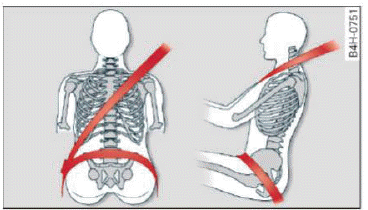
Fig. 149 Safety belt position
Use the height adjustment to change the position of the shoulder belt of the front safety belts.
WARNING
Improperly positioned safety belts can cause serious personal injury in an accident.
- The shoulder belt should lie as close to the center of the collar bone as possible and should fit well on the body. Hold the belt above the latch tongue and pull it evenly across the chest so that it sits as low as possible on the pelvis and there is no pressure on the abdomen. The belt should always fit snugly
 fig. 149. Pull on the belt to tighten if necessary.
- A loose-fitting safety belt can cause serious injuries by shifting its position on your body from the strong bones to more vulnerable, soft tissue and cause serious injury.
- Always read and heed all WARNINGS and other important information.
Pregnant women must also be correctly restrained
The best way to protect the fetus is to make sure that expectant mothers always wear safety belts correctly - throughout the pregnancy.
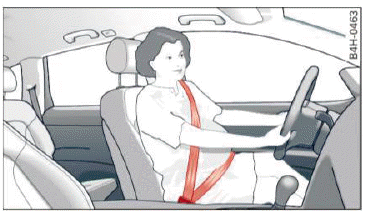
Fig. 150 Safety belt position during pregnancy
To provide maximum protection, safety belts must always be positioned correctly on the wearer's body.
- Adjust the front seat and adjustable head restraint correctly.
- Pull the safety belt evenly across the chest so that it sits as low as possible on the pelvis and there is no pressure on the abdomen fig. 150.
- Insert the tongue into the correct buckle of your seat until you hear it latch securely.
- Pull on the belt to make sure that it is securely latched in the buckle.
WARNING
Improperly positioned safety belts can cause serious personal injury in an accident.
- Expectant mothers must always wear the lap portion of the safety belt as low as possible across the pelvis and below the rounding of the abdomen.
- Always read and heed all WARNINGS and other important information.
Was this page helpful?