Tire designations
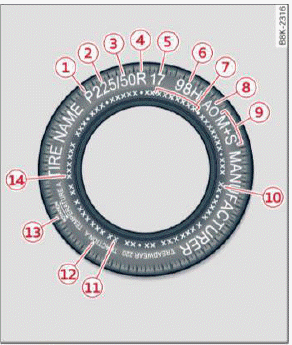
Fig. 188 Tire designations on the sidewall
- Tires for passenger vehicles (if applicable)
P indicates a tire for a passenger vehicle. T indicates a tire designated for temporary use.
- Nominal width
Nominal width of the tire between the sidewalls in millimeters.
In general: the larger the number, the wider the tire.
- Aspect ratio
Height/width ratio expressed as a percentage.
- Tire construction
R indicates a radial tire.
- Rim diameter
Size of the rim diameter in inches.
- Load index and speed rating
The load index indicates the tire's load-carrying capacity.
The speed rating indicates the maximum permitted speed  in Winter tires.
"EXTRA LOAD", "xl" or "RF" indicates that the tire is reinforced or is an Extra Load tire.
P - up to 150 km/h
Q - up to 160 km/h
R - up to 170 km/h
S - up to 180 km/h
T - up to 190 km/h
U - up to 200 km/h
H - up to 210 km/h
V - up to 240 km/ha)
Z - above 240 km/ha)
W - up to 270 km/ha)
Y - up to 300 km/ha)
a) For tires above 240 km/h, tire manufacturers sometimes use the code "ZR" .
- US DOT number (TIN) and manufacture date
The manufacture date is listed on the tire sidewall (it may only appear on the inner side of the tire):
DOT ... 2216 ...
means, for example, that the tire was produced in the 22nd week of the year 2016.
- Audi Original Tires
Audi Original equipment tires with the designation "AO" have been specially matched to your Audi. When used correctly, these tires meet the highest standards for safety and handling. An authorized Audi dealer or authorized Audi Service Facility will be able to provide you with more information.
- Mud and snow capability
"M/S" or "M+S" indicates the tire is suitable for driving on mud and snow.  indicates a winter tire.
- Composition of the tire cord and materials
The number of plies indicates the number of rubberized fabric layers in the tire. In general: the more layers, the more weight a tire can carry. Tire manufacturers must also specify the materials used in the tire. These include steel, nylon, polyester and other materials.
- Maximum permitted load
This number indicates the maximum load in kilograms and pounds that the tire can carry.
- Uniform tire quality grade standards for treadwear, traction and temperature resistance
Tread wear, traction and temperature ranges.
- Running direction
The arrows indicate the running direction of unidirectional tires.
You must always follow the specified running direction.
- Maximum permitted inflation pressure
This number indicates the maximum pressure to which a tire can be inflated under normal operating conditions.