Infants and Young Children
Everyone in a vehicle needs protection! This includes infants and all other children. Neither the distance traveled nor the age and size of the traveler changes the need, for everyone, to use safety restraints. In fact, the law in every state in the United States and in every Canadian province says children up to some age must be restrained while in a vehicle.
Airbags plus lap—shoulder belts offer protection for adults and older children, but not for young children and infants. Neither the vehicle's safety belt system nor its airbag system is designed for them. Every time infants and young children ride in vehicles, they should have the protection provided by appropriate child restraints.
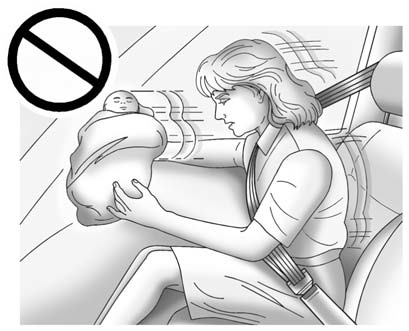
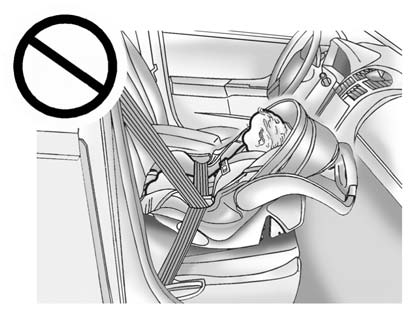
Children who are not restrained properly can strike other people, or can be thrown out of the vehicle.
Q: What are the different types of add-on child restraints? A: Add-on child restraints, which are purchased by the vehicle owner, are available in four basic types. Selection of a particular restraint should take into consideration not only the child's weight, height, and age but also whether or not the restraint will be compatible with the motor vehicle in which it will be used.
For most basic types of child restraints, there are many different models available.
When purchasing a child restraint, be sure it is designed to be used in a motor vehicle.
If it is, the restraint will have a label saying that it meets federal motor vehicle safety standards.
The restraint manufacturer's instructions that come with the restraint state the weight and height limitations for a particular child restraint. In addition, there are many kinds of restraints available for children with special needs.
Test yourself
A quick Cadillac SRX quiz: every answer comes with an explanation and a link to the manual page.