Automatic Transmission
The shift lever is located on the center console between the front seats.
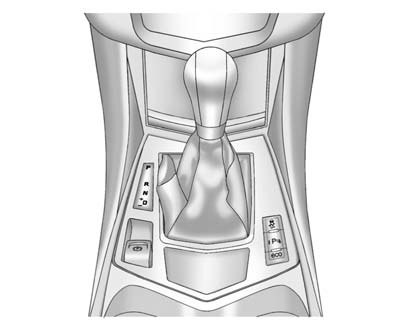
There are several different positions for the shift lever.
P (Park): This position locks the front wheels. It is the best position to use when you start the engine because the vehicle cannot move easily.
Do not leave the vehicle when the engine is running unless you have to. If you have left the engine running, the vehicle can move suddenly. You or others could be injured. To be sure the vehicle will not move, even when you are on fairly level ground, always set the parking brake and move the shift lever to P (Park).
See Shifting Into Park. If you are pulling a trailer, see Driving Characteristics and Towing Tips.
Make sure the shift lever is fully in P (Park) before starting the engine.
The vehicle has an automatic transmission shift lock control system. You must fully apply the regular brakes first and then press the shift lever button before you can shift from P (Park) when the ignition is in ON/RUN. If you cannot shift out of P (Park), ease pressure on the shift lever and push the shift lever all the way into P (Park) as you maintain brake application.
Then press the shift lever button and move the shift lever into another gear. See Shifting out of Park.
Notice: Shifting to R (Reverse) while the vehicle is moving forward could damage the transmission. The repairs would not be covered by the vehicle warranty. Shift to R (Reverse) only after the vehicle is stopped.
R (Reverse): Use this gear to back up.
At low vehicle speeds, R (Reverse) can be used to rock the vehicle back and forth to get out of snow, ice, or sand without damaging your transmission. See If the Vehicle Is Stuck for additional information.
N (Neutral): In this position, the engine does not connect with the wheels. To restart when the vehicle is already moving, use N (Neutral) only. You can also use N (Neutral) when the vehicle is being towed.
D (Drive): This position is for normal driving. It provides the best fuel economy. If you need more power for passing, and you are:
- Going less than 55 km/h, push the accelerator pedal about halfway down.
- Going about 55 km/h or more, push the accelerator all the way down.
The transmission will shift down to a lower gear and have more power.
Downshifting the transmission in slippery road conditions could result in skidding, see “Skidding” under Loss of Control
Notice: Spinning the tires or holding the vehicle in one place on a hill using only the accelerator pedal may damage the transmission. If you are stuck, do not spin the tires.
When stopping on a hill, use the brakes to hold the vehicle in place.
Test yourself
A quick Cadillac SRX quiz: every answer comes with an explanation and a link to the manual page.