Towing the Vehicle
GM recommends a car carrier for transporting a disabled vehicle. Use ramps to help reduce approach angles, if necessary. The towed vehicle must have the drive wheels off the ground. Contact roadside assistance or a professional towing service if a disabled vehicle must be towed.
The vehicle is equipped with a tow eye. Use the tow eye only to tow the vehicle onto a car carrier on a level road surface. Do not use the tow eye to pull the vehicle out of snow, mud, or sand.
The tow eye is stored underneath the floor of the cargo area, near the spare tire or compressor kit, if equipped.
Front Tow Eye
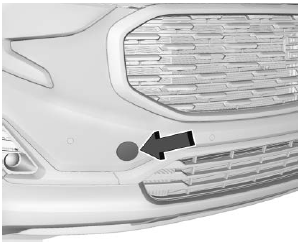
Carefully open the cover using the small notch that hides the front tow eye.
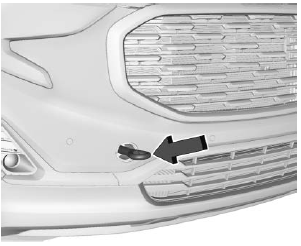
Install the tow eye into the socket, turning it until it stops.
When the tow eye is removed, install the cover with the notch facing inward to the original position.
Rear Tow Eye
If the vehicle is equipped with a trailer hitch, there is no provision to use a tow eye at the rear of the vehicle. The hitch may be used to load the vehicle onto a car carrier truck.
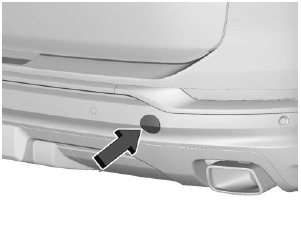
If equipped, carefully open the cover using the small notch that hides the rear tow eye.
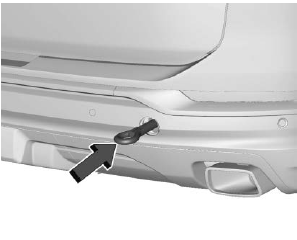
Install the tow eye into the socket, turning it until it stops.
When the tow eye is removed, install the cover with the notch facing inward to the original position.
For towing the vehicle behind another recreational vehicle, such as a motorhome, see Recreational Vehicle Towing.
Test yourself
A quick GMC Terrain quiz: every answer comes with an explanation and a link to the manual page.