Safe Exit Warning (SEW)
Contents:
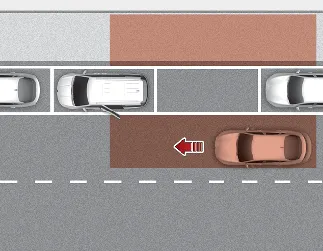
Safe Exit Warning (SEW) in the Kia Seltos is designed to help protect occupants when the vehicle is stopped. If an approaching vehicle from the rear area is detected as a passenger opens a door, SEW may warn the driver with a warning message and an audible alert to help reduce the risk of a collision.

CAUTION
The warning timing may vary depending on the speed of the approaching vehicle and the surrounding traffic conditions.
Detecting sensor

[1]: Rear corner radar
Refer to the image above for the detailed location of the detecting sensors used by Safe Exit Warning.

NOTICE
For more details about rear corner radar precautions, refer to More Details. Keeping the rear bumper and radar area clean and free from damage helps support proper SEW operation.
SEW settings ➤
SEW operation ➤
SEW malfunction and limitations ➤
Limitations of SEW
Safe Exit Warning may not operate normally, or it may operate unexpectedly, under the following conditions:
When exiting the vehicle near overgrown trees, bushes, grass, or other roadside objects.
When leaving the Kia Seltos while the road surface is wet.
When an approaching vehicle is moving very fast or very slowly.

CAUTION
For more details about the limitations of the rear corner radar, refer to More Details.

WARNING
SEW may not operate normally if it is affected by strong electromagnetic waves.
SEW may not operate for approximately 3 seconds after the Kia Seltos is started or while the rear corner radars are initializing.
This device complies with Part 15 of the FCC rules.
Operation is subject to the following two conditions:
This device may not cause harmful interference, and
This device must accept any interference received, including interference that may cause undesired operation.