If and when
Changing a blown fuse
In this manual: If and when
~1min read
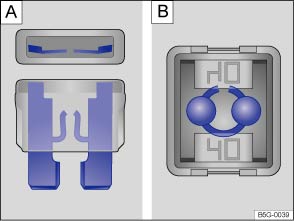
Fig. 232 Blown fuse: A: flat blade fuse, B: JCASE® fuse
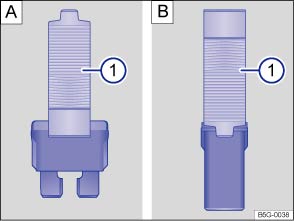
Fig. 233 Remove or insert fuse with plastic pliers: A. flat blade fuse, B. JCASE® fuse
 First read and observe the introductory information and safety warnings
Preparation
- Switch off the ignition, the lights and all electrical consumers.
- Open the appropriate fuse box.
Detecting a blown fuse
- Shine a torch onto the fuse. This will help you to spot the blown fuse more easily.
- A blown flat blade fuse (ATO®, MINI®) can be recognised from the top and side through the transparent housing surrounding the melted metal strips A.
- A blown JCASE® fuse can be recognised from the top through the transparent housing B.
Changing a fuse
In some vehicles, a pair of plastic pliers for removing fuses is located on the inside of the cover of the fuse box in the engine compartment.
- Open the fuse box cover in the engine compartment and remove the plastic pliers.
- Push the plastic pliers suitable to the fuse design A ① or B ① onto the fuse from the side.
- Lift the fuse up and out.
- If the fuse has blown, replace it with a new fuse of the same amp rating (same colour and same markings) and same size .
- Once the new fuse is inserted, clip the plastic pliers into the holder on the inside of the fuse box cover.
- Fit the fuse box cover.

 NOTICE
You can damage another position in the electrical system by using a fuse with a higher amp rating.Test yourself
A quick Volkswagen Golf quiz: every answer comes with an explanation and a link to the manual page.
Was this page helpful?