Adjusting front and rear head restraints
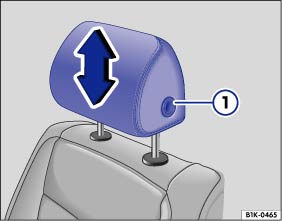
Fig. 44 Adjusting the front head restraints.
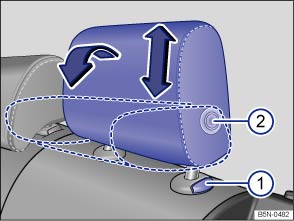
Fig. 45 Adjusting or folding the rear head restraints.
 Read and follow the introductory information and safety information first⇒
 Introduction to the subject
All seats are equipped with head restraints. The rear center head restraint is designed only for the center seat on the rear bench. Therefore, only install the center head restraint in the center position.
There are notches in the head restraint guide rods so that the head restraint can lock into place. Only properly installed head restraints can lock into place at the adjustment range notches. In order to prevent inadvertent removal of the head restraints after installation, there are stops at the top and bottom of the adjustment range.
Adjusting the height
- Push the head restraint up in the direction of the arrow or down when the button ⇒ Fig. 44① or ⇒ Fig. 45① is pressed ⇒ .
- The head restraint must lock securely in the position selected.
Folding the outer rear head restraints down
- With the ⇒ Fig. 45② button pressed, fold the head restraint forward and down ⇒ .
- To use the seating area, fold the head restraint back up until it locks in place.
Proper head restraint adjustment
Adjust head restraints so that the upper edge of the head restraint is at least at eye level or higher. Position the back of the head as close as possible to the head restraint.
Adjusting the head restraint for short people
Push the head restraint down as far as it will go, even if this means the person's head is still below the top edge of the head restraint. A small gap may remain between the head restraint and the backrest when the head restraint is all the way down.
Adjusting the head restraint for tall people
Pull the head restraint up as far as it will go.
 Driving without head restraints or with improperly adjusted head restraints increases the risk of serious injuries in a collision.
- Always drive with the head restraints in place and properly adjusted to help minimize the risk of neck injury in crash.
- Every person in the vehicle must have a properly adjusted head restraint to minimize the risk of neck injury in a crash. Each head restraint must be adjusted according to the occupants' size so that the upper edge is even with the top of the person's head, but no lower than eye level. Always sit so that the back of your head is as close as possible to the head restraint.
- Never adjust head restraint while driving.
Test yourself
A quick Volkswagen Tiguan quiz: every answer comes with an explanation and a link to the manual page.