Towing the Vehicle
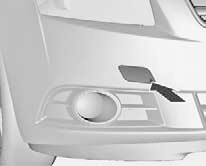
Remove the cover by pressing on the mark and pulling it out of the retainer.
The tow eye is stored in the tool kit.
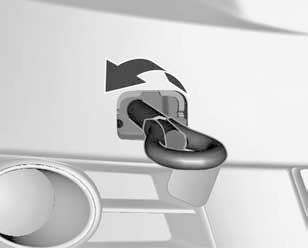
Screw the tow eye in until it stops, with it in the horizontal position.
Attach a tow rope or, preferably, a tow bar to the tow eye.
The tow eye may only be used for towing on the road, not for pulling a stuck vehicle out.
Turn the ignition on to unlock the steering wheel and to allow the brake lights, horn, and windshield wipers to operate.
Place the transmission in neutral.
Start moving slowly.
Avoid jerking. Excessive towing force may damage the vehicle.
With the engine off, much greater force is required to brake and steer.
To prevent exhaust gases from the towing vehicle from entering the cabin, close the windows and turn on the recirculation mode.
Vehicles with automatic transmission: The vehicle must be towed front wheels forward, at a speed not exceeding 80 km/h and for a distance not exceeding 100 km (60 miles). In all other cases, or if the transmission is faulty, the front axle of the vehicle must be lifted off the ground.
Seek assistance from a service station.
After towing is complete, unscrew the tow eye.
Insert the cover from below and snap it into place.
The best way to transport the vehicle is by using a flatbed tow truck.
Test yourself
A quick Chevrolet Cruze quiz: every answer comes with an explanation and a link to the manual page.