Load Limit Information
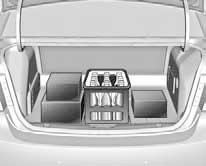
• Place heavy items in the cargo area as close as possible to the seatbacks. Make sure the seatbacks are securely latched. If items can be stacked, place the heavier items on the bottom.
• Secure all items in the cargo area so that they cannot slide.
• When carrying cargo in the cargo area, the rear seatbacks must not be folded forward.
• Luggage must not extend above the top edge of the seatbacks.
• Do not place any items on the cargo cover or on the instrument panel, and do not cover the sensor on the instrument panel.
• Cargo must not interfere with the operation of the pedals, parking brake and gear shift lever, or restrict the driver's freedom of movement. Do not leave loose items in the passenger compartment.
• Driving with the cargo area open is prohibited.
• The payload is calculated as the difference between the gross vehicle weight rating (see the certification label 180) and the curb weight of the vehicle.
To calculate the curb weight of your vehicle, complete the weight table on page 3.
Curb weight includes the weight of the driver (68 kg), luggage (7 kg) and all fluids (fuel tank filled to 90%).
Optional equipment and accessories increase the curb weight of the vehicle.
• When driving with a roof rack, the vehicle's lateral wind stability is reduced, and handling deteriorates due to the higher center of gravity. Distribute the load evenly and secure it properly with cargo straps. Adjust the tire pressure and observe speed limits according to the vehicle load. Check and tighten the cargo fasteners more frequently.
Test yourself
A quick Chevrolet Cruze quiz: every answer comes with an explanation and a link to the manual page.