Older Children
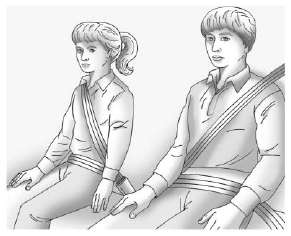
Older children who have outgrown booster seats must wear the vehicle's seat belts.
Follow the booster seat manufacturer's instructions regarding weight and height limits for the booster. Use the booster seat with the lap/shoulder belt until the child passes the following fit test:
- Sit all the way back against the seatback. Do the knees bend comfortably at the edge of the seat? If yes, continue. If no, return to the booster.
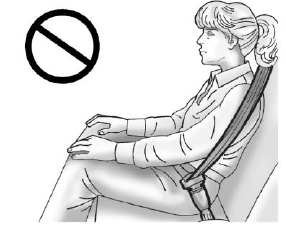
- Position the shoulder belt. Does the shoulder belt rest on the shoulder? If yes, continue. If no, try using a rear seat belt comfort guide, if available. See "Rear Seat Belt Comfort Guides" under Lap/Shoulder Belt. If a comfort guide is not available, or if the shoulder belt still does not rest on the shoulder, return to the booster seat.
- Does the lap belt fit low and snug across the hips, touching the upper thighs? If yes, continue. If no, return to the booster.
- Can the correct seat belt position be maintained for the entire trip? If yes, continue. If no, return to the booster.
Q: What is the correct way to wear seat belts?
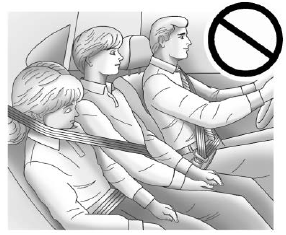
A: An older child should wear the lap/shoulder belt and use the additional restraint the lap/shoulder belt can provide. The shoulder belt must not cross the face or neck. The lap belt must fit low, just touching the upper thighs. This applies belt force to the child's pelvic bones in a crash. It should never be worn over the stomach, which can cause serious or even fatal internal injuries in a crash.
See also "Rear Seat Belt Comfort Guides" under Lap/Shoulder Belt.
According to crash statistics, children are safer when properly restrained in the rear seat.
In a crash, children who are not buckled up can strike other occupants who are buckled up, or can be thrown from the vehicle. Older children must use seat belts properly.
Test yourself
A quick GMC Terrain quiz: every answer comes with an explanation and a link to the manual page.