Blind-Spot Collision-Avoidance Assist malfunction and limitations
Blind-Spot Collision-Avoidance Assist malfunction
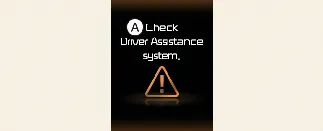
A: Check Driver Assistance system.
If the Blind-Spot Collision-Avoidance Assist (BCA) system in your Kia Carnival encounters an internal fault, a warning message will be displayed on the instrument cluster for several seconds, and the Master warning light ( ) will illuminate. Should this occur, please have the Blind-Spot Collision-Avoidance Assist system inspected by an authorized Kia dealer.
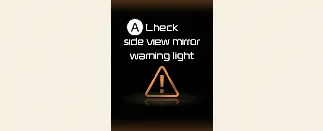
A: Check side-view mirror warning light
If the warning indicators integrated into your outside rear-view (side-view) mirrors are not functioning as expected, a warning message will appear on the cluster, accompanied by the Master warning light ( ). In such a case, it is essential to have your Kia Carnival BCA system inspected by a qualified technician at an authorized Kia dealer to restore full safety functionality.
Blind-Spot Collision-Avoidance Assist disabled
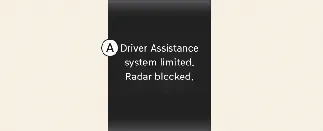
A: Driver Assistance system limited. Radar blocked.
The Blind-Spot Collision-Avoidance Assist system relies on rear corner radar sensors. If the rear bumper area is obstructed by foreign materials—such as thick snow, mud, heavy rain, or if a trailer or carrier is installed—the detection performance may be reduced. Consequently, the Kia Carnival BCA system may be temporarily limited or automatically disabled for safety.
A warning message and the Master warning light ( ) will appear. This notification signifies a temporary environmental restriction rather than a permanent component failure. The system will generally return to normal functionality once the obstructions are removed and your Kia Carnival is restarted.
If the system does not resume normal operation after cleaning the sensors or removing attachments, visit an authorized Kia dealer for a professional diagnosis.
 WARNING
Please note that the absence of a warning message does not guarantee the Blind-Spot Collision-Avoidance Assist is operating perfectly; always remain vigilant while driving your Kia Carnival.
The system may experience delayed activation in environments such as open, featureless terrain where the sensors require more time to calibrate, or if they were obstructed immediately upon starting the vehicle.
 CAUTION
To prevent sensor interference, please turn off the Blind-Spot Collision-Avoidance Assist before installing or removing a trailer, cargo carrier, or any rear-mounted attachment. Reactivate the system once the vehicle is cleared of these items.
 NOTICE
You can verify the current operational status of the Blind-Spot Collision-Avoidance Assist by checking the "Service" or "Utility" information view within your Kia Carnival cluster display window.
Limitations of Blind-Spot Collision-Avoidance Assist
While the Blind-Spot Collision-Avoidance Assist (BCA) system is a sophisticated safety feature for your Kia Carnival, its performance can be compromised or result in unexpected behavior under specific driving environments and physical circumstances, including, but not limited to, the following:
Adverse Weather: Extreme conditions such as heavy snow, torrential rain, or thick fog can obscure radar signals.
Sensor Obstruction: Detection performance decreases if the rear corner radar sensors are covered with snow, mud, road salt, or dirt.
Temperature Extremes: The detection sensors may face operational challenges if the ambient temperature is outside the optimal operating range.
Physical Proximity: Signals may be blocked or distorted when your Kia Carnival is driving in close proximity to solid walls, tunnels, or large concrete pillars.
Road Infrastructure: Navigating through highway ramps, tollgates, or areas with metallic underground construction may trigger false detections.
Fixed Roadside Objects: Objects such as sound barriers, guardrails, central dividers, streetlights, and signage can sometimes be misinterpreted by the Kia Carnival radar system.
Foliage and Open Spaces: Driving on narrow roads with dense overhanging vegetation or in expansive, empty areas with minimal structures can occasionally lead to sensor irregularities.
Road Surface Conditions: Driving on wet or icy roads may impact radar wave reflection and system responsiveness.
High-Speed Dynamics: Fast-approaching vehicles, or instances where you pass another vehicle at high speeds, may not provide the BCA system enough time to issue a warning.
Lane Maneuvers: Simultaneous acceleration with a neighboring vehicle, lane changes, or vehicles moving across multiple lanes can create complex scenarios for the radar sensors.
Aftermarket Attachments: Installing trailers, bike racks, or applying bumper stickers and films near the radar sensors can create "blind spots" in the sensor's vision.
Physical Damage: Impacts to the rear bumper that knock the radar sensors out of alignment or cause structural damage will prevent the system from operating accurately.
Vehicle Geometry: Heavy loads, uneven tire pressure, or non-standard suspension heights can alter the sensor's intended angle of detection.
Target Variations: The system may struggle to consistently identify specific targets such as motorcyclists, bicyclists, flat-bed trailers, large buses, low-profile sports cars, or small moving objects like pedestrians, shopping carts, and strollers.
Always maintain high situational awareness. Automated braking control functionality in your Kia Carnival may be restricted or ineffective under the following conditions:
Driving on rough, uneven terrain or potholes that cause severe vehicle vibration.
Traveling on slippery surfaces, including snow, slush, or ice, where tire traction is significantly reduced.
Operating the vehicle with low or damaged tire pressure.
If the original braking system of your Kia Carnival has been modified or tampered with.
During abrupt, emergency steering maneuvers.
 WARNING
Curved Roads: Driving on sharp curves can limit the detection range of the sensors, as the radar may have difficulty "seeing" around the bend compared to driving on a straight path.
Final Note: Always remember that the Blind-Spot Collision-Avoidance Assist is a driver assistance feature and does not replace the need for an attentive, responsible driver checking their mirrors and blind spots manually.
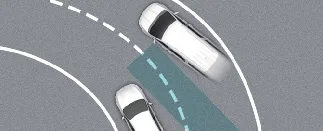
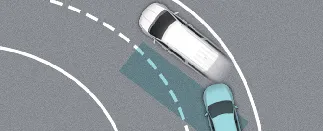
Driving on curved roads: The Blind-Spot Collision-Avoidance Assist (BCA) system in your Kia Carnival may not operate properly or might experience difficulties in detecting vehicles in the adjacent lane when navigating sharp curves. The curvature of the road can affect the sensor's field of view, potentially causing the system to miss approaching vehicles. Always pay close attention to road geometry and maintain active vigilance while driving.
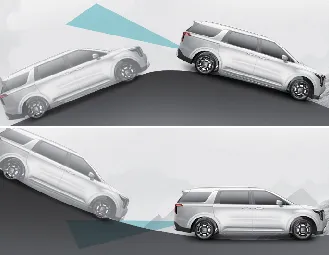
Driving on inclined or uneven roads: When driving your Kia Carnival on slopes or inclined surfaces, the Blind-Spot Collision-Avoidance Assist may not function optimally. The system may fail to correctly distinguish between a vehicle in the next lane and the road surface or nearby structures due to the change in vehicle pitch. Always prioritize manual observation of your surroundings in these conditions.
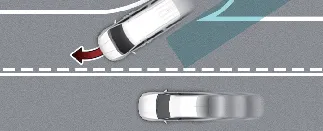
Merging and dividing roads: In areas where lanes merge or divide, the Kia Carnival BCA system may struggle to consistently detect vehicles in the adjacent lane due to the complex and shifting road patterns. Frequent manual checks are necessary when merging into heavy traffic to compensate for these system limitations.
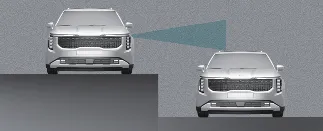
Roads with varying heights: When driving in areas where lanes are at different elevations—such as at underpass junctions, grade-separated intersections, or split-level highways—the Kia Carnival Blind-Spot Collision-Avoidance Assist may not detect vehicles correctly. The elevation difference can effectively hide neighboring vehicles from the rear corner radar's line of sight. Please remain focused and exercise extra caution in these complex traffic environments.
 WARNING
Towing: For the safety of your Kia Carnival and other road users, you must turn off the Blind-Spot Collision-Avoidance Assist whenever you are towing a trailer, a caravan, or another vehicle. Active assistance features may interact improperly with the towed load.
Electromagnetic Interference: High-intensity electromagnetic fields or waves (such as those near industrial sites or large broadcasting transmitters) may interfere with the Kia Carnival sensor systems, potentially causing the BCA to behave unexpectedly or become temporarily unavailable.
Initialization Delay: Please be aware that the Blind-Spot Collision-Avoidance Assist may not provide immediate protection upon startup. The system typically requires approximately 3 seconds to fully initialize the front-view camera and rear corner radar sensors after the vehicle is started.
This device complies with Part 15 of the FCC rules.
Operation is subject to the following two conditions:
This device may not cause harmful interference, and
This device must accept any interference received, including interference that may cause undesired operation.
More Kia Carnival reference pages
Kia Carnival (KA4) 2022-2026 Owner's Manual: Highway Driving Assist (HDA) (if equipped)
Highway Driving Assist Highway Driving Assist (HDA) in your Kia Carnival is designed to reduce driver fatigue on long trips. It detects lane markings and vehicles ahead to help maintain a safe following distance, hold your set speed, and keep your Kia Carnival centered in its lane while driving on highways. Highway Lane Change Assist (if equipped) When the Highway Lane Change Assist feature is active, it can assist you in changing lanes.
Kia Carnival (KA4) 2022-2026 Owner's Manual: Forward/Side/Reverse Parking Distance Warning (PDW) (if equipped)
The Forward/Side/Reverse Parking Distance Warning (PDW) system in your Kia Carnival utilizes a comprehensive array of front, side, and rear ultrasonic sensors. This advanced system is designed to detect and alert you if pedestrians, animals, or various objects are within a specified distance, ensuring safety whether your Kia Carnival is at a complete stop or maneuvering at low speeds.