Brake Fluid
Inspection
BRAKE FLUID LEVEL
Check that the brake fluid level in the reservoir tank is within the standard (between MAX − MIN lines).
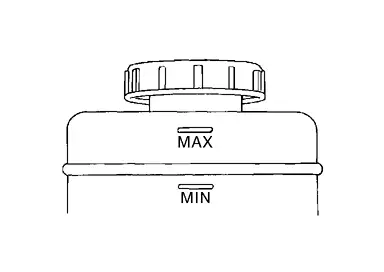
Visually check for any brake fluid leakage around the reservoir tank.
Check the brake system for any leakage if the fluid level is extremely low (lower than MIN).
Check the brake system for fluid leakage if the warning lamp remains illuminated even after the parking brake is released.
Check the reservoir tank for the mixing of foreign matter (e.g. dust) and oils other than brake fluid.
BRAKE LINE
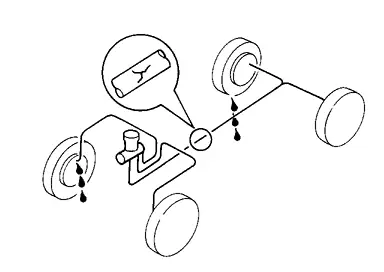
Check brake line (tubes and hoses) for cracks, deterioration or other damage. Replace any damaged parts.
Depress the brake pedal with a force of 785 N (80 kg, 176 lb) and hold down the pedal for approximately 5 seconds with the engine running. Check for any fluid leakage.
Draining
IN CASE REPLACING OR REMOVING AND INSTALLING ELECTRICAL BRAKE CONTROL UNIT
Regarding brake fluid draining, refer to Work Procedure.
IN CASE NOT REPLACING OR REMOVING AND INSTALLING ELECTRICAL BRAKE CONTROL UNIT
Connect a vinyl tube to the bleed valve.
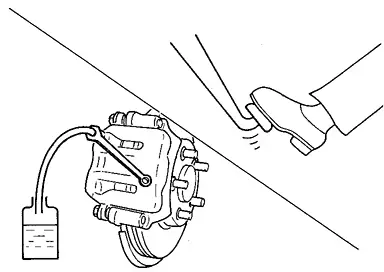
Depress the brake pedal and loosen the bleeder valve to gradually discharge brake fluid.
Refilling
IN CASE REPLACING OR REMOVING AND INSTALLING ELECTRICAL BRAKE CONTROL UNIT
Regarding brake fluid draining, refer to Work Procedure.
IN CASE NOT REPLACING OR REMOVING AND INSTALLING ELECTRICAL BRAKE CONTROL UNIT
Check that there is no foreign material in the reservoir tank, and refill with new brake fluid.
Perform the air bleeding. Refer to Work Procedure.
Bleeding Brake System
Regarding brake fluid bleeding, refer to Work Procedure.