Periodic Maintenance. Engine Coolant
CHECKING COOLING SYSTEM HOSES
Check hoses for the following:
Improper attachment
Leaks
Cracks
Dents
Bulges
Internal obstruction
Damage
Loose connections
Chafing
Deterioration
CHECKING RESERVOIR LEVEL
Check if the reservoir tank coolant level is within MIN to MAX when the engine is cool.
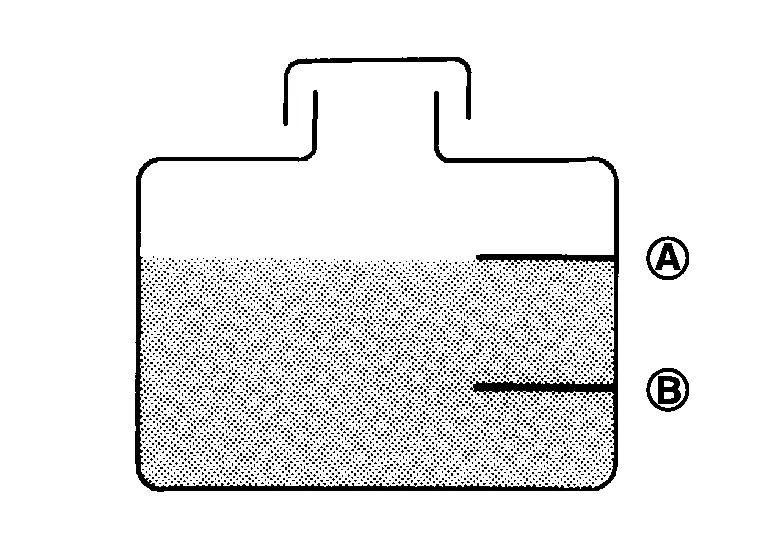
| (A) | : MAX |
| (B) | : MIN |
Adjust coolant level (if necessary), to ensure that the engine coolant level is within the MIN to MAX range.
CHECKING COOLING SYSTEM FOR LEAKS
To check the cooling system for leaks, apply pressure to the cooling system using Tools (A), (B), (C) and (D).
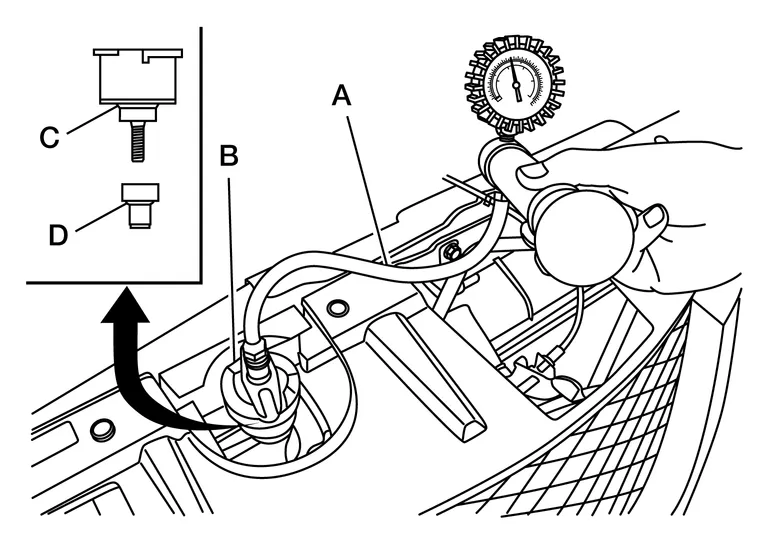
| Tool number (A) | : — (J-51771-5) |
| Tool number (B) | : — (J-51771-9) |
| Tool number (C) | : — (J-51771-1) |
| Tool number (D) | : — (J-51771-4) |
| Leakage test pressure | : Refer to Radiator. |
CHECKING RADIATOR CAP
Check the pressure valve of the radiator cap.
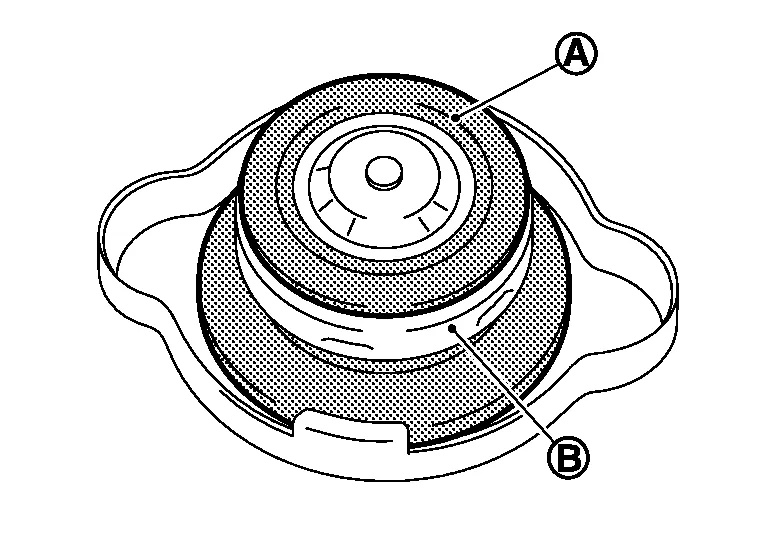
Replace the radiator cap if the metal plunger (B) on the pressure valve cannot be seen around the edge of the rubber gasket (A).
Replace the radiator cap if there is damage or deposits of foreign material on the rubber gasket or pressure valve.
Check the negative-pressure valve of the radiator cap.
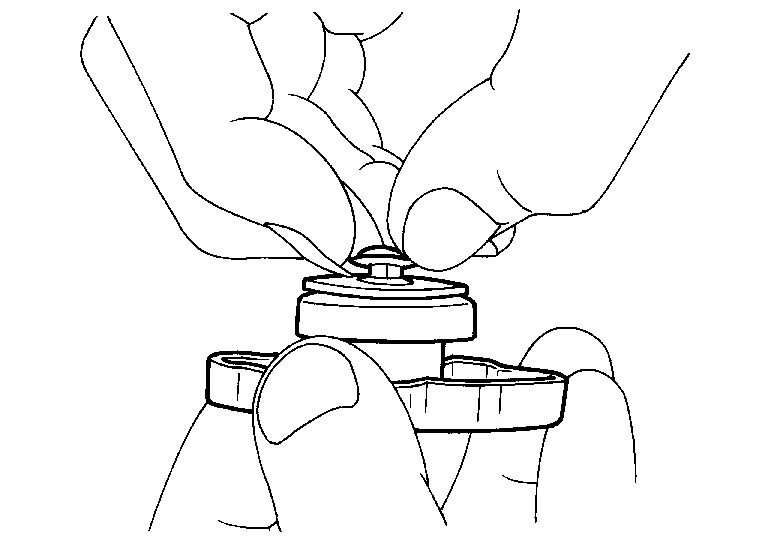
Replace the radiator cap if the negative-pressure valve does not close completely when pulled open and released.
Replace the radiator cap if there is damage or deposits of foreign material on the valve seat of the negative-pressure valve.
Replace the radiator cap if there is an abnormality in the operation of the negative-pressure valve.
Check radiator cap relief pressure.
Check the radiator cap relief pressure using Tools (A) and (B), and suitable tool (C).
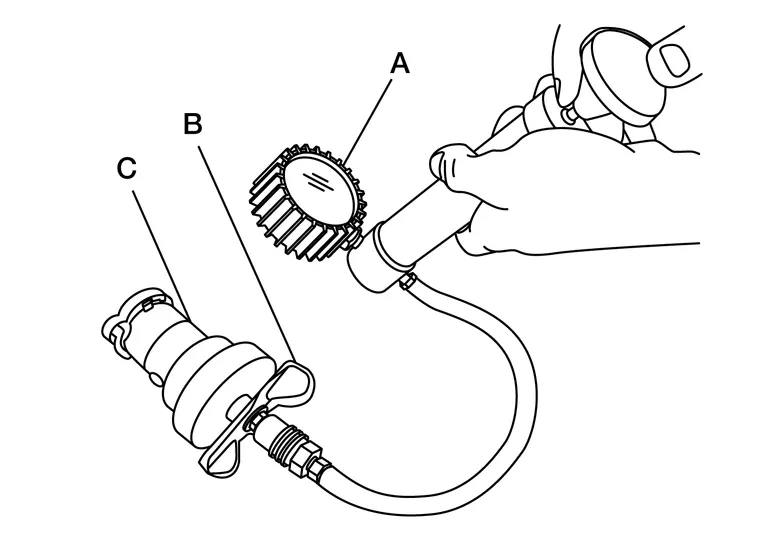
Tool number (A) : — (J-51771-5) Tool number (B) : — (J-51771-9) Tool number (C)
(commercially available): — (J-33984-A or equivalent) Radiator cap relief
pressure: Refer to Radiator. When connecting the radiator cap to suitable tool (C), apply water or coolant to the radiator cap seal surface.
Replace the radiator cap if the radiator cap relief pressure is outside of specification.
CHECKING RADIATOR
Check radiator for mud or clogging. If necessary, clean radiator as follows:
Spray water to the back side of the radiator core using a side-to-side motion from the top down.
Stop spraying when debris no longer flows from radiator core.
Blow air into the back side of radiator core using a side-to-side motion from the top down.
Use compressed air lower than 490 kPa (5 kg/cm2, 71 psi) and keep a distance of more than 30 cm (11.8 in).
Continue to blow air until no water sprays out.
Check for coolant leaks. Repair as necessary.
DRAINING ENGINE COOLANT
Remove the front under cover. Refer to Removal and Installation.
Open the radiator drain plug at the bottom of the radiator and remove the radiator filler cap. This is the only step required when partially draining the cooling system (radiator only).
Follow this step for heater core removal/replacement only. Disconnect the upper heater hose at the engine side and apply moderate air pressure [103.46 kPa (1.055 kg/cm2, 15 psi) maximum air pressure] into the hose for 30 seconds to blow the excess coolant out of the heater core.
When draining all of the coolant in the system, remove the reservoir tank and drain the coolant then clean the reservoir tank before installation.
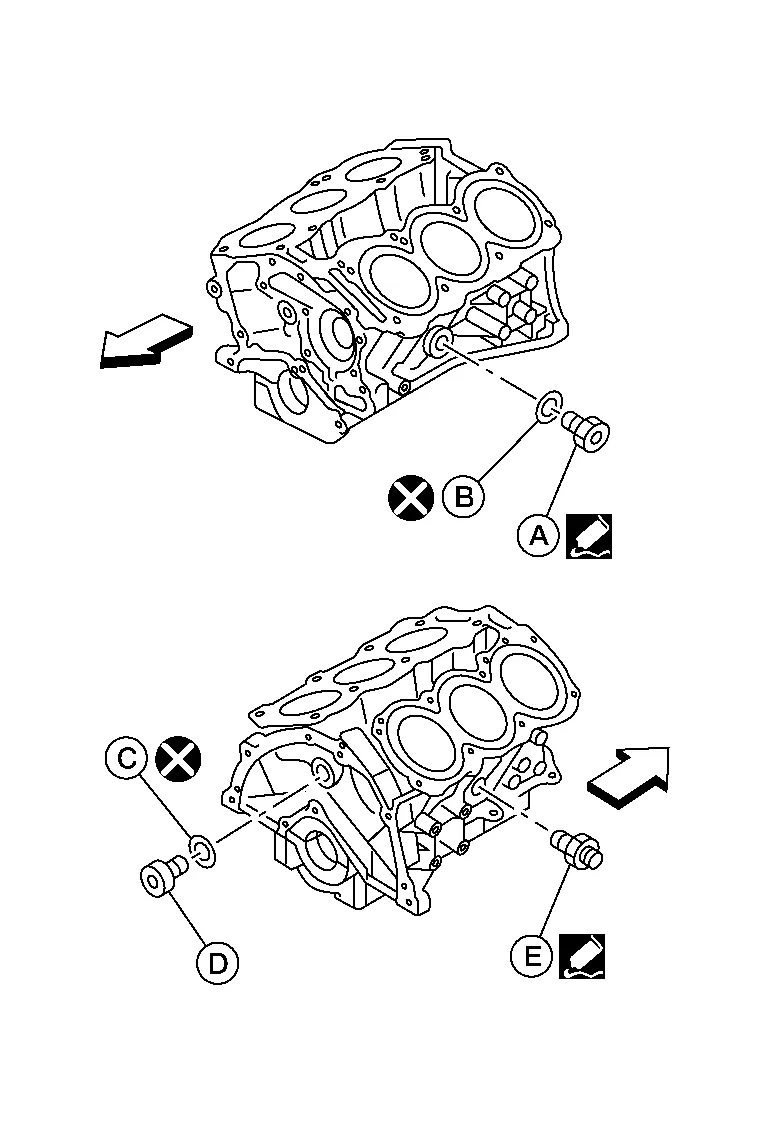
When performing a complete cooling system drain, remove the water drain plug (A) and (D), connector bolt (E) from the cylinder block.
 |
: Engine front |
Check the drained coolant for contaminants, such as rust, corrosion or discoloration.
If the coolant is contaminated, flush the engine cooling system.
REFILLING ENGINE COOLANT
Install the following, if removed:
Cylinder block drain plugs, refer to Exploded View.
Reservoir tank, refer to Exploded View.
Cooling system hoses, refer to Exploded View.
Radiator drain plug, refer to Exploded View.
Set the Nissan Murano vehicle heater controls to the full HOT and heater ON positions. Turn the vehicle ignition ON with the engine OFF as necessary to activate the heater mode.
Fill the cooling system with engine coolant using Tool (A), following the manufacturer’s instructions included with the tool.
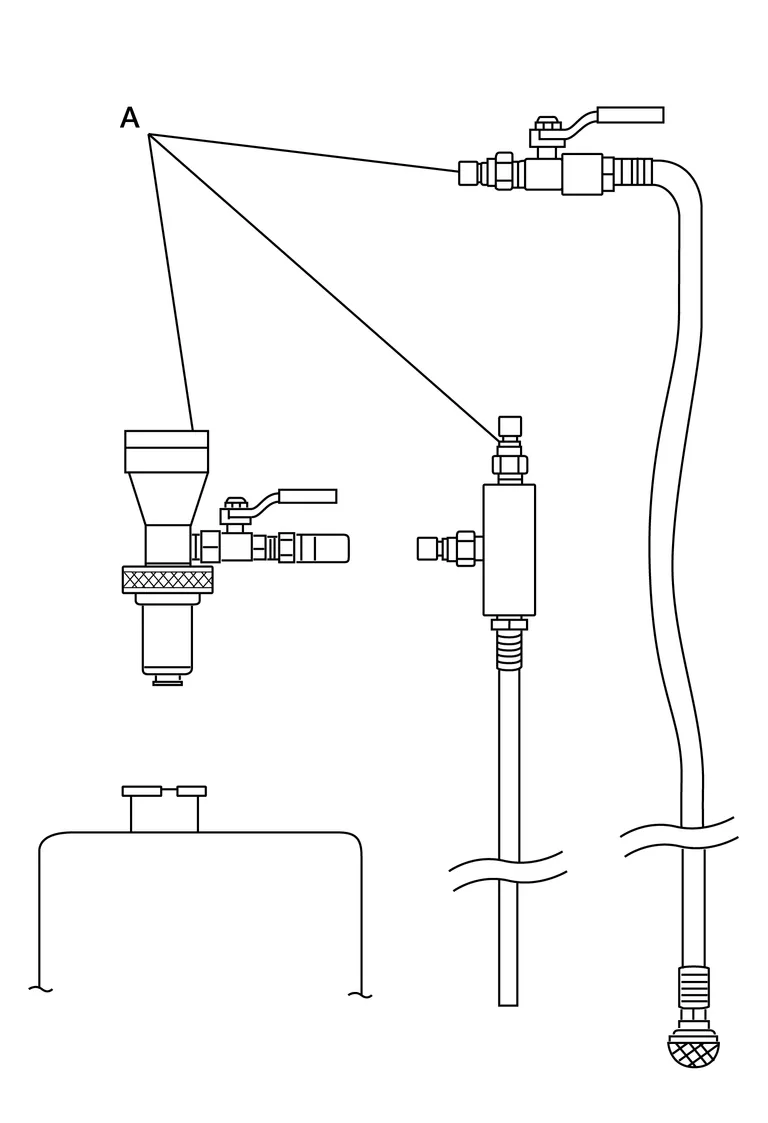
| Tool number (A) | : KV991J0070 (J-45695-A) |
| Engine Coolant | : Refer to Fluids and Lubricants. |
Remove the Tool (A) and top off the cooling system with engine coolant as necessary.
Install the radiator cap and reservoir tank cap.
Run the engine until it reaches normal operating temperature.
Stop the engine and allow it to cool.
Check the engine coolant level and adjust if necessary.
Install the front under cover. Refer to Removal and Installation.
FLUSHING COOLING SYSTEM
Fill the radiator from the filler neck above the radiator upper hose and reservoir tank with clean water and reinstall radiator filler cap.
Run the engine until it reaches normal operating temperature.
Rev the engine two or three times under no-load.
Stop the engine and wait until it cools down.
Drain the water from the system.
Repeat steps 1-5 until clear water begins to drain from the radiator.