Sealers - Description and Operation
| Item | Specification |
|---|---|
| Clear Silicone Rubber TA-32 | ESB-M4G92-A |
| Roof Ditch Sealer TA-15 | — |
| Seam Sealer TA-2 | — |
 WARNING: Always
refer to Material Safety Data Sheet (MSDS) when handling chemicals and wear protective equipment as directed. Examples may include but are not limited to respirators and chemically resistant gloves. Failure to follow these instructions may result in serious personal injury.
The correct sealing of joints is essential to repairing the vehicle correctly. Sealers are used to prevent wind noise, water leaks, exhaust fumes and dust from entering the vehicle. They also provide anti-corrosion barriers. Sealers are applied to areas such as door and rear compartment hem flanges, wheelhouse, quarter outer, floor, cowl, roof and other panel-to-panel attaching points. The following joint sealers are recommended for use depending upon the application:
- Brushable Seam Sealer — A sealer intended to restore the original brushed seam appearance. It is used to seal lap joints in sheet metal that are spot welded (for example, floorpans and cowls).
- Roof Ditch Sealer — A self-leveling sealer used for drip rails, roof seams, quarter panels to rear deck and for water leaks.
- Seam Sealer — Heavy-bodied, non-sag adhesive/sealer for use on standing cosmetic seams, truck bed seams, tooled door skin seams and floor pans.
- Clear Silicone Rubber — Used for sealing water leaks, noise concerns, remounting trim and repairing torn weatherstripping.
Sealers should remain flexible after curing and must be paintable. Follow the manufacturer's directions for correct application of these materials.
Any damage to originally sealed joints should be repaired by resealing. Along with attaching points of new panels, open joints that require bridging of sealer to close a gap should be sealed using a heavy-bodied sealer.
Decklid NOTICE: Sealer is not applied to the over-hem flanges of the service replacement decklids and must be applied when replacement is carried out to prevent corrosion of this area.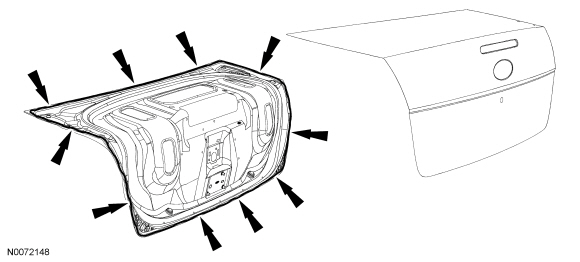
Test yourself
A quick Ford Focus quiz: every answer comes with an explanation and a link to the manual page.