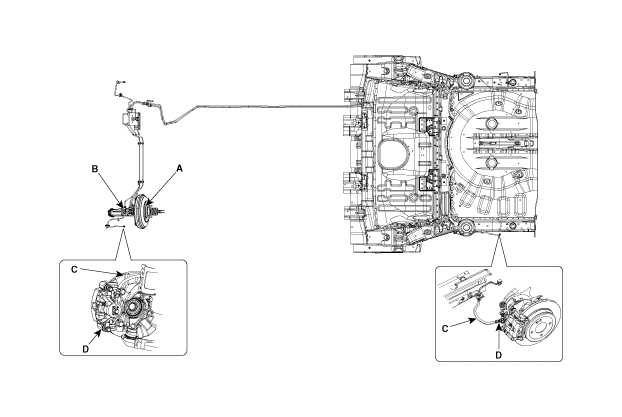
Check brake operation during a road test. If there is a malfunction, inspect the brake booster. Replace the brake booster assembly if it is faulty or if there are signs of leakage.
Inspection of Piston Cup and Pressure Cup (B)
Check brake operation by applying the brakes. Visually inspect for any damage or signs of fluid leakage. Replace the entire master cylinder if the pedal does not operate correctly or if there is any damage or signs of fluid leakage.
Compare brake pedal travel when the brakes are applied suddenly and slowly. Replace the master cylinder if the travel changes.
Brake Hoses (C)
Visually inspect for damage or signs of fluid leakage. Replace the brake hose with a new one if it is damaged or leaking.
Caliper Piston Seal and Piston Boot (D)
Check brake operation by applying the brakes. Visually inspect for damage or signs of fluid leakage. If the pedal does not operate properly, if the brakes drag, or if you notice signs of damage or fluid leakage, disassemble and inspect the caliper. Each time the brake caliper is disassembled, replace the boots and seals with new ones.
BRAKE SYSTEM BLEEDING
Make sure the brake fluid level in the reservoir is at the MAX (upper) level.
Have another person slowly depress the brake pedal several times: once, then press and hold.
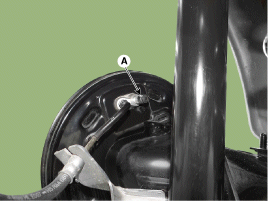
Loosen the right rear brake bleeder screw (A) to release system air. Then tighten the screw securely. (Before)[Rear Drum Brake Type][Rear Disc Brake Type]
Repeat the procedure described above for each wheel in the order indicated below until no air bubbles remain in the fluid.
Fill the brake master cylinder reservoir to the MAX level line.
?
Test yourself
A quick Hyundai i20 quiz: every answer comes with an explanation and a link to the manual page.