Gauges and Meters
Speedometer
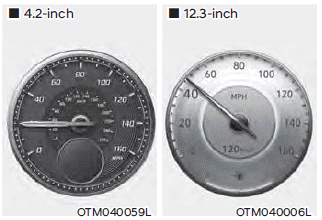
The speedometer shows vehicle speed and is calibrated in miles per hour (MPH) and/or kilometers per hour (km/h).
Tachometer
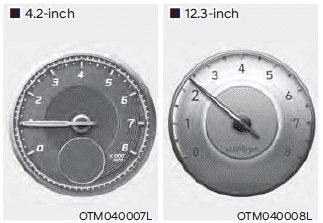
The tachometer shows the approximate engine speed in revolutions per minute (rpm).
Use the tachometer to select the correct shift points and to prevent wheel spin and/or over-revving the engine.
NOTICE
Do not operate the engine in the RED ZONE of the tachometer. Doing so may cause serious engine damage.
Engine Coolant Temperature Gauge
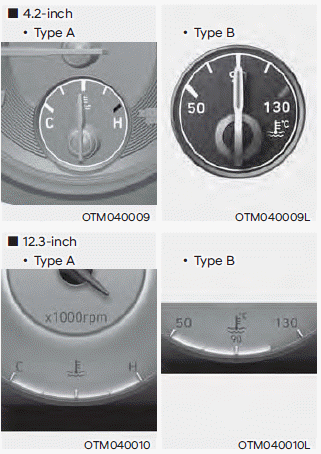
This gauge shows the engine coolant temperature when the ignition switch is in the ON position.
NOTICE
If the gauge pointer moves beyond the normal range toward the "H (Hot)" mark or 130 inches, it indicates overheating, which may damage the engine.
Do not continue driving with an overheated engine. If your vehicle overheats, refer to the "If the Engine Overheats" section in Chapter 8.
WARNING
Never remove the engine coolant reservoir cap when the engine is hot. Engine coolant is under pressure and may cause serious burns. Wait until the engine has cooled before adding coolant to the reservoir.
Fuel Gauge
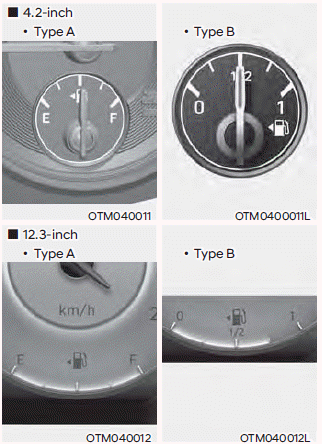
This gauge shows the approximate amount of fuel remaining in the fuel tank.
Information
- Refer to Chapter 2 for the fuel tank capacity.
- The fuel gauge is supplemented by the low fuel warning light, which illuminates when the fuel tank is nearly empty.
- On hills or curves, the fuel gauge pointer may fluctuate, or the low fuel warning light may come on earlier than usual due to fuel movement in the tank.
WARNING
Running out of fuel may endanger the vehicle occupants.
You should stop and obtain additional fuel as soon as possible after the warning light illuminates or when the fuel gauge needle approaches the "E" (Empty) or "0" mark.
NOTICE
Avoid driving with very low fuel. Running out of fuel may cause engine misfires, damaging the catalytic converter.
Outside Air Temperature Gauge
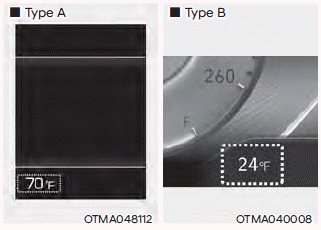
This gauge shows the current outside air temperature to the nearest 1°F (1°C).
Note that the temperature displayed on the LCD may not change as quickly as the outside temperature (there may be a slight delay before the temperature changes).
You can change the temperature unit in the "Settings" menu of the cluster. Select:
- Settings - Unit - Temperature Unit - °F/°C
For vehicles equipped with automatic climate control, you can also:
- Press the AUTO button while holding the OFF button on the climate control unit for 3 seconds.
The temperature unit on both the cluster LCD and the climate control display will change.
Odometer
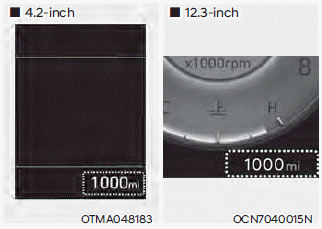
The odometer shows the total distance the vehicle has traveled and should be used to determine when periodic maintenance is due.
Distance to Empty
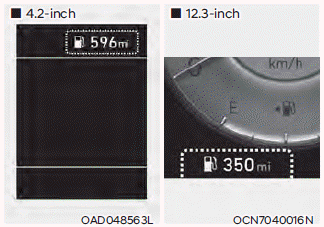
- Distance to Empty is the estimated distance the vehicle can travel on the remaining fuel.
- If the estimated distance is less than 1 mile (1 km), the trip computer will display "---" as the distance to empty.
Information
- If the vehicle is not on level ground or the battery is discharged or disconnected, the distance to empty function may not operate correctly.
- The distance to empty may differ from the actual driving distance, as it is an estimate of the available driving distance.
- The trip computer may not register a refueling if less than 6 liters (1.5 gallons) of fuel is added to the vehicle.
- The distance to empty may vary significantly depending on driving conditions, driving style and vehicle condition.
Fuel Economy (for 12.3-inch Cluster)
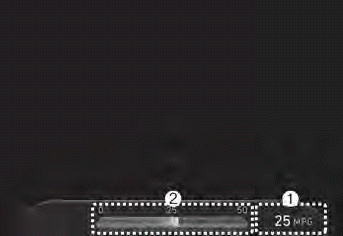
The average fuel economy (1) and instantaneous fuel economy (2) are displayed at the bottom of the cluster.
Automatic Reset
To automatically reset the average fuel economy, select "After Ignition ON" or "After Refueling" in the "Settings" menu on the infotainment system screen.
Test yourself
A quick Hyundai Santa Fe quiz: every answer comes with an explanation and a link to the manual page.