Engine Electrical System
Battery Repair Procedures
In this manual: Engine Electrical System
22steps
~132min
4/5difficulty
Done 0 of 22
Removal
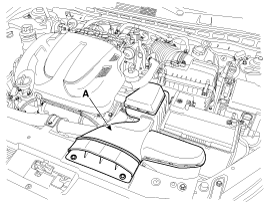
- Remove the air duct (A).
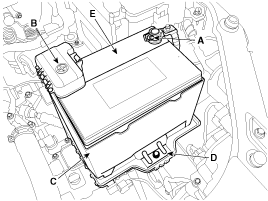
- Disconnect the negative (-) battery terminal clamp (A), then the positive (+) terminal clamp (B).
- Remove the battery mounting bracket (D) and insulation pad (C), then remove the battery (E).
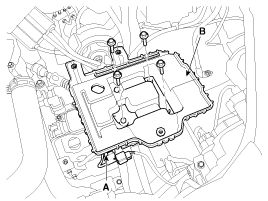
- Disconnect the front connector mounting clip (A).
- Remove the battery tray (B) after removing the bolts.
Installation
- Install in the reverse order of removal. Battery Negative (-) Terminal Installation: 4.0 ~ 6 N·m Battery Positive (+) Terminal Installation: 7.8 ~ 9.8 N·m Battery Mounting Bracket and Insulation Pad Installation: 9.8 ~ 11.8 N·m

- When installing the battery, properly secure the mounting bracket to the tray.
Vehicle Parasitic Current Check
- Turn off all electrical devices, then turn the ignition off.
- Close all doors except the hood, then lock all doors.
- Disconnect the hood switch connector.
- Close the liftgate.
- Close the doors or remove the door switches.
- Wait several minutes until the vehicle electrical systems go into sleep mode.
- For an accurate measurement of the vehicle parasitic current, all electrical systems must go into sleep mode (at least one hour, or up to one day). However, an approximate vehicle parasitic current can be measured after 10 to 20 minutes.
- Connect the ammeter in series between the battery negative (-) terminal and the ground cable, then slowly disconnect the ground cable from the battery negative (-) terminal.
- Be careful that the ammeter lead wires do not come off the battery negative (-) terminal and the ground cable, to prevent the battery from discharging. If the battery is discharged, connect the battery cable, then start the engine or turn the ignition on for more than 10 seconds. Repeat the procedure from step 1. To prevent battery discharge during inspection,
a. Connect the jumper cable between the battery negative (-) terminal and the ground cable. b. Disconnect the ground cable from the battery negative (-) terminal. b. Connect the ammeter between the battery negative (-) terminal and the ground cable. d. After disconnecting the jumper cable, read the ammeter current value. 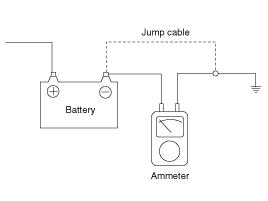
- Read the ammeter current value.
- If the parasitic current exceeds the limit value, search for the abnormal circuit by removing fuses one at a time and checking the parasitic current.
- Reconnect the fuse of the suspected parasitic current draw circuit only, and locate the suspect unit by removing the components connected to the circuit one at a time until the parasitic draw drops below the limit value.
Specified limit (after 10 to 20 min.): Below 50 mA
Cleaning
- Make sure the ignition switch and all accessories are in the OFF position.
- Disconnect the battery cables (negative terminal first).
- Remove the battery from the vehicle.

- Use caution if the battery case is cracked or leaking to protect skin from electrolyte. Wear tight-fitting rubber gloves (not household gloves) when removing the battery.
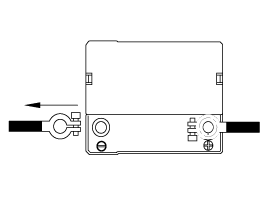
- Inspect the battery compartment for damage caused by electrolyte leakage. If acid damage is present, clean the area with a solution of clean warm water and baking soda. Scrub the area with a stiff brush and wipe with a cloth dampened with baking soda and water.
- Clean the top of the battery with the same solution described above.
- Inspect the battery case and cover for cracks. If cracks are found, the battery must be replaced.
- Clean the battery terminals with a suitable tool.
- Clean the inside surfaces of the battery terminal clamps using a suitable battery terminal cleaning tool. Replace damaged or worn cables and broken terminal clamps.
- Install the battery in the vehicle.
- Connect the cable terminals to the battery posts, making sure the tops of the terminals are flush with the tops of the posts.
- Tighten the terminal nuts securely.
- After tightening, apply light mineral grease to all connections.
- Explosive gas is generated inside the battery under each cell cap during charging. Do not smoke near batteries that are being charged or have recently been charged. Do not break the circuit at the terminals of batteries being charged, as this will produce a spark. Keep open flames away from the battery.
Test yourself
A quick Kia Cadenza VG Owner's Manual quiz: every answer comes with an explanation and a link to the manual page.
Was this page helpful?