Vehicle care
Tyre designations, Tyre pressure
In this manual: Vehicle care
~1min read
Tyre designations
E.g. 185/65 R 15 88 T 185 = Tyre width, mm. 65 = Cross-section ratio (tyre height to tyre width), %. R = Belt type: Radial. RF = Type: RunFlat. 15 = Wheel diameter, inches. 88 = Load index e.g. 88 is equivalent to 567 kg.T = Speed code letter.
Speed code letter:Q = up to 160 km/h. S = up to 180 km/h. T = up to 190 km/h. H = up to 210 km/h. V = up to 240 km/h.
W = up to 270 km/h.
Tyre pressure
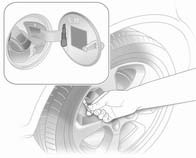
Check the pressure of cold tyres at least every 14 days and before any long journey. Do not forget the spare wheel. This also applies to vehicles with tyre pressure monitoring system. Remove the valve cap key from the fuel filler flap and use it to unscrew the valve cap. Tyre pressure and on the label on the inside of the fuel filler flap, if present. The tyre pressure data refers to cold tyres. It applies to summer and winter tyres. Always inflate the spare tyre to the pressure specified for full load. The ECO tyre pressure serves to achieve the smallest amount of fuel consumption possible.
Incorrect tyre pressures will impair safety, vehicle handling, comfort and fuel economy and will increase tyre wear.
Warning:If the pressure is too low, this can result in considerable tyre warmup and internal damage, leading to tread separation and even to tyre blow-out at high speeds.
Test yourself
A quick Opel Corsa quiz: every answer comes with an explanation and a link to the manual page.
Was this page helpful?