Engine Oil
GENERAL INFORMATION.
Replacing Engine Oil and Oil Filter
Engine oil must be changed depending on two factors: vehicle mileage and the duration of oil use in the engine. This is because oil properties deteriorate not only during engine operation, but also due to natural oil aging. When the vehicle is operated under severe conditions, such as frequent cold starts of the
engine or predominantly city driving in heavy traffic with frequent stops,
the engine oil and oil filter change interval must be shortened compared to that specified in the vehicle maintenance schedule. The oil filter must be replaced with a new one at the same time as the engine oil.
Oil change interval:
Every 10,000 km or 6 months (every 5,000 km or 3 months under
severe operating conditions).
Capacity – 3.8 L.
Severe operating conditions requiring more frequent engine oil changes include cases when:
– short trips up to 6 km predominate.
– short trips up to 16 km predominate at negative
ambient air temperatures.
– trips with frequent stops and prolonged engine idling predominate, as well as driving at low speed (for example, in city traffic).
– the vehicle is operated in dusty areas.
Checking Engine Oil Level.
Pull out the dipstick and wipe it with a clean rag. Then
insert the dipstick back in place, pushing it all the way down, and pull it out again. The oil level must
be between the MAX and MIN marks. Also visually check the oil for contamination and foreign particles.
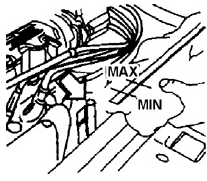
The oil level must not exceed the MAX mark on the dipstick. An excessively high oil level leads to increased oil consumption due to burning off, fouling
of spark plugs and increased carbon deposit formation.

When topping up engine oil, use the same oil that was filled into the engine at the last oil change.
Warning.
Check the engine oil level with the vehicle parked on a level horizontal surface (before starting the engine).
If the engine is running, stop it and wait approximately 5 minutes before
checking the oil level. This pause is necessary so that the oil drains into the
engine oil pan.
Prolonged and frequent contact of exposed skin with used engine oil
may cause various skin diseases, including dermatitis and
malignant skin tumors. Therefore, avoid unnecessary contact with
engine oil and thoroughly wash contaminants off the skin after work.
Test yourself
A quick Daewoo Nexia quiz: every answer comes with an explanation and a link to the manual page.