If a Tire Goes Flat
It is unusual for a tire to blowout while driving, especially if the tires are maintained properly. If air goes out of a tire, it is much more likely to leak out slowly. But if there ever is a blowout, here are a few tips about what to expect and what to do:
If a front tire fails, the flat tire creates a drag that pulls the vehicle toward that side. Take your foot off the accelerator pedal and grip the steering wheel firmly. Steer to maintain lane position, and then gently brake to a stop, well off the road, if possible.
A rear blowout, particularly on a curve, acts much like a skid and may require the same correction as used in a skid. Stop pressing the accelerator pedal and steer to straighten the vehicle. It may be very bumpy and noisy. Gently brake to a stop, well off the road, if possible.
Re-inflating a tire after it has been driven on while severely underinflated or flat may cause a blowout and a serious crash.
Never attempt to re-inflate a tire that has been driven on while severely underinflated or flat.
Have your dealer or an authorized tire service center repair or replace the flat tire as soon as possible.
If a tire goes flat, avoid further tire and wheel damage by driving slowly to a level place, well off the road, if possible. Turn on the hazard warning flashers. See Hazard Warning Flashers on page 6‑5.
When the vehicle has a flat tire (B), use the following example as a guide to assist in the placement of the wheel blocks (A).
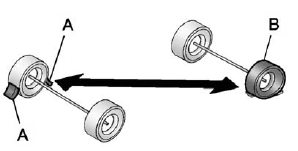 A. Wheel Block
The following information explains how to use the jack and change a tire.
Test yourself
A quick GMC Sierra quiz: every answer comes with an explanation and a link to the manual page.