Driving Your Vehicle
All-Wheel Drive (AWD)
In this manual: Driving Your Vehicle
~1min read
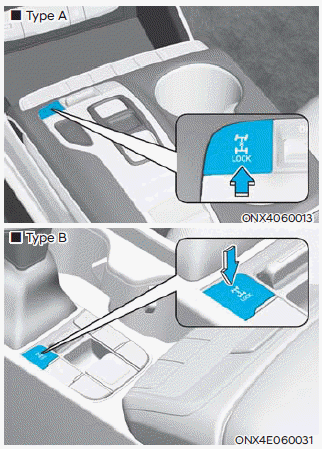
The All-Wheel Drive (AWD) system delivers engine power to all four wheels for maximum traction. AWD is useful when additional traction is needed on slippery, muddy, wet, or snow-covered roads.
AWD can also be used for occasional off-road driving, such as on unpaved roads and trails. Always reduce speed to a level appropriate for the conditions.
WARNING
To reduce the risk of serious injury or death:
- Do not drive in conditions beyond the intended design of the vehicle, such as severe off-road conditions.
- Avoid high speeds when driving through curves or turns.
- Do not make quick steering movements, such as sudden lane changes or rapid, sharp turns.
- The risk of rollover greatly increases if you lose control of your vehicle at highway speeds.
- Loss of control often occurs when two or more wheels leave the paved surface and the driver turns to re-enter the road.
- If your vehicle leaves the paved road, do not turn sharply. Instead, slow down before returning to the paved road.
NOTICE
- Do not drive through water if the water level is above the lower edge of the vehicle.
- Check the brakes as soon as you have driven out of mud or water. Press the brake pedal several times while driving slowly until normal braking condition returns.
- Reduce the scheduled maintenance interval if you drive in off-road conditions such as sand, mud, or water (see the "Severe Duty Maintenance" section in Chapter 9).
- Always wash the vehicle thoroughly after driving off-road, especially the underbody.
- Make sure an all-wheel drive vehicle is towed with all four wheels off the ground (by a flatbed tow truck).
Test yourself
A quick Hyundai Tucson LM quiz: every answer comes with an explanation and a link to the manual page.
Was this page helpful?