Seat Belt Restraint System
- For maximum protection, the restraint system must always be used whenever the vehicle is moving. The shoulder belt should be positioned across the middle of the shoulder and over the collarbone.
- Never allow children to ride in the front passenger seat. See the Child Restraint System section for further information.
WARNING - Twisted Seat Belt
Make sure your seat belt is not twisted when worn. A twisted seat belt may not protect you properly in a crash and may even cut your body.
WARNING - Shoulder Belt
- Never wear the shoulder belt under your arm or behind your back. An improperly worn shoulder belt cannot protect the occupant in a crash.
- Always wear both the lap and shoulder portions of the seat belt.
WARNING - Damaged Seat Belt
Replace the entire seat belt assembly if any part of the webbing or hardware is damaged, as you can no longer be sure the damaged seat belt will provide protection in a crash.
Seat belts are designed to fit the bony structure of the body and should be worn low across the front of the pelvis, chest, and shoulders, as applicable. The lap portion of the belt should not be worn across the abdomen.
Seat belts should be adjusted as tightly as is comfortable to provide the protection for which they were designed.
A loose belt significantly reduces the level of protection provided to the occupant.
Care must be taken to avoid contaminating the webbing with polish, oils, and chemicals, especially battery acid. Cleaning can be safely performed using mild soap and water. The seat belt should be replaced if the webbing is worn, contaminated, or damaged.
- The user must not make any modifications or additions that either prevent the seat belt adjustment devices from removing slack or prevent the seat belt assembly from being adjusted to remove slack.
- When fastening the seat belt, make sure it does not latch into the buckles of other seats. This is very dangerous, and you may not be protected by the seat belt properly.
- Do not unbuckle and buckle the seat belt repeatedly while driving. This may result in loss of control and an accident, which could lead to death, serious injury, or property damage.
- When fastening the seat belt, make sure it does not pass over hard or easily breakable objects.
WARNING - Seat Belt Buckle
Keep foreign materials (gum, crumbs, coins, etc.) out of the seat belt buckle. They may prevent the seat belt from latching securely.
Unfastened Seat Belt Warning
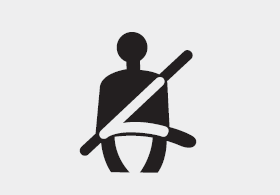
As a reminder to the driver, the unbelted warning light illuminates for approximately 6 seconds each time the engine start/stop button is in the ON position, regardless of whether the belt is fastened, and the warning chime sounds for approximately 6 seconds each time the engine start/stop button is in the ON position while the belt is not fastened.
If the driver continues not to fasten the seat belt and drives at a speed of 9 km/h or more but less than 20 km/h, the warning light will remain illuminated.
If the driver continues not to fasten the seat belt while driving at a speed above 20 km/h, the unbelted warning chime will sound for approximately 100 seconds and the corresponding warning light will flash.
If the driver unfastens the seat belt while driving at a speed below 20 km/h, the warning light will remain illuminated.
If the driver unfastens the seat belt while driving at a speed above 20 km/h, the unbelted warning chime will sound for approximately 100 seconds and the corresponding warning light will flash.
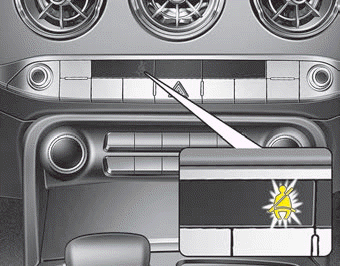
As a reminder to the front passenger, the front passenger unbelted warning light illuminates for approximately 6 seconds each time the engine start/stop button is in the ON position, regardless of whether the belt is fastened.
If the front passenger continues not to fasten the seat belt and the vehicle is driven at a speed of 9 km/h or more but less than 20 km/h, the warning light will remain illuminated.
If the front passenger continues not to fasten the seat belt while the vehicle is driven at a speed above 20 km/h, the unbelted warning chime will sound for approximately 100 seconds and the corresponding indicator will flash.
If the front passenger unfastens the seat belt while the vehicle is driven at a speed below 20 km/h, the warning light will remain illuminated.
If the front passenger unfastens the seat belt while the vehicle is driven at a speed above 20 km/h, the unbelted warning chime will sound for approximately 100 seconds and the corresponding indicator will flash.
Lap/Shoulder Belt
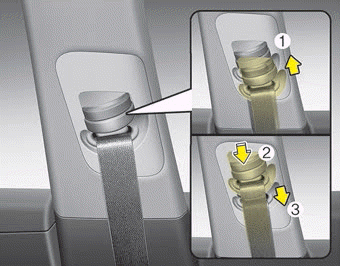
Height Adjustment
You can adjust the height of the shoulder belt anchor to one of 4 positions for maximum comfort and safety.
The height of the adjustable seat belt should not be too close to the neck. You will not get the most effective protection. The shoulder portion must be adjusted so that it lies across the chest and middle of the shoulder, close to the door, and not the neck.
To adjust the height of the seat belt anchor, lower or raise the height adjuster to the appropriate position.
To raise the height adjuster, pull it up (1). To lower it, press the height adjustment button (2) and push it down (3).
Release the button to lock the anchor in the desired position. Try moving the height adjuster to make sure it is locked in that position.
Improperly fastened seat belts may cause serious injury in a crash.
WARNING. Shoulder Belt Positioning.
Never route the shoulder belt across your neck or face.
WARNING - Seat Belt Replacement
Replace seat belts after a crash. Failure to replace seat belts after a crash may leave you with damaged seat belts that will not provide protection in a subsequent collision.
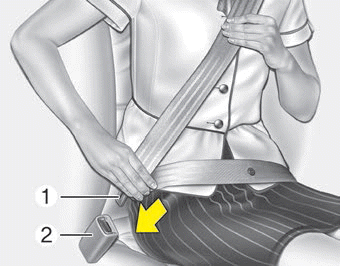
To fasten the seat belt:
To fasten the seat belt, pull the belt out of the retractor and insert the metal tongue (1) into the buckle (2). A click will be heard when the tongue latches into the buckle.
The seat belt automatically adjusts to the required length only after the lap belt portion is manually adjusted to fit snugly across the hips. If you lean forward slowly and gently, the belt will extend and allow you to move. However, during a sudden stop or impact, the belt will lock in place. It will also lock if you attempt to lean forward too quickly.
✽ NOTICE
If you cannot pull the seat belt out of the retractor, pull the belt firmly and release it. Then you will be able to pull the belt out smoothly.
WARNING
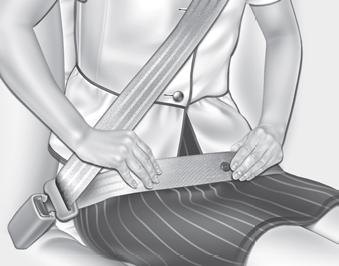
The lap belt portion must be positioned as low as possible and snugly across the hips, not across the waist. If the lap belt is positioned too high on the waist, the likelihood of injury in a collision may increase. Neither hand should be placed under or over the belt. Rather, one hand should be above and the other below, as shown in the illustration.
Never fasten the seat belt under the arm next to the door.
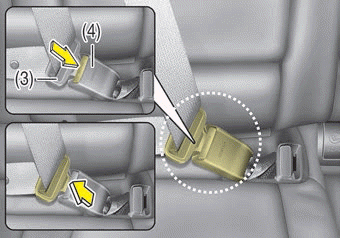
To fasten the rear seat belts:
Pull the metal tongue (3) and insert it into the buckle (4). A click will be heard when the tongue latches into the buckle. Make sure the belt is not twisted.
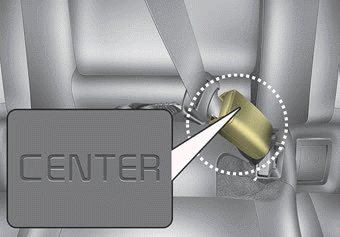
When using the rear center seat belt, the buckle marked "CENTER" must be used.
WARNING
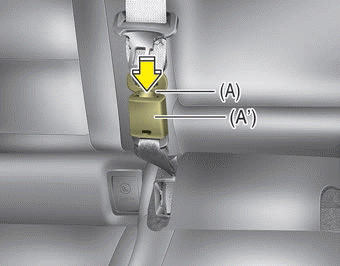
Always insert the metal tongue (A) into the buckle (A').
✽ NOTICE
If you cannot pull the seat belt out of the retractor, pull the belt firmly and then release it. Once released, you will be able to pull the belt out smoothly.
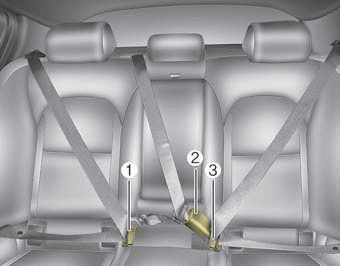
The seat belt must be latched into the buckle on each seat cushion to be properly fastened.
➀ : Rear right seat belt buckle
➁ : Rear center seat belt buckle
➂ : Rear left seat belt buckle
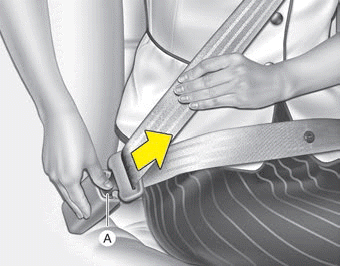
To unfasten the seat belt:
The seat belt is released by pressing the release button (A) on the buckle. When released, the belt should retract automatically into the retractor.
If this does not occur, check the belt to make sure it is not twisted, then try again.
WARNING
Before fastening the rear seat belts, make sure the buckle matches the seat belt. Forcing the left or right belt into the center buckle may result in improper fastening that will not protect you in a crash.
Test yourself
A quick Kia Stinger CK quiz: every answer comes with an explanation and a link to the manual page.