Whels, Tires, Whel Alignment
EU Tire Label, Categories
In this manual: Whels, Tires, Whel Alignment
~4min read
Rolling Resistance. Refer to → AnchorWet Grip. Refer to → AnchorNoise Emission. Refer to → Anchor |
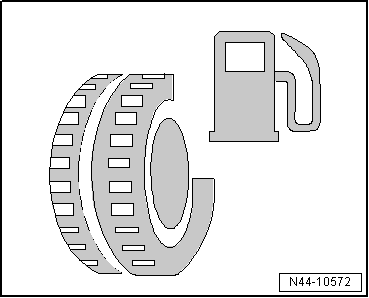
Rolling ResistanceRolling resistance:Is defined as the amount of energy used by a tire to travel to a given distance.This corresponds to the loss of energy in units per defined distance.This is expressed as an quotient of energy in Newton meters (Nm) and of distance in meters (m). Thus, the rolling resistance is expressed as a force in Newtons (N). The rolling resistance of a tire is defined by the rolling resistance coefficient c R:
c R - Rolling resistance coefficientF R - Rolling resistance forceZ - Vehicle weight (sum of all wheel loads)GoalTo reduce rolling resistanceTo economize fuel and CO 2 |
 |
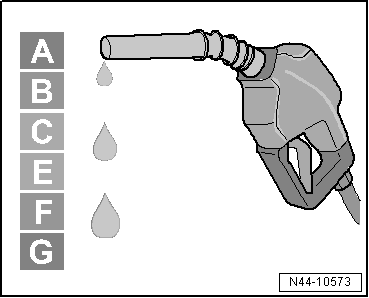
EvaluationSeparated into fuel efficiency classes A to GClass D is not used Note The fuel efficiency classes are listed in EU Regulation (EG) 1222/2009. Tires categories are established by this regulation. The rolling resistance is ascertained by prescribed tests performed by the tire manufacturer. The lower the rolling resistance, the lower the fuel consumption.
|
 |
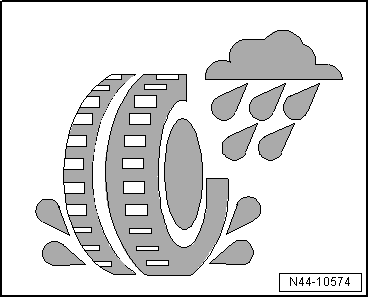
Wet GripDefinitionFor the wet grip, the wet grip parameter G must be determined. The wet grip parameter G is defined by testing the distance required by a standardized vehicle to brake from 80 km/h down to 20 km/h on a wet, even road surface. The test is performed using predefined standard reference test tires (SRTT), allowing for the wet grip parameter G to be determined. Mean fully developed deceleration (mfdd) is used for the test.The mean fully developed deceleration is determined thusly:
The wet grip parameter G is determined thusly:
mfdd - mean fully developed decelerationGoalGood wet grip on tireSharp decrease in braking distance |
 |
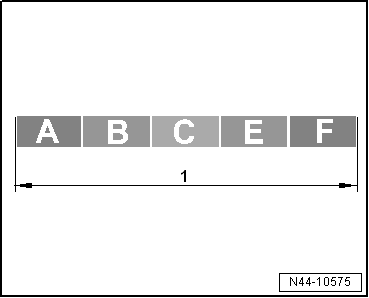
EvaluationSeparated into wet grip classes A to GClasses D and G are not used Note The wet grip classes are listed in EU Regulation (EG) 1222/2009. Tires categories are established by this regulation. The lower the wet grip parameter, the shorter the braking distance.
|
 |
Noise EmissionGoalTo reduce pass-by noiseTo reduce noise impactEvaluationTake measurements from outside of the vehicle onlyDivided into three classes |
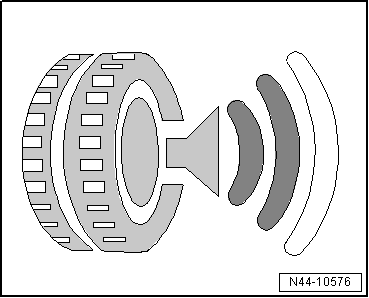 |
| Three black waves signify the worst performance. The tire produces external rolling noise, which falls below the current EU Directive 2001/43/EG limit. The limit surpasses the future limit set by EU Regulation (EG) 661/2009, which will go into effect in 2016. Two black waves: the tire noise level does not exceed the future limit set by EU Regulation (EG) 661/2009, which will go into effect in 2016. One black wave: the tire noise level does not exceed the future limit set by EU Regulation (EG) 661/2009, which will go into effect in 2016, by at least three decibels. Note Reducing the noise measured value from two black waves down to one corresponds to 3 dB, which halves the noise level. Please note that extreme tire rolling noise does not always correspond to the noise in the vehicle interior. |
 |
Test yourself
A quick Volkswagen Polo quiz: every answer comes with an explanation and a link to the manual page.
Was this page helpful?