Tread depth and wear indicators
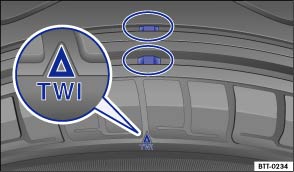
Fig. 147 Tyre tread: wear indicators
 First read and observe the introductory information and safety warnings
Tread depth
Difficult driving situations demand the deepest possible tread depth for the tyres and the same tread depth for the tyres on the front and rear axles. This applies in particular for driving in winter weather and cold temperatures and in wet conditions .
In most countries, the minimum tread depth required by law is 1.6 mm (measured in the tread grooves next to the tread wear indicators). Observe any country-specific legal requirements.
Winter tyres lose a large degree of their effectiveness when the tread is worn down to a depth of 4 mm.
The tread depth of new tyres can vary according to type and manufacturer due to construction and tread design.
Tread wear indicator in tyres
The original tyres on your vehicle have 1.6 mm high tread wear indicators running across the tread . These wear indicators are positioned at set intervals around the tyre. Markings on the tyre sidewall (for instance the letters TWI or other symbols) indicate the positions of the tread wear indicators.
The tread wear indicators show if a tyre is worn down. The tyre must be replaced at the latest when the tread depth is just down to the tread wear indicator.
 Worn tyres are a safety risk and can lead to a loss of control of the vehicle and cause serious injury.
- Tyres must be replaced at the latest when the tread is worn down to the tread wear indicators.
- Worn tyres have considerably less tread, particularly on wet roads, which can cause the vehicle to glide along the road surface (aquaplaning).
- Worn tyres reduce the possibility of controlling the vehicle well in normal and difficult driving situations and increase braking distance and the risk of sliding.
Test yourself
A quick Volkswagen Polo quiz: every answer comes with an explanation and a link to the manual page.