Securing the Child Restraint System Seat with the Tether Anchor

Primero fije el dispositivo de retención infantil con los anclajes inferiores LATCH o con el cinturón de seguridad del asiento. Si el fabricante del dispositivo de retención infantil recomienda fijar la correa superior, enganche y apriete la correa superior en el anclaje superior correspondiente.
The tether anchors are located on the back of the seatbacks.
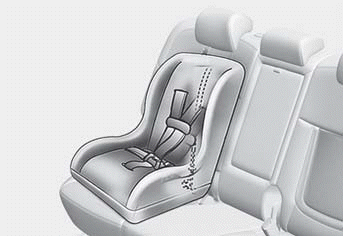
Para instalar el anclaje de la correa superior:
1. Pase la correa superior del sistema de retención infantil por encima del respaldo del asiento. Pase la correa por debajo del reposacabezas y entre los postes de sujeción del reposacabezas, o pase la correa por encima del respaldo del asiento. Asegúrese de que la correa no esté torcida.
2. Attach the tether strap hook to the anchor, then tighten the upper strap according to the child restraint system manufacturer's instructions to securely fasten the child restraint system.
3. Make sure the child restraint system is secure by pushing and pulling the seat forward and backward and from side to side.
ADVERTENCIA
Tenga en cuenta las siguientes precauciones al instalar la correa superior:
- Lea y siga todas las instrucciones de instalación proporcionadas junto con su sistema de retención infantil.
- Never attach more than one child restraint system to a single tether anchor. This may cause the anchor or tether to loosen or break in the future.
- Attach the tether strap only to the correct anchor for that seating position.
- Make sure the child restraint system anchors support the combined weight of the child and child restraint system, which is less than 65 lb (30 kg) for each LATCH system. Do not use them for adult seat belts, tie-downs, or to secure other items or equipment in the vehicle.
Anclaje del sistema de retención infantil con cinturón de regazo/hombro
ADVERTENCIA
Always place a rear-facing child restraint system on the rear seat of the vehicle.
Installing a rear-facing child restraint on the front passenger seat may result in serious injury or death if the child restraint system is activated by the deployment of the airbag.
If the LATCH system is not used, all child restraint systems must be secured to the rear seat using the lap/shoulder belt.
Modo de bloqueo automático
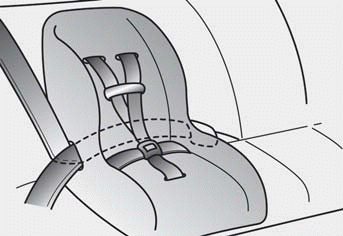
Since all passenger seat belts move freely under normal conditions and lock only in extreme or emergency situations (emergency locking mode), you must manually pull the seat belt all the way out to move the retractor to Automatic Locking Mode to secure the child restraint system.
Automatic Locking Mode helps prevent the normal movement of the child in the vehicle from causing the seat belt to loosen and compromise the child restraint system.
To install a child restraint system on the rear seats:
1. Place the child restraint system on the rear seat and route the lap/shoulder belt around or through the child restraint system, following the child restraint system manufacturer's instructions. Make sure the seat belt straps are not twisted.
Información
When using the rear center seat belt, refer to "Passenger and Rear Seat Belts – 3-Point System with Convertible Retractor Locking" in this chapter.
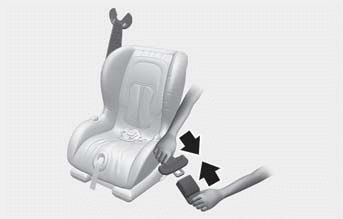
2. Insert the lap/shoulder belt latch plate into the buckle. Make sure you hear a distinct "click".
Información
Coloque el botón de bloqueo de modo que sea de fácil acceso en caso de emergencia.
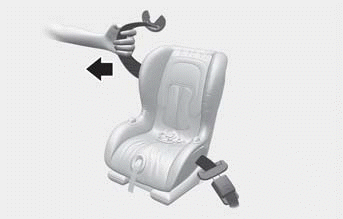
3. Extraiga completamente la parte del hombro del cinturón de seguridad. Cuando la parte del hombro del cinturón de seguridad se extrae por completo, el retractor cambia al modo de bloqueo automático (sistema de sujeción para niños).
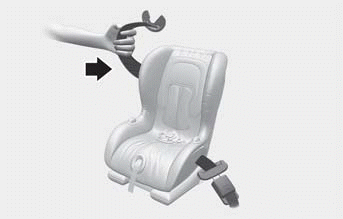
4. Deje que la parte del hombro del cinturón de seguridad se retraiga lentamente y escuche un «clic» o «chasquido» audible. Esto indica que el retractor está en modo de bloqueo automático. Si no se escucha un sonido claro, repita los pasos 3 y 4.
5. Elimine al máximo la holgura del cinturón presionando el sistema de sujeción para niños mientras introduce de nuevo la correa del hombro en el retractor.
6. Presione y tire del sistema de sujeción para niños para confirmar que el cinturón de seguridad lo mantiene firmemente en su lugar. Si no es así, desabroche el cinturón de seguridad y repita los pasos 2 a 6.
7. Verifique nuevamente que el retractor esté en modo de bloqueo automático intentando extraer más cinturón del retractor. Si no puede, el retractor está en modo de bloqueo automático.
Si el fabricante de su sistema de sujeción para niños especifica o recomienda el uso de una correa de anclaje con el cinturón de regazo/hombro, consulte las páginas anteriores para obtener más información.
Información
Cuando el cinturón de seguridad se retrae completamente a su posición de reposo, el retractor cambia automáticamente del modo de bloqueo automático al modo de bloqueo de emergencia para el uso normal de un adulto.
ADVERTENCIA
Asegúrese de que el retractor esté en el modo de bloqueo automático. De lo contrario, el sistema de sujeción infantil podría moverse cuando el vehículo gire o se detenga bruscamente. El niño podría sufrir lesiones graves o morir si el sistema de sujeción infantil no está correctamente asegurado en el vehículo. Para cambiar el retractor al modo de bloqueo automático, extraiga manualmente el cinturón de seguridad por completo.
Para retirar el sistema de sujeción infantil, presione el botón de liberación de la hebilla, retire el cinturón de seguridad del sistema de sujeción infantil y permita que el cinturón se retraiga por completo.
Pon a prueba tus conocimientos
Un test rápido sobre el Hyundai Tucson LM: cada respuesta trae una explicación y un enlace a la página del manual.