Securing a child restraint system with the tether anchor

First secure the child restraint using the LATCH lower anchors or the seat belt. If the child restraint manufacturer recommends that the top tether strap be attached, route, attach and tighten the top tether strap to the top tether anchor.
The tether anchors are located on the rear of the seatback.
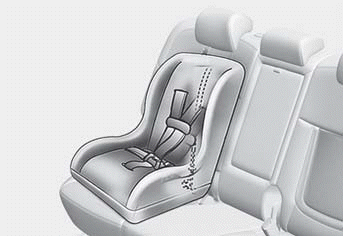
To install the tether anchor:
1. Route the child restraint system top tether strap over the seatback. Route the strap under the head restraint and between the head restraint posts, or route the strap over the seatback from the vehicle roof. Make sure the strap is not twisted.
2. Attach the tether strap hook to the anchor, then tighten the upper strap according to the child restraint system manufacturer's instructions to securely fasten the child restraint system.
3. Make sure the child restraint system is secure by pushing and pulling the seat forward and backward and from side to side.
WARNING
Observe the following precautions when installing the top tether:
- Read and follow all installation instructions provided with your child restraint system.
- Never attach more than one child restraint system to a single tether anchor. This may cause the anchor or tether to loosen or break in the future.
- Attach the tether strap only to the correct anchor for that seating position.
- Make sure the child restraint system anchors support the combined weight of the child and child restraint system of less than 65 lbs (30 kg) for each LATCH system. Do not use them for adult seat belts, tie-downs, or for securing other items or equipment in the vehicle.
Lap/Shoulder Belt Child Restraint Anchorage
WARNING
Always install a rear-facing child restraint system on the rear seat of the vehicle.
Installing a rear-facing child restraint on the front passenger seat may result in serious injury or death if the child restraint system is activated by an airbag deployment.
If the LATCH system is not used, all child restraint systems must be secured on the rear seat using the lap/shoulder belt.
Automatic Locking Mode
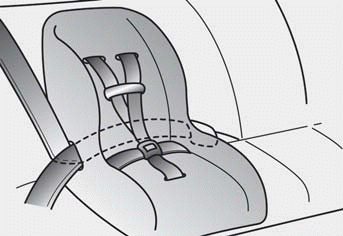
Since all passenger seat belts move freely under normal conditions and lock only in extreme or emergency situations (emergency locking mode), you must manually pull the seat belt all the way out to move the retractor into Automatic Locking mode to secure the child restraint system.
Automatic Locking mode helps prevent the normal movement of a child in the vehicle from causing the seat belt to loosen and compromise the child restraint system.
To install a child restraint system on the rear seat:
1. Install the child restraint system on the rear seat and route the lap/shoulder belt around or through the child restraint system, following the child restraint system manufacturer's instructions. Make sure the seat belt webbing is not twisted.
Information
When using the rear center seat belt, see "Passenger and Rear Seat Belts – 3-Point Seat Belt System with Convertible Retractor Locking" in this chapter.
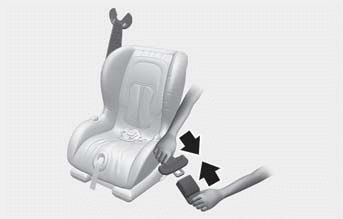
2. Insert the lap/shoulder belt latch plate into the buckle. Make sure a distinct "click" is heard.
Information
Position the buckle release button so that it is easily accessible in an emergency.
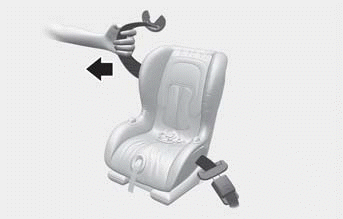
3. Pull the shoulder portion of the seat belt all the way out. When the shoulder portion of the seat belt is fully extended, it moves the retractor into Automatic Locking (child restraint) mode.
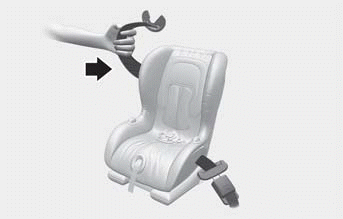
4. Slowly let the shoulder portion of the seat belt retract and listen for an audible "click" or "ratchet" sound. This indicates that the retractor is in Automatic Locking mode. If no distinct sound is heard, repeat steps 3 and 4.
5. Remove as much belt slack as possible by pressing down on the child restraint system while feeding the shoulder belt back into the retractor.
6. Press and pull the child restraint system to confirm that the seat belt holds it firmly in place. If it does not, unbuckle the seat belt and repeat steps 2 through 6.
7. Double-check that the retractor is in Automatic Locking mode by trying to pull more seat belt webbing out of the retractor. If you cannot, the retractor is in Automatic Locking mode.
If your child restraint system manufacturer specifies or recommends using a tether anchor with the lap/shoulder belt, see the previous pages for more information.
Information
When the seat belt can be fully retracted, the retractor automatically switches from Automatic Locking mode to Emergency Locking mode for normal adult use.
WARNING
Make sure the retractor is in Automatic Locking mode. Otherwise, the child restraint system may move when the vehicle turns sharply or stops. The child could be seriously injured or killed if the child restraint system is not properly secured in the vehicle, including manually pulling the seat belt all the way out to switch the retractor to Automatic Locking mode.
To remove the child restraint system, press the release button on the buckle, then pull the seat belt out of the child restraint system and allow the seat belt to fully retract.
Test yourself
A quick Hyundai Tucson LM quiz: every answer comes with an explanation and a link to the manual page.