Mirrors
Manual day/night interior mirror
Normal position
- Push the lever on the lower edge of the mirror forward.
Mirror in night position
- Pull the lever on the lower edge of the mirror back.
Applies to vehicles: with photosensitive interior mirror
Photosensitive interior mirror
You can switch the anti-glare function on or off as required.
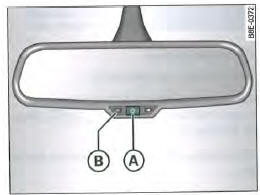
Fig. 85 Photosensitive interior mirror: indicator and on/off button
Switching off the interior mirror anti-glare function
- Press the button (Â) => fig. 85; the indicator (B) goes out.
Switching on the interior mirror anti-glare function
- Press the button (Â) => fig. 85; the indicator (B) lights up.
Interior mirror anti-glare function
When you switch on the ignition, the anti-glare function is activated. The green indicator in the mirror housing lights up.
When the mirror anti-glare function is activated, the mirror automatically darkens depending on the brightness striking the mirror. However, the mirror does not darken when:
- the interior light is on.
- reverse gear is engaged.
Sensors for automatic headlights *
Thanks to the sensors housed in the rear-view mirror, the headlights switch on and off automatically depending on the ambient light conditions when the light switch is in the AUTO position.
CAUTION!
Electrolyte may leak from a broken rear-view mirror. This liquid can irritate the skin, eyes and respiratory organs.
Immediately rinse any parts of the body that have come into contact with this liquid with plenty of water. If necessary, consult a doctor!
 Warning!
Electrolyte leaking from a broken rear-view mirror is abrasive to plastic parts. Remove the liquid as quickly as possible with a damp sponge.
Note
- Deactivating the light-sensitive function of the interior rear-view mirror also deactivates the light-sensitive function of the exterior rear-view mirrors.
- The anti-glare function of the rear-view mirror only works perfectly if the rear window sunblind* is rolled up and no objects are blocking the light falling on the interior rear-view mirror.
- Do not affix stickers to the windshield in front of the sensors, as this may disturb or disable the "automatic headlights" and "light-sensitive rear-view mirrors" functions.
Exterior mirrors
The exterior rear-view mirrors are electrically adjustable.
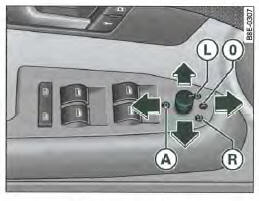
Fig. 86 Partial view of armrest: rotary knob
Adjusting the exterior mirrors
- Turn the rotary knob to position => fig. 86 (L) (driver's side mirror) or to position ( R ) (passenger's side mirror).
- Turn the rotary knob to adjust the exterior rear-view mirror so that you have a good view to the rear.
Folding in both exterior rear-view mirrors*
- Turn the rotary knob to position (Â).
It is recommended to fold in* the exterior rear-view mirrors, for example to protect them when the vehicle is parked or when the available space is very narrow.
Rear-view mirror heating*
The rear-view mirror glass is heated depending on the outside temperature when the rear window defroster is switched on.
Exterior rear-view mirror memory*
On vehicles with a driver's side memory seat, the exterior rear-view mirror adjustment position is automatically stored when you store the driver's seat position.
Tilting the passenger's side exterior rear-view mirror* (only with exterior rear-view mirror memory)
When you engage reverse, the mirror glass tilts slightly downward if the system is set to the passenger's side mirror (rotary knob in position (R), fig. 86). This lets you see the edge of the kerb when you want to parallel park.
The mirror glass returns to its basic position when you disengage reverse and drive forwards at a speed above 15 km/h, or when you turn the rotary knob to position (L) or neutral (0).
 Warning!
- Convex (curved or non-spherical*) rear-view mirrors widen the field of vision. However, they make objects appear smaller. For this reason, these mirrors are only partly suitable for judging the distance between your vehicle and the vehicles behind you.
- If the mirror housing has been knocked out of position by outside influences (for example while manoeuvring your vehicle into a parking space), fold the rear-view mirror in until it reaches its stop using the electric control. Never adjust the mirror housing by hand, as this may disrupt the operation of the rear-view mirrors.
Note
If the electric mirror adjustment fails, you can adjust both exterior rear-view mirrors manually by pressing on the edge of the mirror glass.
Applies to vehicles: with light-sensitive exterior rear-view mirrors
Light-sensitive exterior rear-view mirrors
The exterior rear-view mirrors are set to the anti-glare position at the same time as the light-sensitive interior rear-view mirror.
When the ignition is switched on, the mirrors automatically dim depending on the light falling on the mirror glass (for example light from the headlights of a following vehicle).
When you switch on the interior light and when you engage reverse, the mirrors return to their original brightness (normal position).
Note
- When the anti-glare function of the interior rear-view mirror is deactivated, the exterior rear-view mirrors do not dim automatically either.
- The anti-glare function of the rear-view mirror only works perfectly if the rear window sunblind* is rolled up and no objects are blocking the light falling on the interior rear-view mirror.
Test yourself
A quick Audi A4 quiz: every answer comes with an explanation and a link to the manual page.