Use of seat belts
All seats in the vehicle are fitted with three-point seat belts, each with a retractor.
The retractor mechanism locks the webbing in the event of sudden braking or strong deceleration due to an impact. Under normal conditions, this feature allows the seat belt webbing to slide freely so that it fits the occupant's body perfectly. In the event of an accident, the belt locks, reducing the risk of impact inside the passenger compartment or of being thrown out of the vehicle.
The driver is required to comply with (and ensure all passengers comply with) local legal requirements regarding the obligation and methods of using seat belts.
Always fasten your seat belt before setting off. Wear the belt with your torso upright and resting against the backrest.
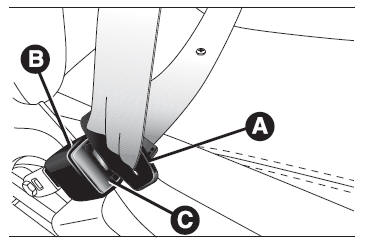
To fasten the seat belts, grasp the latch plate A fig. 58 and insert it into the buckle B until you hear the locking click. If the belt locks while being pulled out, let it retract slightly and pull it out again without sudden movements.
To unfasten the seat belts, press button C. Guide the belt as it retracts to prevent it from twisting. The retractor automatically adapts the belt to the body of the occupant wearing it, allowing freedom of movement.
When the vehicle is parked on a steep slope, the retractor may lock; this is normal. The retractor mechanism also locks the belt whenever it is pulled out quickly or during sudden braking, impacts and cornering at high speed.
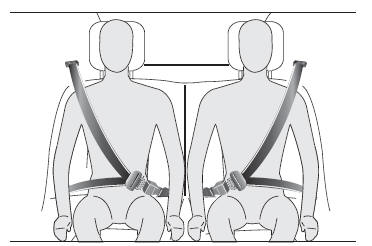
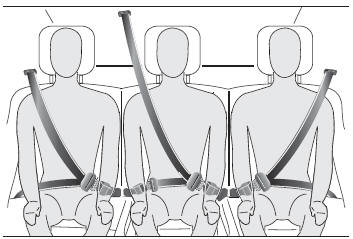
The rear seat is equipped with three-point inertia seat belts with retractors. Fasten the rear seat belts as shown in fig. 59 (4-seater versions) or fig. 60 (5-seater versions).
WARNING When returning the rear seat to normal use after folding it down, take care to correctly reposition the seat belt so that it is ready for use.
Test yourself
A quick Fiat Panda quiz: every answer comes with an explanation and a link to the manual page.