Exterior Care
Locks
Locks are lubricated at the factory. Use de-icer only when absolutely necessary, and have the locks lubricated after use. Refer to Recommended Fluids and Lubricants.
Vehicle Washing
To maintain the vehicle's appearance, wash it often and out of direct sunlight.
If you use an automatic car wash, follow the car wash instructions. Turn off the windshield wipers and rear wiper, if equipped. Remove all accessories that may be damaged or interfere with the car wash equipment.
Thoroughly rinse the vehicle before and after washing to remove all cleaning agents completely. If they are allowed to dry on the surface, they may stain.
Dry the finish with a soft, clean chamois or an all-cotton towel. Avoid scratching the surface and water spotting.
Finishing Care
Applying a secondary clear coat sealant or wax materials is not recommended. If painted surfaces are damaged, contact your dealer to evaluate the damage and have it repaired. Foreign materials such as calcium chloride and other salts, de-icing agents, road oils and tar, tree sap, bird droppings, industrial fallout, etc., can damage the vehicle finish if left on painted surfaces. Wash the vehicle as soon as possible. If necessary, use non-abrasive cleaners that are labeled as safe for painted surfaces to remove foreign material.
Occasional hand waxing or light polishing should be done to remove paint residue. See your dealer for approved cleaning products.
Do not apply wax or polish to uncoated plastic, vinyl, rubber, decals, simulated wood, or matte paint, as damage may occur.
To keep the paint looking like new, keep the vehicle in a garage or covered whenever possible.
Protecting Exterior Bright Metal Moldings
Bright metal moldings on the vehicle are made of aluminum, chrome, or stainless steel. To prevent damage, always follow these cleaning instructions:
- Make sure the molding is cool to the touch before applying any cleaning solution.
- Use only approved cleaning solutions for aluminum, chrome, or stainless steel. Some cleaners are strongly acidic or contain alkaline substances and can damage the moldings.
- Always dilute concentrated cleaner according to the manufacturer's instructions.
- Do not use cleaning products not intended for automotive use.
- Apply a non-abrasive car wax after washing to protect and extend the finish of the cast parts.
Cleaning Exterior Lamps/Lenses, Emblems, Decals and Stripes
Use only warm or cool water and a soft cloth and car wash soap to clean the exterior lamps, lenses, emblems, decals and trim. Follow the instructions in the "Washing the Vehicle" section earlier in this section.
Lamp covers are made of plastic, and some have a UV protective coating. Do not clean or wipe them when dry.
Do not use any of the following on the lamp cover:
- Abrasive or caustic substances
- Washer fluids and other cleaning agents in higher concentrations than recommended by the manufacturer
- Solvents, alcohols, fuel, or other harsh cleaning agents
- Ice scrapers or other hard objects
- Aftermarket covers or covers while the lamps are illuminated due to excessive heat generated
Air Inlets
Clean debris from the air inlets between the hood and windshield when washing the vehicle.
Shutter System
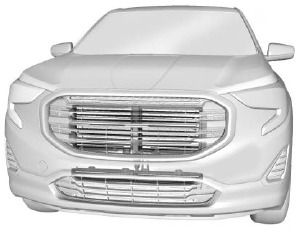
The vehicle may have a shutter system designed to help improve fuel economy. Keep the shutter system clean for proper operation.
Windshield and Wiper Blades
Clean the outside of the windshield with glass cleaner.
Clean the rubber blades with a lint-free cloth or paper towel dampened with windshield washer fluid or mild detergent. Wash the windshield thoroughly when cleaning the blades. Bugs, road grime, tree sap, and buildup from car wash/wax treatments may cause wiper streaking.
Replace the wiper blades if they are worn or damaged. Damage may be caused by severe dusty conditions, sand, salt, heat, sun, snow, and ice.
Sealers
Apply weatherstrip lubricant to the weatherstrips to make them last longer, seal better, and prevent sticking and squeaking. Lubricate the weatherstrips at least once a year. Hot, dry climates may require more frequent application. Black marks from rubber material on painted surfaces can be removed by wiping with a clean cloth. See Recommended Fluids and Lubricants.
Tires
Use a stiff brush with tire cleaner to clean the tires.
Wheels and Wheel Covers
Use a soft clean cloth with mild soap and water to clean the wheels. After rinsing thoroughly with clean water, dry with a soft clean towel. Wax may then be applied.
Brake System
Visually inspect the brake lines and hoses for proper attachment, connection, binding, leaks, cracks, abrasion, etc. Inspect disc brake pads for wear and rotors for surface condition. Inspect all other brake components for cracks and leaks.
Steering, Suspension, and Chassis Components
Visually inspect steering, suspension, and chassis components for damaged, loose, or missing parts, or signs of wear at least once a year.
Inspect the power steering hoses for proper attachment, connections, binding, leaks, cracks, abrasion, etc.
Visually inspect the CV boot and axle seals for leaks.
Lubricating Body Components
Lubricate all key lock cylinders, hood hinges, rear door hinges, steel fuel door hinge, and power step hinges if the components are plastic. Applying silicone lubricant to the weatherstrips with a clean cloth extends their service life, seals better, and prevents sticking and squeaking.
Underbody Maintenance
At least twice a year, in spring and fall, use plain water to rinse any corrosive substances from the underbody. Be sure to thoroughly clean any areas where dirt and other debris may collect.
Do not wash the transfer case and/or front/rear axle output seals directly. High-pressure water may penetrate the seals and contaminate the lubricant. Contaminated lubricant will shorten the life of the transfer case and/or axles and should be replaced.
Sheet Metal Damage
If the vehicle is damaged and sheet metal repair or replacement is required, make sure the body repair shop applies corrosion protection material to the parts repaired or replaced to restore corrosion protection.
Replacing parts with original manufacturer parts that have corrosion protection maintains the vehicle warranty.
Finish Damage
Minor chips and scratches can be repaired quickly with touch-up materials obtained from your dealer to prevent corrosion. Large areas of finish damage can be repaired at your dealer's body and paint shop.
Chemical Paint Spotting
Airborne contaminants can land on and attack painted vehicle surfaces, causing spotty, ring-shaped discoloration and small, irregular dark spots etched into the paint surface. Refer to "Care Finishing" earlier in this section.
Test yourself
A quick GMC Terrain quiz: every answer comes with an explanation and a link to the manual page.