Vehicle Identification Number (VIN)
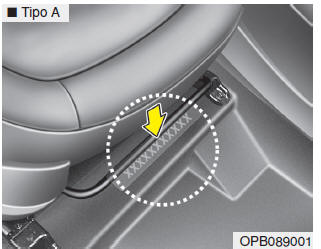
The vehicle identification number is the number used for vehicle registration and in all legal references relating to ownership, etc.
The number is stamped under the passenger or driver seat.
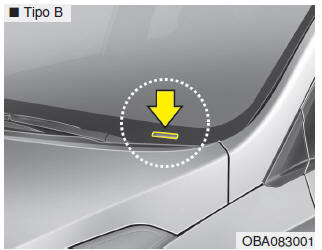
The VIN is also shown on a plate fixed to the top of the instrument panel.
The number on the plate can be easily seen from outside through the windshield.
Vehicle Certification Label
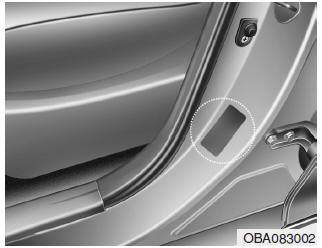
The vehicle certification label, attached to the driver's (or front passenger's) center pillar, shows the vehicle identification number (VIN).
Tire Specification and Pressure Label
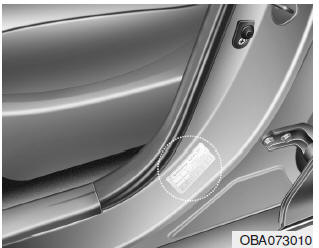
The tires fitted to the new vehicle are selected to provide the best performance for normal driving.
The label located on the center pillar on the driver's side shows the recommended tire pressures for the vehicle.
Engine Number
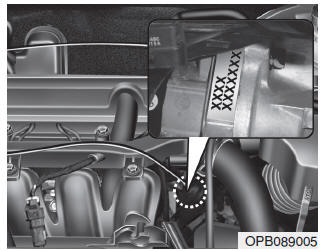
The engine number is stamped on the engine as shown in the illustration.
Air Conditioning Compressor Label
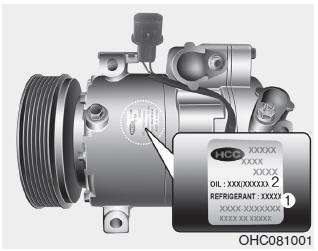
The compressor label shows information on the type of compressor fitted to the vehicle, such as model, supplier part number, production number, refrigerant (1) and refrigerant oil (2).
E-Mark Label (For Europe)
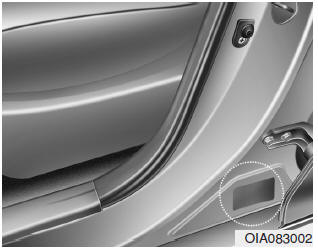
An E-mark label is located on the center pillar on the driver's side.
The E-mark certifies that the vehicle has met the ECE safety / environmental regulations. It contains the following information:
- International prefix
- Regulation number
- Regulation amendment number
- Approval number
Refrigerant Label
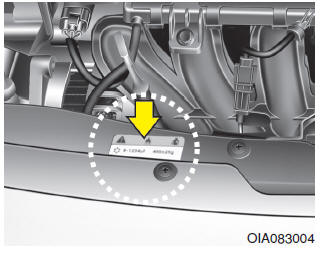
The refrigerant label is located at the front of the engine compartment.
Declaration of Conformity
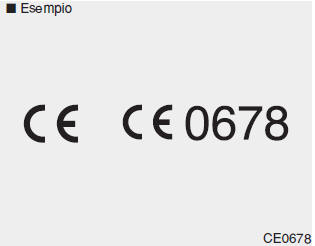
The radio frequency components of the vehicle comply with the requirements and other relevant provisions set out in Directive 1995/5/EC.
Further information, including the manufacturers' Declarations of Conformity, is available on the following HYUNDAI website: http://service.hyundai-motor.com
Test yourself
A quick Hyundai i10 quiz: every answer comes with an explanation and a link to the manual page.