Using the Tire Mobility Kit
CAUTION
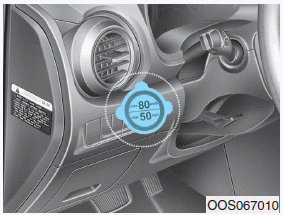
Detach the speed limit label (0) from the sealant bottle (1) and place it in a visible location inside the vehicle, for example on the steering wheel, to remind the driver not to drive at high speed.
1. Shake the sealant bottle.
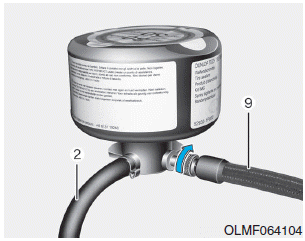
2. Screw the connecting hose (9) onto the sealant bottle fitting.
3. Make sure the button (8) on the compressor is not pressed.
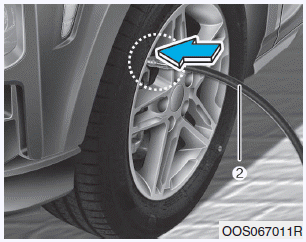
4. Remove the valve cap from the damaged tire and screw on the filler hose (2). Detach the speed limit label from the valve.
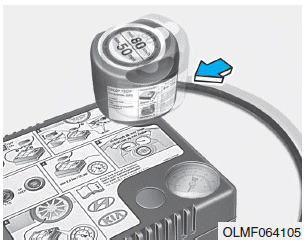
5. Insert the sealant bottle into the compressor holder (4) so that the bottle is in an upright position.
6. Make sure the compressor is off, position 0.
CAUTION
Securely install the sealant filler hose onto the valve. Otherwise, sealant may flow backward, which may cause the filler hose to become clogged.
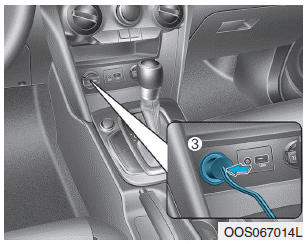
7. Insert the compressor power cable (3) into the vehicle power outlet.
NOTICE
When connecting the power cord, use only the front passenger side power outlet.
8. With the ignition key in the ON position, turn on the compressor and let it run for approximately 5-7 minutes to fill the tire with sealant to the proper pressure (refer to "Tires and Wheels", Chapter 8). Tire pressure after filling is not critical and will be checked/adjusted later.
Be careful not to overinflate the tire, and keep away from the tire while inflating it.
CAUTION
Tire Pressure
Do not attempt to drive the vehicle if tire pressure is below 200 kPa (29 psi). This may cause an accident due to sudden tire failure.
9. Turn off the compressor.
10. Disconnect the hoses from the sealant bottle connector and from the tire valve.
Return the tire mobility kit to its storage location in the vehicle.
WARNING
Carbon Monoxide
Do not leave the vehicle with the engine running in a poorly ventilated area for long periods. Carbon monoxide poisoning and suffocation may occur.
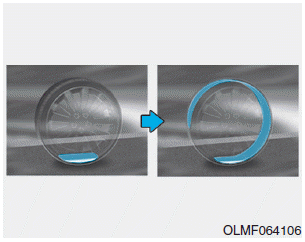
Distributing the Sealant
11. Immediately drive approximately 7–10 km (4–6 miles or about 10 minutes) to evenly distribute the sealant inside the tire.
Do not exceed 80 km/h. If possible, do not drop below 20 km/h.
If you experience unusual vibration, handling changes, or noise while driving, reduce speed and drive carefully until you can safely pull off the road.
Call roadside assistance or a towing service.
Test yourself
A quick Hyundai Kona quiz: every answer comes with an explanation and a link to the manual page.