Brake System
High Voltage Disconnection Procedure
In this manual: Brake System
6steps
~36min
3/5difficulty
Done 0 of 6
High Voltage Disconnection Procedure
|
- Turn the ignition OFF and disconnect the negative (-) terminal of the auxiliary battery.
- Remove the cover (A) from the rear seat floor mat.
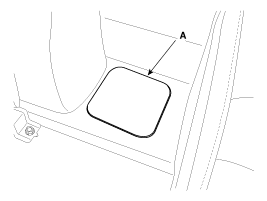
- Loosen the nut and remove the service cover of the safety plug (A). Service cover mounting nut: 7.8 ~ 11.8 N·m
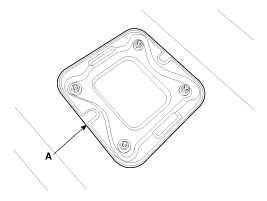
- Remove the safety plug (A).
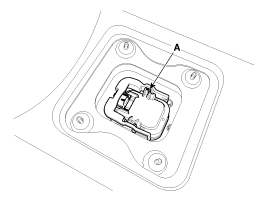
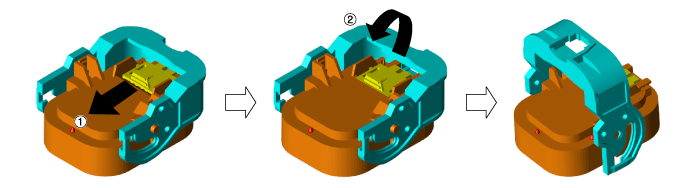
Remove the safety plug in the following order.
- Wait at least 5 minutes or until the capacitor in the high-voltage system is fully discharged.
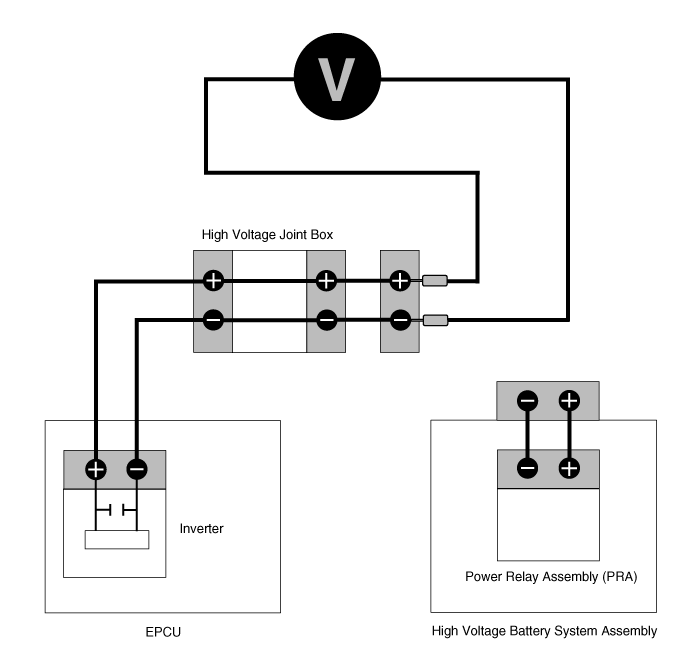
- Measure the voltage between the inverter terminals to confirm that the capacitor in the inverter is fully discharged.
- Raise the vehicle.
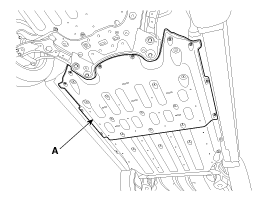
- Remove the high-voltage battery lower cover (A) by loosening the bolt.
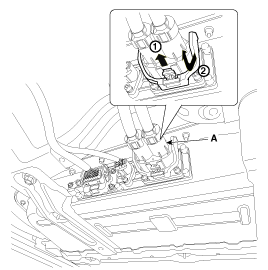
- Disconnect the high-voltage cable (A).
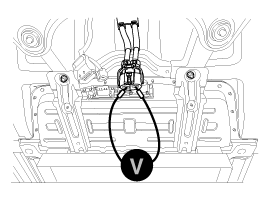
- Measure the voltage between the inverter terminals. Less than 30 V: High-voltage circuit is properly closed. More than 30 V: Malfunction in the high-voltage circuit.
Test yourself
A quick Kia Soul EV Owner's Manual quiz: every answer comes with an explanation and a link to the manual page.
Was this page helpful?