Body Electrical System
Relay Box (Interior) Description and Operation
In this manual: Body Electrical System
25steps
~150min
4/5difficulty
Done 0 of 25
Description
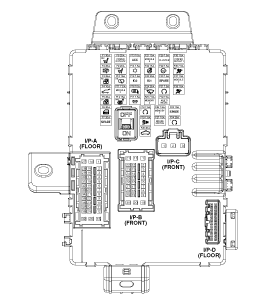
Smart Junction Box (SJB)- General Functions: Internal Junction Box + some BCM functions. It controls loads via CAN communication and IPS.
- Main Function
- Low-speed CAN communication (100 kbit/s)
- Self-Diagnosis (Lamp Open/Short)
- Fail-Safe (when MCU/CAN fails, headlamp/tail lamp operates directly)
- Lamp Overvoltage Protection (PWM function)
- Overload and Short Circuit Shutdown: PCL (Program Current Limit)
Function
- Door Switch: After evaluating the contact switch position, the SJB sends CAN messages to other modules.
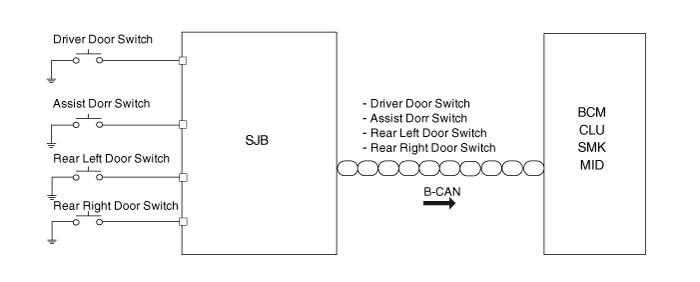
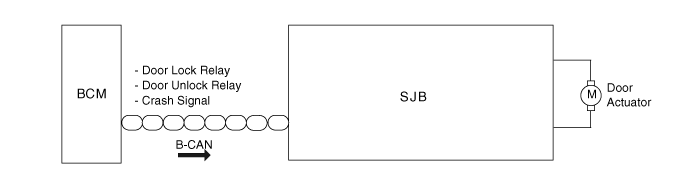
- Door Lock/Unlock Relay: The SJB receives commands from the BCM and operates the door lock/unlock relay.
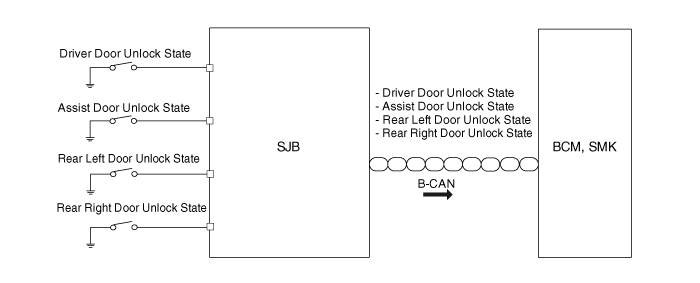
- Door Unlock Status: After evaluating the contact switch position, the SJB sends CAN messages to other modules.
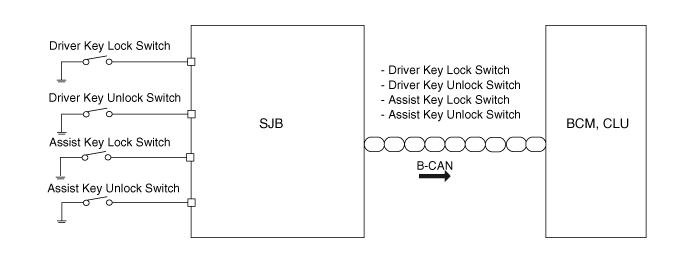
- Door Key Lock/Unlock Switch: After evaluating the contact switch position, the SJB sends CAN messages to other modules.
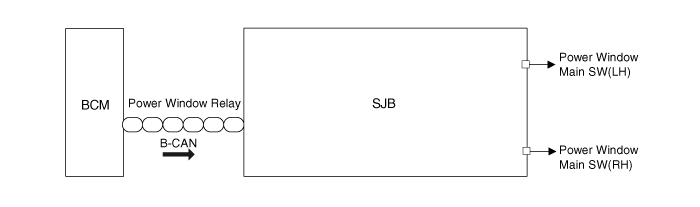
- Power Window Relay: The SJB receives commands from the BCM and operates the power window relays.
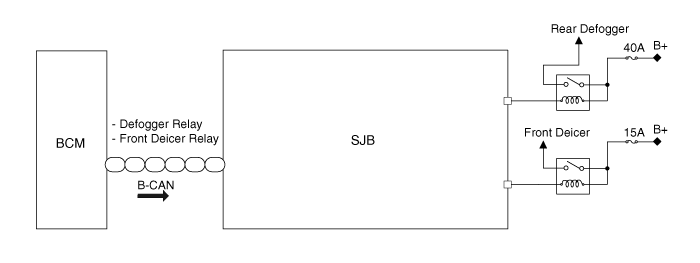
- Rear Window Defroster Relay and Front Window Defroster Relay: The SJB receives commands from the BCM and controls the rear window defroster relay and the windshield heater relay.
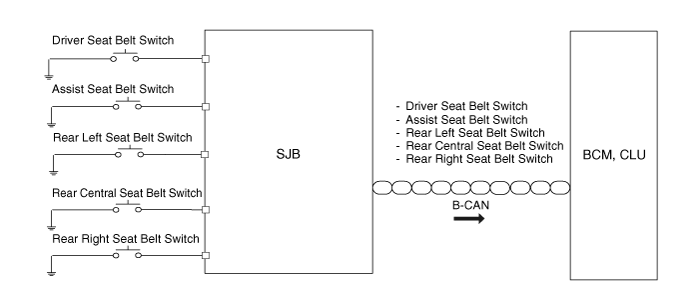
- Driver Seat Belt Switch: After evaluating the contact switch position, the SJB sends CAN messages to other modules.
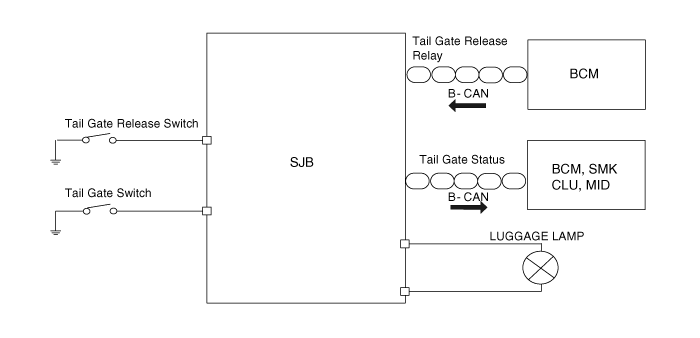
- Tailgate Switch: After evaluating the contact switch position, the SJB sends CAN messages to other modules (BCM, CLU). The SJB sends a CAN message with the rear door status to the SMK.
- Hood Switch: After evaluating the contact switch position, the SJB sends CAN messages to other modules.
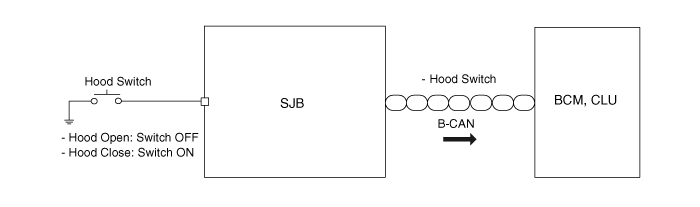
- Lamp: The SJB receives commands from the BCM and controls each lamp accordingly.
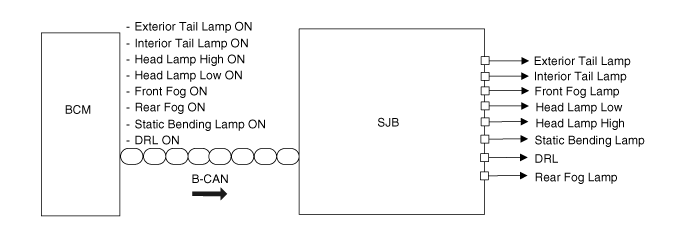
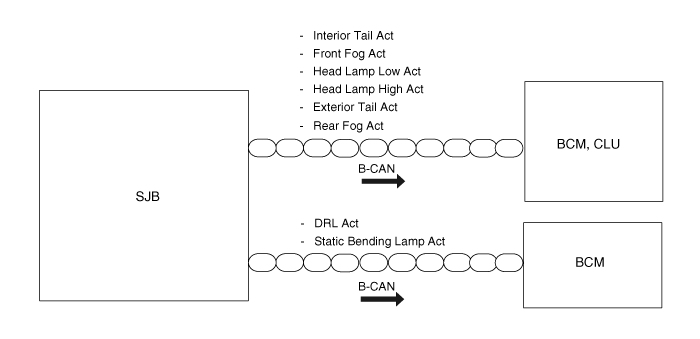
- Lamp Status: After evaluating the status of each lamp, the SJB sends CAN messages to other modules.
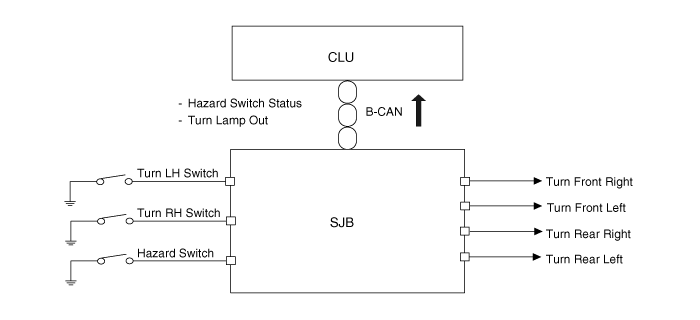
- Hazard Warning and Turn Signal Lamp
- Operating Conditions: When the key box is on or operating (IGN1 and IGN2).
- While the turn signal lamps are operating, if more than 1 load is in Open Load or Short to GND condition, double flashing will be performed.
- When the hazard warning lamps are on, if more than 3 loads are in Open Load or Short to GND condition, double flashing will be performed.
- Double Flashing: The lamps flash twice as fast as during normal operation.
- When the hazard warning and turn signal lamp circuit is overcurrent or short-circuited, all related load outputs on its side are turned off.
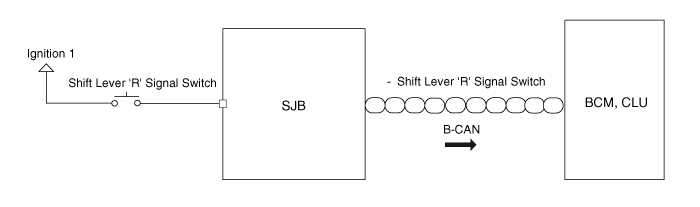
- 'R' Gear Shift Lever Signal Switch: After evaluating the contact switch position, the SJB sends CAN messages to other modules.
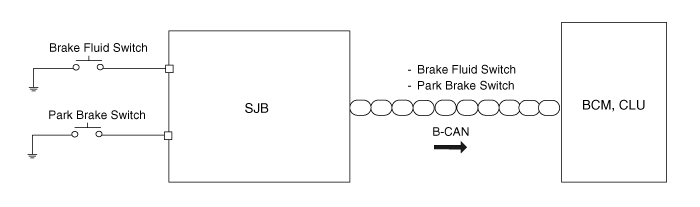
- Brake Fluid / Parking Brake Switch: After evaluating the contact switch position, the SJB sends CAN messages to other modules.
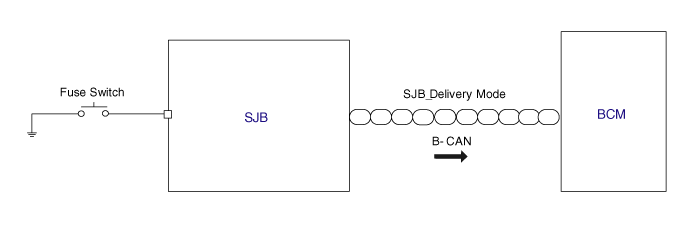
- Fuse Switch: After evaluating the contact switch position, the SJB sends CAN messages to other modules.
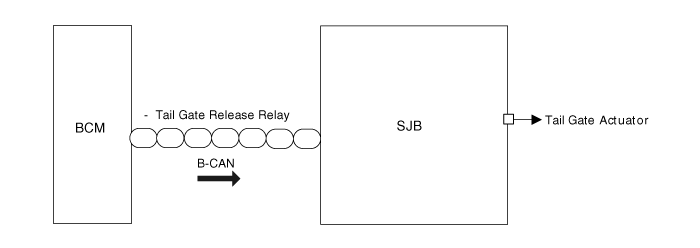
- Tailgate Opening Relay: The SJB receives commands from the BCM and operates the tailgate actuator.
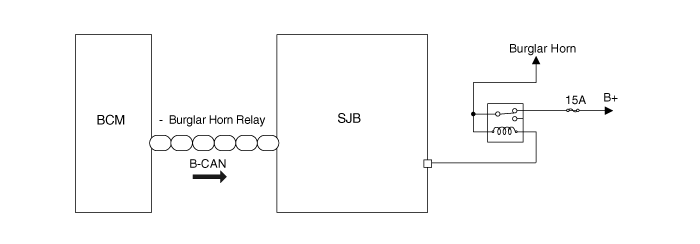
- Theft Alarm Relay: The SJB receives commands from the BCM and controls the horn.
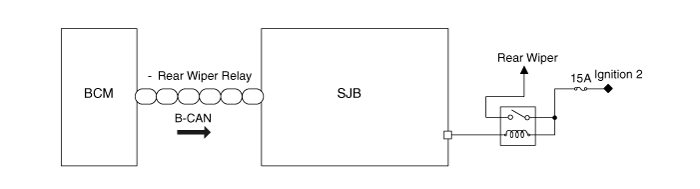
- Rear Wiper Relay: The SJB receives commands from the BCM and operates the rear wiper.
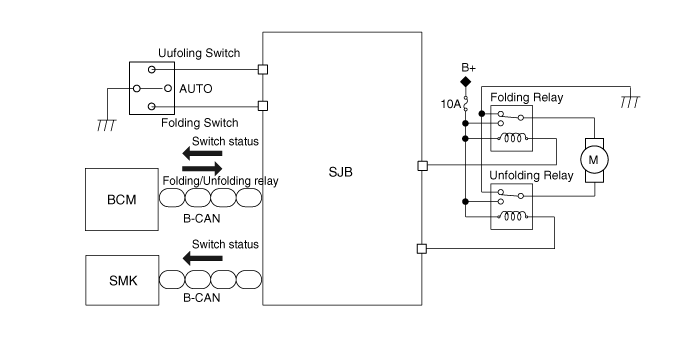
- Mirror Fold/Unfold Relay: After evaluating the contact switch position or receiving commands from the BCM, the SJB controls the mirror fold and unfold relays and sends the mirror command mode status to other modules.
- Description: Automatically cuts power to loads to reduce unnecessary parasitic current depending on the vehicle condition.
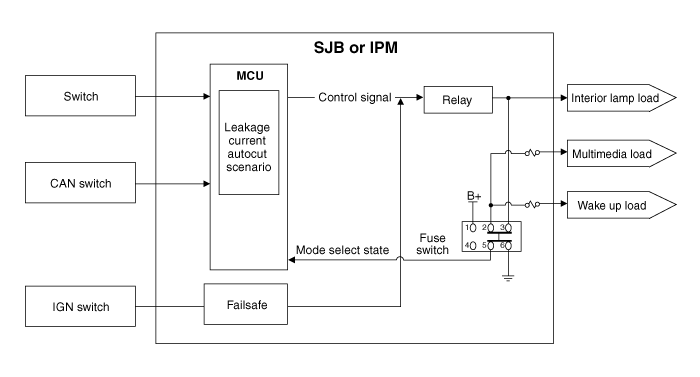
- The SJB has 3 modes: "Normal Mode", "Sleep Mode", and "Power Down Mode". Automatic parasitic current cut-off is performed in "Sleep Mode".
- "Sleep" condition: IG OFF, no constant input switch, CAN network not active.
- Sleep Entry Conditions: Any switch input or CAN network activation, KEY ON, IGN ON.
- Power Down Condition: The set time of the timer used. When the load is de-energized, power expires.
- "Normal Mode": The SJB function is normally active.
- "Sleep Mode": A low power consumption mode activated to reduce power consumption of the SJB or SIZ. The automatic parasitic current cut-off function is activated.
- "Power-down mode": power to the MCU and the circuit is cut off to minimize power consumption. Operation stops.
- Description - Automatic Dark Current Cut-off
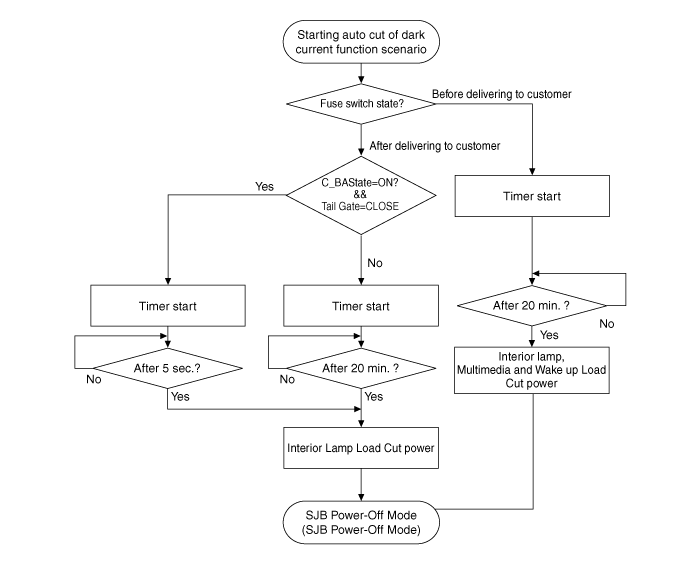
Before Delivery to Customer Fuse switch OFF. • All doors closed and door lock by RKE or constant switch status
(Automatic parasitic current cut-off scenario starts.)
- After the "sleep" state for 20 min.
- SJB power down (SJB parasitic current: 200 μA) and power down of interior lamp / multimedia / wake-up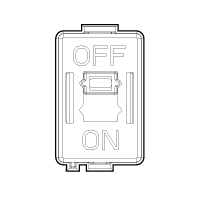
After Delivery to Customer Fuse switch ON. • All doors closed and constant switch status: C_BAState=OFF
(Automatic parasitic current cut-off scenario starts.)
- After the "sleep" state for 20 min.
- SJB power down (SJB parasitic current: 200 μA) and power down of interior lamp load
• In case of RKE door lock: C_BAState=ON & Tail Gate=CLOSE
(Automatic parasitic current cut-off scenario starts.)
- After entering sleep mode, 35–65 s (other device wait time: 30–60 s + SJB sleep mode counts 5 s)
- SJB power down (SJB parasitic current: 200 μA) and power down capability of interior lamp load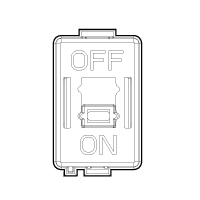
- Problem when the fuse switch is incorrectly set: If the fuse switch is set to OFF (before delivery to the customer) and the customer or technician activates the automatic parasitic current cut-off function, the following problems may occur.
Symptom Related Part • Door lock/unlock and open tailgate are not activated by RKE.
(Wake-up of each module is not activated.)BCM • Digital clock reset. (Memory reset.) Digital Clock • Audio setting values (volume, frequency) are reset.
(Memory reset.)Audio
* If the fuse switch is turned OFF (before delivery to the customer), BCM power, digital clock and audio are disabled.
Test yourself
A quick Kia Cee'd quiz: every answer comes with an explanation and a link to the manual page.
Was this page helpful?