Fuel Tank: Functional Description
PETROL
DIESEL
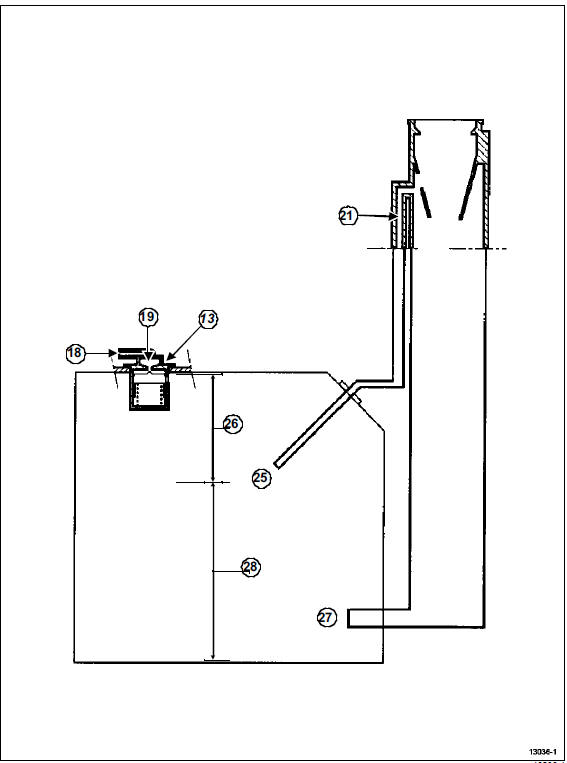
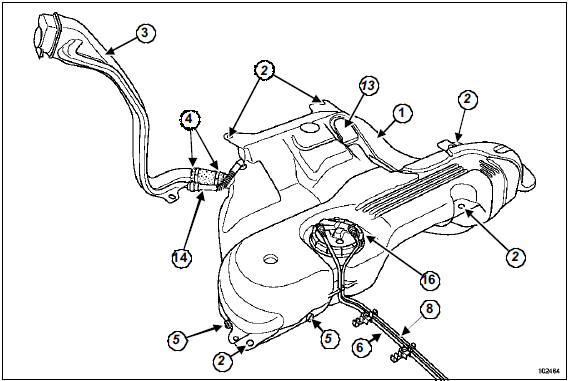
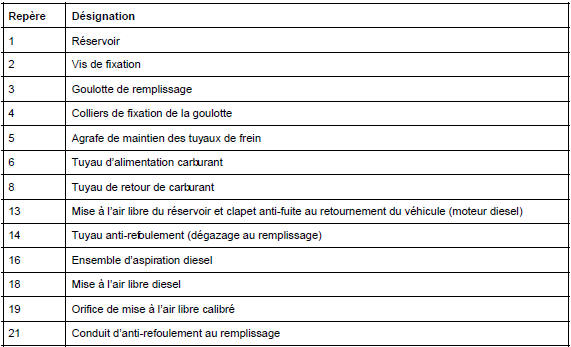
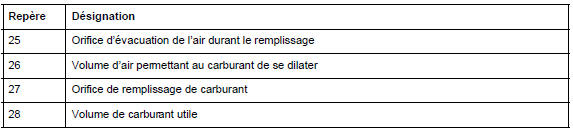
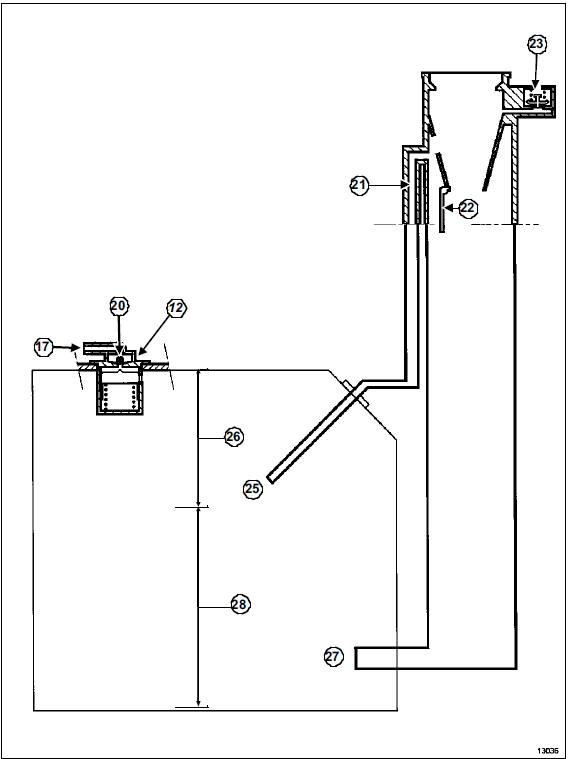
ROLE OF THE VALVES AND THE FILLER NECK
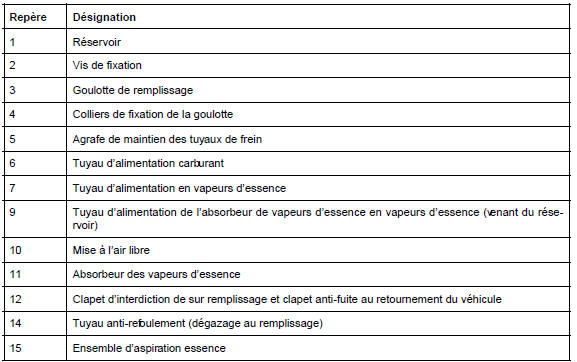
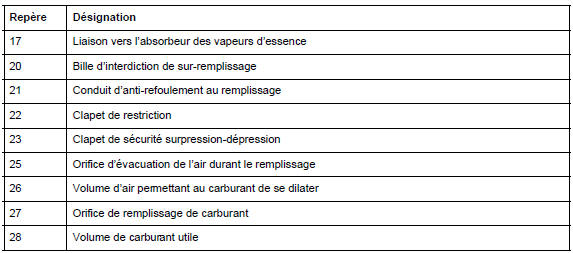
1 - Pressure/vacuum relief valves (23) (petrol versions only)
If the fuel vapour recovery circuit is blocked, this valve prevents the tank from becoming pressurised (the tank swells) or under vacuum (as fuel is consumed, the tank collapses).
2 - Restrictor valve (22)
This valve prevents leaded petrol or diesel pump nozzles from being inserted into the tank.
3 - Overfill prevention valve (12) and rollover valve (13)
The ball acts as an overfill valve.
With the vehicle at rest, during refuelling, the ball rests on its seat, trapping a volume of air in the tank.
With the vehicle in motion, the ball leaves its seat, connecting the tank to the charcoal canister.
When the tank is full, it is essential that a volume of air remains in the tank so the petrol can expand without causing the tank to burst.
The rollover valve prevents the tank from draining through the line to the charcoal canister or through the vent line (diesel).
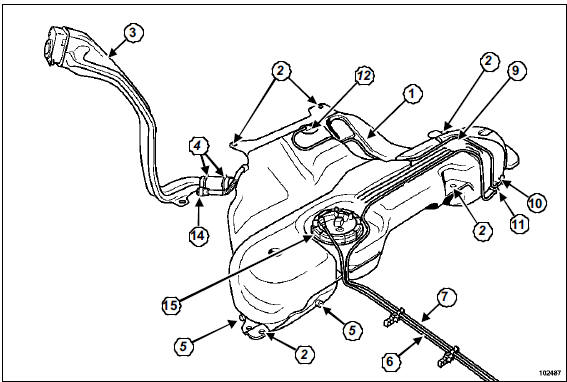
4 - Filler neck (3)
The unleaded fuel filler neck has:
- a smaller-diameter filler opening (restrictor valve). Leaded petrol damages the emission control system: oxygen sensor and catalytic converter,
- a valve closing the filler opening (to prevent fuel vapour escaping or fuel flowing back out),
- a sealed-type cap.
Test yourself
A quick Renault Megane quiz: every answer comes with an explanation and a link to the manual page.