Wheels and Tyres Guide - General Information
Run-flat tyres - general information
In this manual: Wheels and Tyres Guide - General Information
~1min read
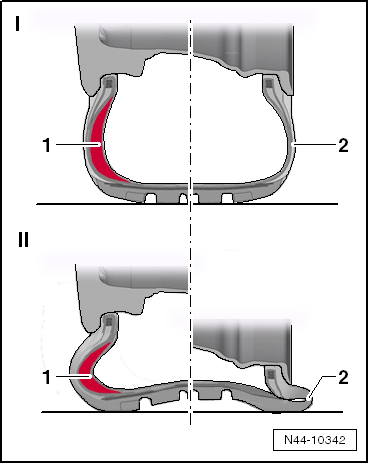
| Tyres with run-flat properties have reinforced side walls when comparing them with normal tyres. This reduces the slippage of the side walls and prevents the tyre flanks sticking when the tyres are run deflated. This ensures the vehicle remains controllable and the vehicle has almost normal driving characteristics. The alleviates the necessity to fit the spare wheel in dangerous conditions e.g hard shoulder of a motorway or in bad weather conditions. A deflated tyre can be driven further to the next workshop (approx. 50 km (approx. 30 miles)) at a suitable speed (max. 80 km/h) and in suitable driving style for the conditions, see → Owner's wallet. After checking the respective wheel, the responsibility lies with the driver to decide if it is safe to drive further with the deflated tyre. |
-I- Tyres with normal air pressure
-II- Deflated tyreWhen a normal tyre -2- deflates, the side walls are pressed against the wheel rims. The side walls heat up extremely or stick and are therefore destroyed when the tyre is deflated. Tyres with run-flat properties -1- are supported on the reinforced side walls (-red-). A special tyre mixture and the reduced walkability of the reinforced side walls reduces the heat created when the tyre is run and the vehicle remains controllable. Note Please note the special requirements when using tyres with run-flat properties → Chapter. |
 |
Test yourself
A quick Volkswagen Golf quiz: every answer comes with an explanation and a link to the manual page.
Was this page helpful?