Tread depth and wear indicators
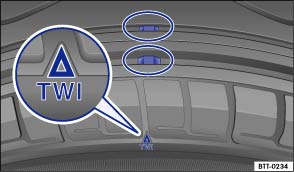 Fig. 129
Tire tread: wear indicators.
 Read and observe the introductory information
and safety warnings first⇒
 Introduction
to the topic Tread depth
Special driving conditions require the greatest possible tread depth on the tires and approximately equal tread depth on the front and rear axles. This applies in particular to driving in winter weather and cold temperatures and on wet roads ⇒ .
In most countries, the legally permissible minimum tread depth is reached at a remaining tread of 1.6 mm, measured in the tread grooves next to the wear indicators. Observe country-specific legal regulations.
Winter and all-season tires largely lose their winter performance when the tread has worn down to a depth of 4 mm. Observe country-specific legal regulations on the permissible minimum tread depth of winter and all-season tires.
The tread depth of new tires may vary depending on design features and tread pattern, depending on the version and manufacturer.
Wear indicators in the tireThe tread base of the original tires has 1.6 mm high wear indicators running across the direction of travel ⇒ Fig. 129. These wear indicators are arranged several times at equal intervals on the tread. Markings on the tire sidewalls show the position of the wear indicators, e.g. the letters TWI or symbols.
The wear indicators show whether a tire is worn down. As soon as the tread has worn down to the wear indicator at the latest, the tire must be replaced.

 Warning
Worn tires are a safety risk and can lead to loss of vehicle control and serious injury.
- As soon as the tires have worn down to the wear indicator at the latest, they must be replaced with new tires.
- Worn tires have greatly reduced grip, especially on wet roads, and the vehicle is more likely to hydroplane (aquaplaning).
- Worn tires reduce the ability to control the vehicle well in normal and difficult driving situations, and increase braking distance and the risk of skidding.