Tyre pressure
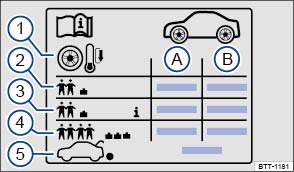 Fig. 127
Symbols on the tyre pressure label.
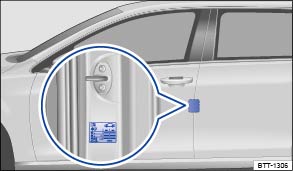 Fig. 128
On the driver's door pillar: tyre pressure label
(alternatively on the inside of the fuel filler flap).
 Read and observe the introductory information
and safety warnings first⇒
 Introduction
to the topic
Information on the tyre pressure label ⇒ Fig. 127 :
 Tyre pressure for the front axle tyres.
 Tyre pressure for the rear axle tyres.
 Tyre pressure when tyres are cold.
 Tyre pressure with partial load.
 Depending on vehicle: comfort tyre pressure
with partial load. Tyre pressure with full load.
 Tyre pressure for the spare wheel or
temporary spare wheel.
The tyre pressure label shows the correct tyre pressure for tyres fitted at the factory. The values apply to summer, all-season and winter tyres. The tyre pressure label is located either on the driver's door pillar ⇒ Fig. 128 or on the inside of the fuel filler flap.
Depending on the vehicle, the appearance of the tyre pressure label may differ. It may include additional tyre sizes ⇒ Tyre markings and tyre types.
Incorrect tyre pressure leads to increased wear, a considerably shorter tyre service life, or even tyre bursts. Tyre pressure that is too low or too high has an adverse effect on the vehicle's handling ⇒. Correct tyre pressure is especially important
at high speeds.
Depending on the vehicle, the tyre pressure label may include a comfort tyre pressure ⇒ Fig. 127③ . Comfort tyre pressure improves ride comfort. Driving with comfort tyre pressure may increase fuel consumption.
Checking tyre pressure- Check tyre pressure regularly, at least once a month, and additionally before every longer journey. Always check all tyres, including the spare wheel if fitted. In colder regions, check tyre pressure more often, but only if the vehicle has not been moved beforehand. Always use a working tyre pressure gauge.
- Only check tyre pressure if the tyres have not been driven more than a few kilometres at low speed in the last 3 hours. The specified tyre pressure applies to cold tyres. Tyre pressure is higher when tyres are warm than when they are cold. For this reason, never let air out of a warm tyre to adjust the tyre pressure.
- If the load is increased, adjust the tyre pressure accordingly ⇒ Fig. 127④ .
- After adjusting the tyre pressures, always screw the valve caps back onto the valves and observe any information and notes on setting up the tyre pressure monitoring system ⇒ Tyre pressure monitoring system.
- Make sure you use the tyre pressure specified by the vehicle manufacturer, not the tyre manufacturer's tyre pressure. Never exceed the maximum tyre pressure stated on the tyre sidewall.
The spare wheel or temporary spare wheel is inflated to the highest tyre pressure ⇒ Fig. 127⑤ specified for the vehicle.

 Warning
Tyre pressure that is too high or too low can cause the tyre to suddenly lose air or burst while driving. This can cause serious accidents and fatal injuries.
- Tyre pressure that is too low can cause the tyre to heat up so much while driving that the tread may separate and the tyre may burst.
- Excessive speeds or overloading the vehicle can lead to overheating, sudden tyre damage including tyre bursts and tread separation, and thus to loss of vehicle control.
- Tyre pressure that is too low or too high shortens tyre service life and worsens the vehicle's handling.
- Check tyre pressure regularly, at least once a month, and additionally before every longer journey.
- All tyres must have the correct tyre pressure for the load being carried.
- Never reduce the increased tyre pressure when tyres are warm.

 Note
- When attaching the tyre pressure gauge, make sure it does not sit at an angle on the valve stem. Otherwise the tyre valve may be damaged.
- Missing, unsuitable or incorrectly tightened valve caps can damage the tyre valve. For this reason, always drive with the valve caps fully screwed on, matching the factory-fitted valve caps.

Tyre pressure that is too low increases fuel consumption.

If the tyre pressure monitoring indicator warns that the tyre pressure
is too low on at least one tyre, check the tyre pressure with a working tyre pressure gauge. Tyre pressure that is too low cannot be reliably detected just by looking at the tyre. This also applies to tyres with low tread depth.
When checking the tire inflation pressures, observe the special features of the
tire pressure monitoring system ⇒ Tire pressure monitoring system.