Tire Rotation
If the vehicle has non-directional tires, they should be rotated every 12 000 km/7,500 mi.
See Maintenance Schedule.
Tires are rotated to achieve a uniform wear for all tires.
The first rotation is the most important.
Any time unusual wear is noticed, rotate the tires as soon as possible and check the wheel alignment. Also check for damaged tires or wheels.
See When It Is Time for New Tires and Wheel Replacement.
Directional tires should not be rotated. Each tire and wheel should be used only in the position it is in. Directional tires will have an arrow on the tire indicating the proper direction of rotation or will have “left” or “right” molded on the sidewall.
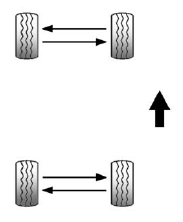
Use this rotation pattern if the vehicle has different size tires on the front and rear and they are non-directional.
Different tire sizes should not be rotated front to rear.

Use this rotation pattern when rotating tires of the same size installed on all four wheel positions.
If the vehicle has a compact spare tire, do not include it in the tire rotation.
Adjust the front and rear tires to the recommended inflation pressure on the Tire and Loading Information label after the tires have been rotated.
See Tire Pressure and Vehicle Load Limits.
Reset the Tire Pressure Monitor System. See Tire Pressure Monitor Operation.
Check that all wheel nuts are properly tightened. See “Wheel Nut Torque” under Capacities and Specifications.
Lightly coat the center of the wheel hub with wheel bearing grease after a wheel change or tire rotation to prevent corrosion or rust build-up. Do not get grease on the flat wheel mounting surface or on the wheel nuts or bolts.
Test yourself
A quick Cadillac CTS quiz: every answer comes with an explanation and a link to the manual page.