General Information
Warning and Caution Labels
In this manual: General Information
~3min read
Warning and Caution Labels

| 1. Radiator Cap Warning 2. Fan Warning |
3. Battery Caution |
WARNING SRS Vehicle
This vehicle is equipped with a supplemental restraint system. To ensure continued reliability, some components of the supplemental restraint system must be serviced or replaced by an authorized dealer ten years after the vehicle's manufacture date. For further information, refer to the owner's manual.
Side Airbag
This vehicle is equipped with a side airbag system. To ensure continued reliability, some components of the side airbag system must be serviced at the date shown on the certification label. For further information, refer to the owner's manual.
Battery Warning Label Description
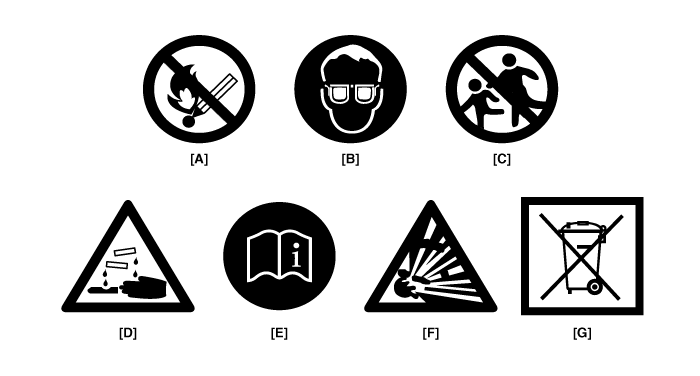
Keep lit cigarettes and any other open flames or sparks away from the battery.
B.
Wear eye protection when charging or working near the battery. Always provide ventilation when working in an enclosed area.
- When lifting a plastic-cased battery, excessive pressure may cause acid leakage, which can result in injury. Lift the battery with a battery carrier or with hands on opposite corners.
- Never attempt to replace the battery while the battery cables are connected.
- The electrical ignition system operates at high voltage. Never touch these components with the engine running or the ignition switch ON.
C.
Keep batteries out of reach of children because batteries contain highly corrosive SULFURIC ACID. Do not allow battery acid to contact skin, eyes, clothing, or paint.
D.
If electrolyte gets into the eyes, flush eyes with clean water for at least 15 minutes and seek immediate medical attention. If possible, continue flushing with a sponge or cloth until medical help is provided.
If electrolyte contacts the skin, wash the contact area thoroughly. If you feel pain or burning, seek medical attention immediately.
E.
Always carefully read the following instructions before handling the battery.
F.
Hydrogen, a flammable gas, is always present in battery cells and may explode if ignited.
G.
Improperly disposed of batteries can harm the environment and human health.
Always check local battery disposal regulations.
Battery Handling and Storage
| Battery |
|
| Battery Installed in the Vehicle |
|
|

Test yourself
A quick Hyundai Genesis DH quiz: every answer comes with an explanation and a link to the manual page.
Was this page helpful?