Selecting a Child Restraint System (CRS)
When selecting a child restraint for your child, always consider:
- Make sure it has a CRS label certifying that it meets the country's safety standards.
- Always use a child restraint suitable for the child's height and weight. The required label or the instructions for use usually provide this information.
- Select a child restraint that fits the vehicle seat where it will be installed.
- Read and follow the warnings and installation and use instructions provided with the child restraint.
Types of Child Restraint System
There are three types of child restraint systems: rear-facing child seats, forward-facing child seats, and booster seats. They are classified according to the child's age, height and weight.
Rear-Facing Child Restraint
WARNING NEVER place a child or infant restraint system in the passenger seat. Placing a rear-facing restraint on the front seat can cause SERIOUS INJURY or DEATH if the seat is struck by the airbag.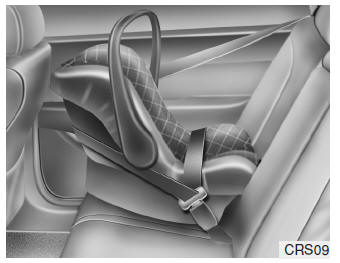
A rear-facing child seat provides protection with its backrest supporting the child's back. The harness system keeps the child in position and, in the event of a collision, works to keep the child in the seat and reduce stress on the fragile neck and spinal cord.
All children under one year old must always travel in a rear-facing child seat. There are several types of rear-facing child seats: infant seats can only be used rear-facing. 3-in-1 convertible seats generally have height and weight limits for the rear-facing position, allowing the child to stay rear-facing for a longer period.
These seats must be used as long as the child is within the height and weight limits specified by the seat manufacturer. This is the best way to keep them safe. Once the child has outgrown the rear-facing child restraint, they are ready for a forward-facing restraint with a harness.
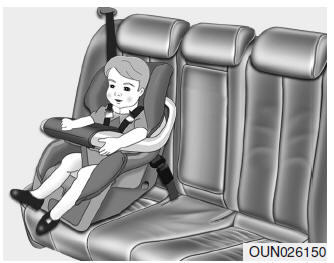
Forward-Facing Child Restraint
A forward-facing child seat provides protection for the child with a harness. Keep the child in a forward-facing child restraint with a harness until they reach the height and weight limits specified by the seat manufacturer.
When the child has exceeded the limits of the forward-facing child seat, they are ready for a booster seat.
Booster Seat
A booster seat is a restraint designed to improve the fit of the vehicle's seat belt system. A booster seat positions the seat belt so that it fits correctly over the strongest parts of the child's body. Keep children in booster seats until they are large enough to use a seat belt correctly.
For correct seat belt use, the lap belt must sit snugly across the thighs, not across the stomach. The shoulder belt must lie across the shoulder and chest, not on the neck or face. Children under 13 years old traveling in the vehicle must sit in the rear seat and always be buckled up to reduce the risk of injury in a collision, sudden stop or sudden maneuver.
Test yourself
A quick Hyundai i10 quiz: every answer comes with an explanation and a link to the manual page.