Engine Electrical System
Spark Plug Repair Procedures
In this manual: Engine Electrical System
13steps
~78min
3/5difficulty
Done 0 of 13
Inspection
[Vehicle Check]
- Run the engine at approximately 3000 rpm for more than 3 minutes.
- Remove the spark plug.
- Visually inspect the spark plug wire. If the electrode is dry, the spark plug is normal. If the electrode is wet, check for damage and electrode gap as shown below.
[Component Inspection]
- Check the spark plug thread and insulator for damage. If damaged, replace the spark plug.
- Check the electrode. Measure the insulation resistance using an ohmmeter. If the resistance is lower than specified, adjust the electrode gap.
Specification: 10 MΩ or more
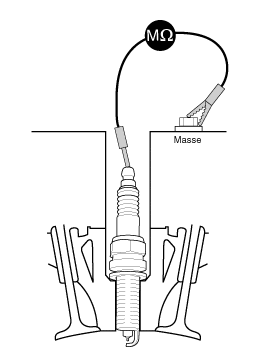
- Check the spark plug electrode gap. If the gap is greater than the maximum value, replace the spark plug.
Specification: 0.7 ~ 0.8 mm (0.028 ~ 0.031 in.)
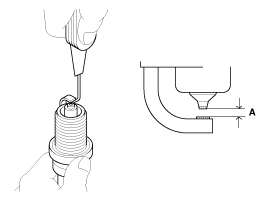
CLEANING
Combustion becomes temporarily unstable due to spent fuel and carbon deposits accumulated on the spark plugs after prolonged storage.[Method 1]
- Start the engine and let it idle for 2 minutes.
- Depress the accelerator pedal and hold the engine speed at 4500 rpm with the shift lever in the N position to warm up the engine until the coolant temperature reaches 80°C.
- Maintain 2500~3000 rpm in the N position for 15 minutes.
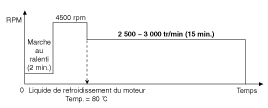
[Method 2]
- Start the engine and let it idle for 2 minutes.
- Drive the vehicle for more than 20 minutes while maintaining engine speed above 3500 rpm.
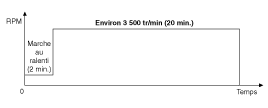
DEPOSIT
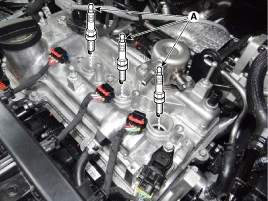
- Remove the ignition coil. (Refer to Ignition System – Ignition Coil)
- Remove the spark plug (A) using a spark plug wrench.
REMEDY
- To install, perform the removal procedure in reverse order.
Tightening Torque: 14.7 – 24 N·m
Test yourself
A quick Hyundai i20 quiz: every answer comes with an explanation and a link to the manual page.
Was this page helpful?