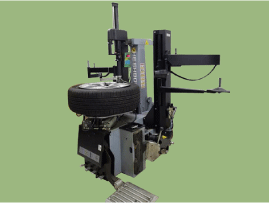
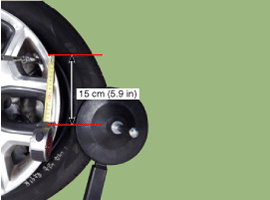
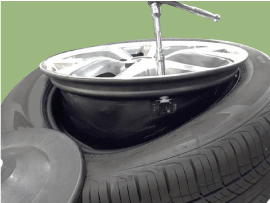
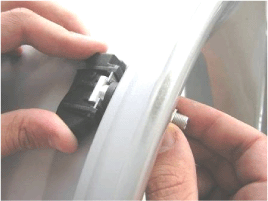
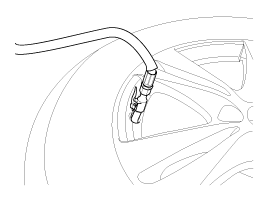
Press the tire as shown in the illustration below.
Remove the TPMS sensor by loosening the nut.
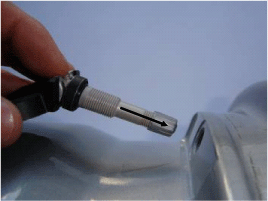
Insert the TPMS sensor into the valve hole in the rim.
Pre-install the nut on the TPMS sensor.
Tighten the TPMS sensor nut.
Tightening torque: 7.0 - 9 N·m
Remove the tire changer.
Inflate the tire until the beads are seated correctly. Tire pressure: 230 kPa (33 psi)
Diagnostic procedure using the diagnostic tool
The following section describes how to diagnose malfunctions using the scan tool.
Connect the diagnostic tool to the data link connector (16-pin) under the protective cover on the driver's side, then turn the ignition on to activate the diagnostic tool.
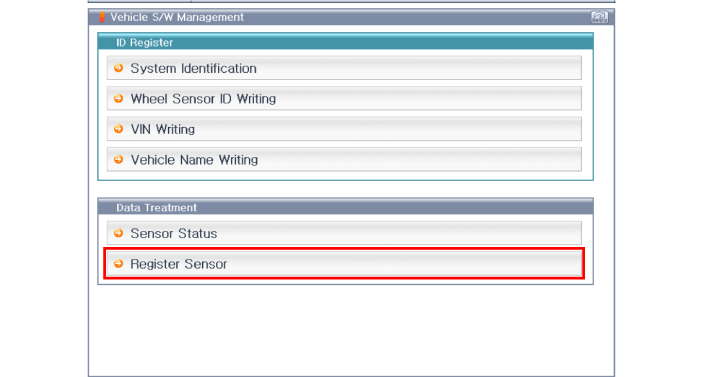
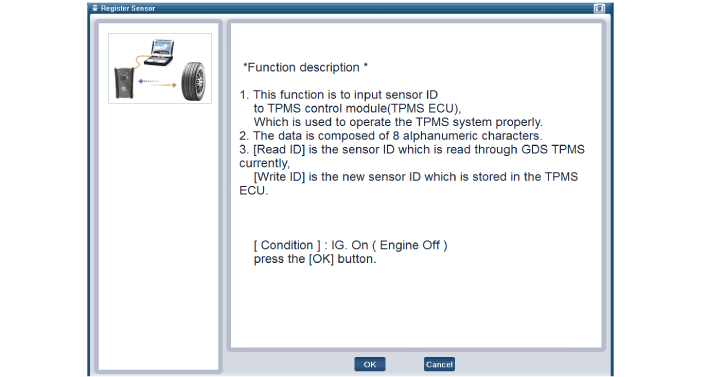
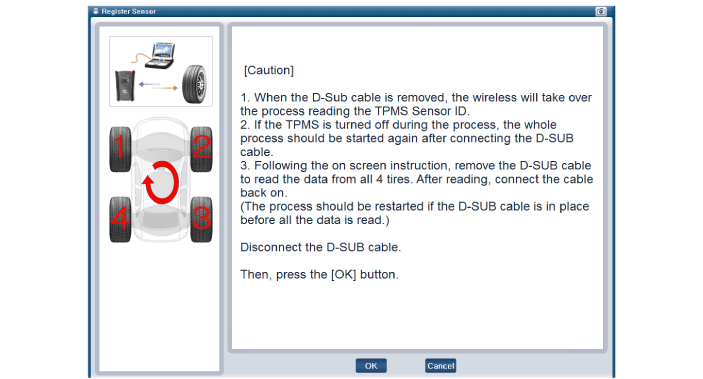
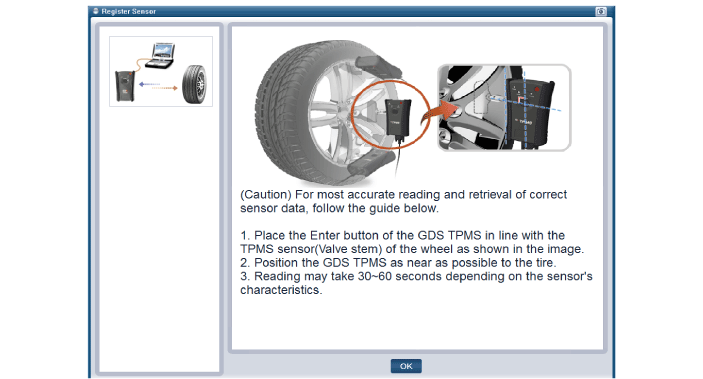
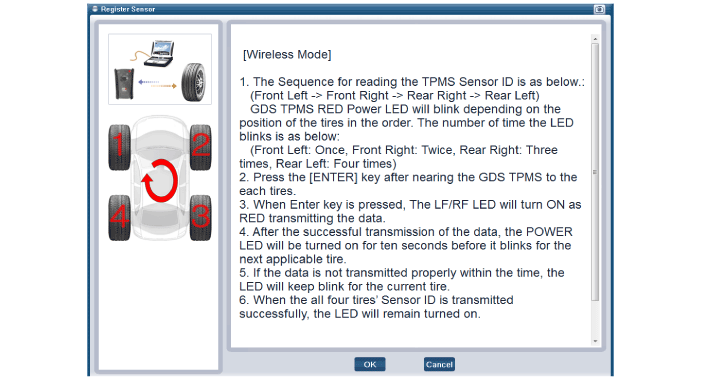
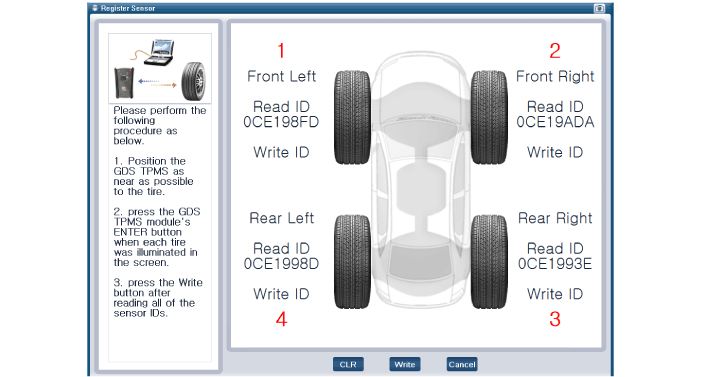
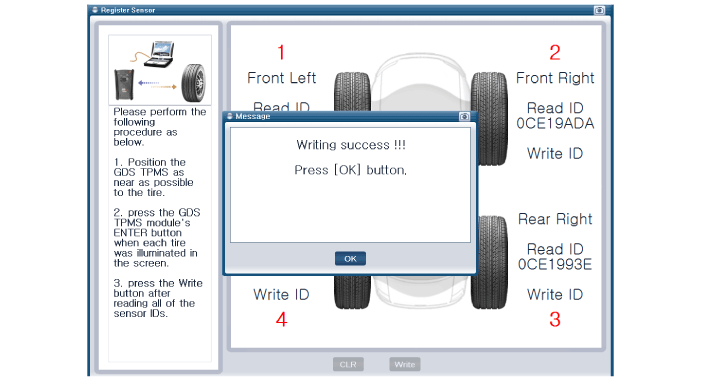
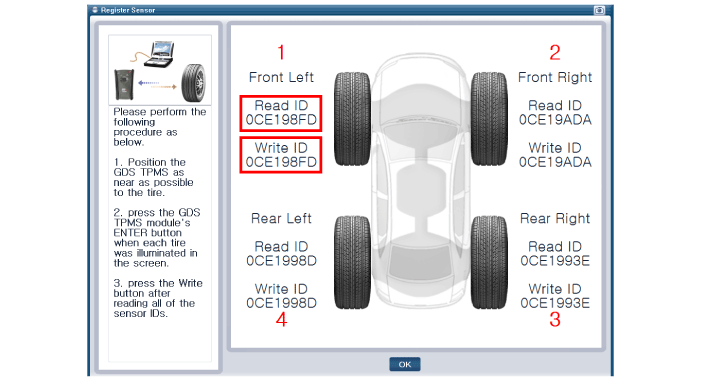
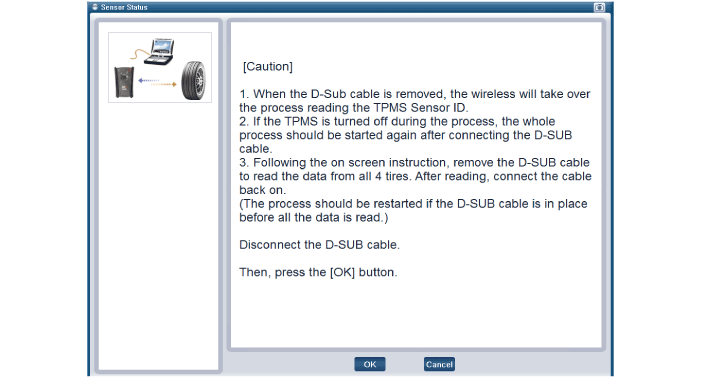
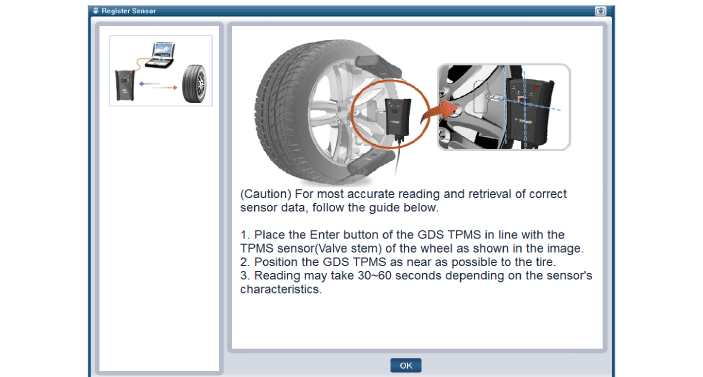
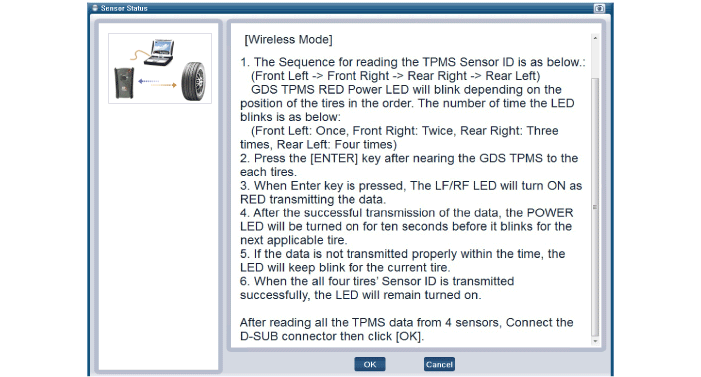
In the GDS vehicle type selection menu, select "Vehicle Type" and "TPMS System," then select "OK." [Initial screen for sensor ID registration][Sensor Registration Function Description][Sensor Measurements during Preparation][Sensor Registration Method 1][Sensor Registration Method 2][Sensor Registration Method 3][Sensor Registration Method 4][Sensor Registration Method 5]
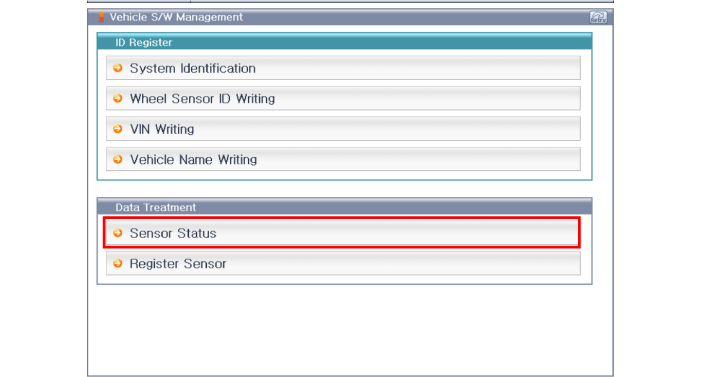
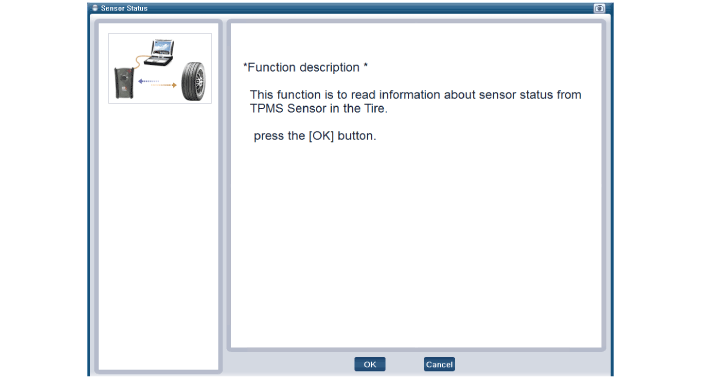
[Sensor Status Initialization][Sensor Function Description][Sensor Measurements during Preparation]
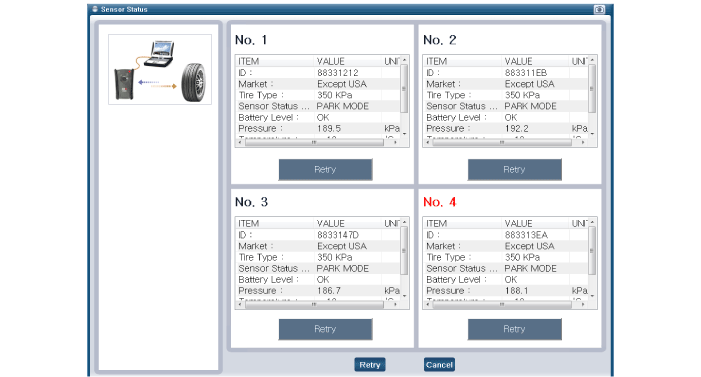
[Sensor Measurements 1][Sensor Measurements 2][Sensor Status]
?
Test yourself
A quick Hyundai Kona quiz: every answer comes with an explanation and a link to the manual page.