Always use genuine DOT 3/DOT 4 brake fluid. Use of non-genuine DOT 3/DOT 4 brake fluid may cause corrosion and shorten the service life of the system.
Make sure dirt or other foreign substances do not contaminate the brake fluid.
Do not spill brake fluid on the vehicle, as it may damage the paint. If brake fluid gets on the paint, wash it off immediately with water.
The master cylinder reservoir must be at the MAX (upper) level mark at the start of the bleeding procedure and checked after bleeding each brake caliper. Add fluid as necessary.
Make sure the brake fluid in the reservoir is at the MAX (upper) line.
Have someone slowly depress the brake pedal several times, then apply pressure.
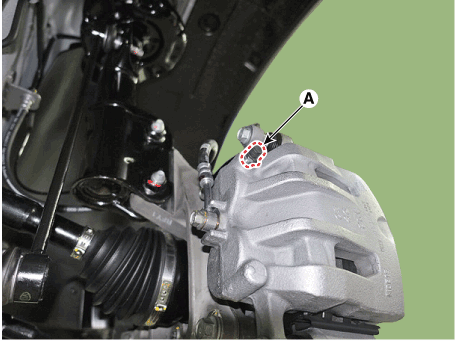
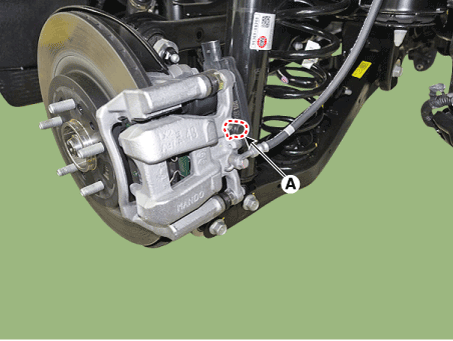
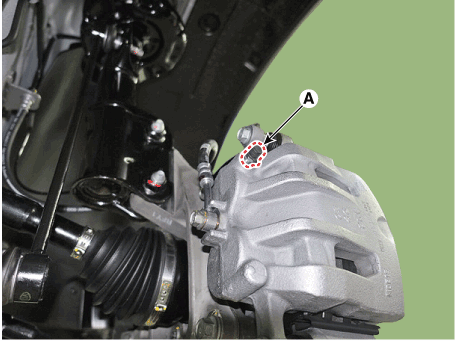
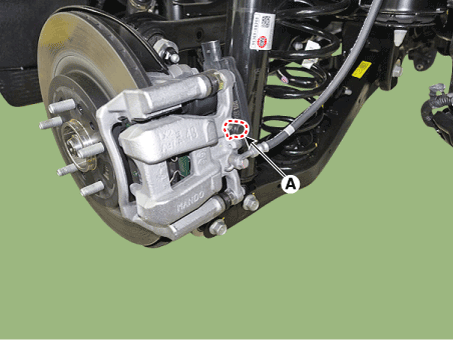
Loosen the bleeder screw on the right rear brake (A) to allow air to escape from the system. Then securely tighten the bleeder screw. [Front][Rear]
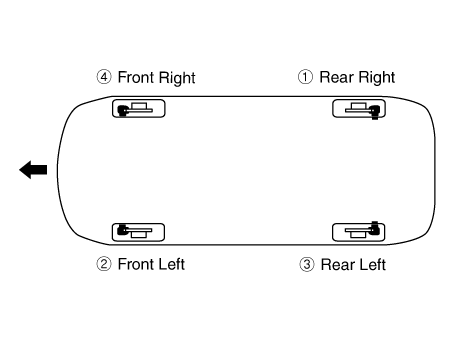
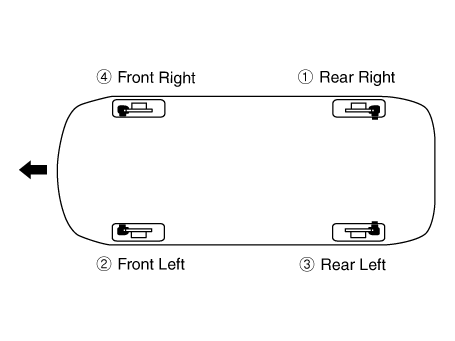
Repeat the procedure for each wheel in the sequence shown below until no more air bubbles appear in the fluid.
Follow the sequence as shown below.
Fill the master cylinder reservoir to the MAX (upper) level mark.
ESC Brake Bleeding
Be careful not to damage parts located under the vehicle (floor under cover, fuel filter, fuel tank, and canister) when lifting the vehicle with a lift. (Refer to General Information - Jack Lifting Points and Support Points)
This procedure must be performed to ensure proper air bleeding and filling of the ESC unit, brake lines, and master cylinder with brake fluid.
Remove the reservoir cap and fill the reservoir with brake fluid.
Do not depress the brake pedal when releasing pressure.
Recommended fluid........ DOT3 or DOT4
Connect a clear plastic tube to the wheel cylinder bleeder screw and insert the other end of the tube into a clear plastic bottle half-filled with brake fluid.
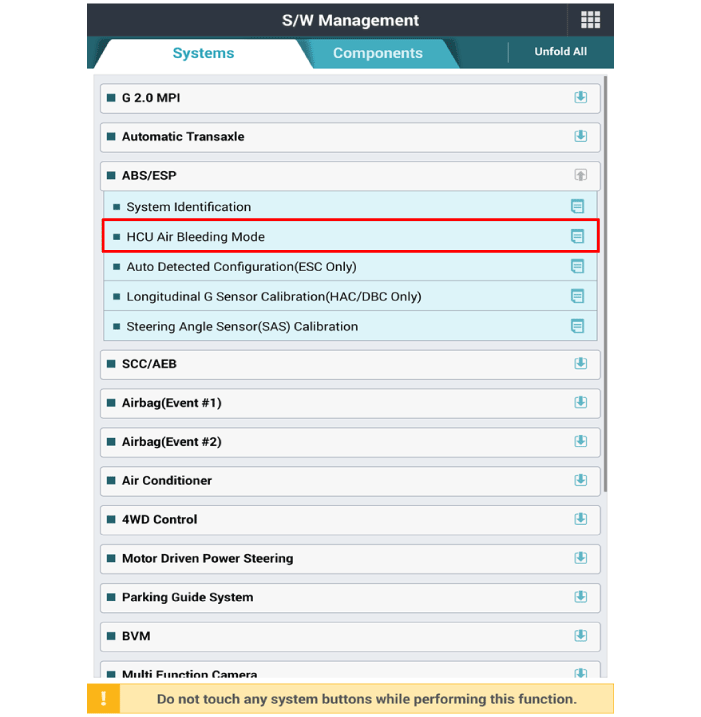
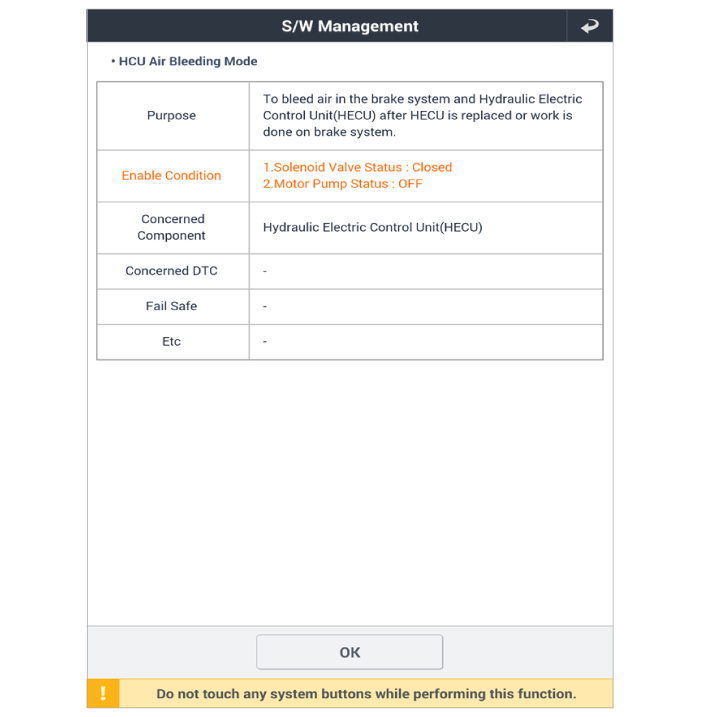
Connect the GDS to the data link connector located under the instrument panel.
Select and follow the instructions on the GDS screen.
Have someone slowly depress the brake pedal several times, then apply pressure.
Depress the brake pedal several times, then loosen the bleeder screw until fluid flows out without bubbles. Then close the bleeder screw (A).
Tightening torque: 6.8–12.7 N·m
[Front][Rear]
Repeat the procedure for each wheel in the sequence shown below until no more air bubbles appear in the fluid.
Fill the master cylinder reservoir to the MAX (upper) level mark.
?
Test yourself
A quick Hyundai Palisade quiz: every answer comes with an explanation and a link to the manual page.