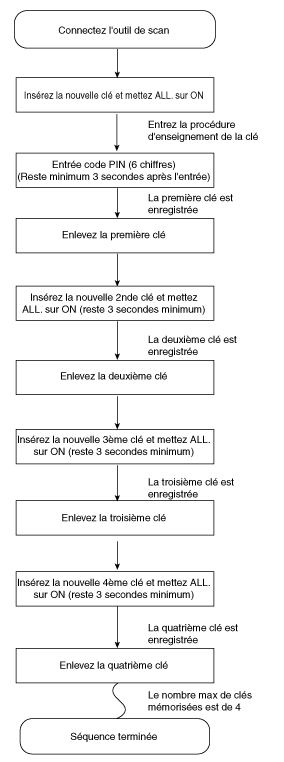
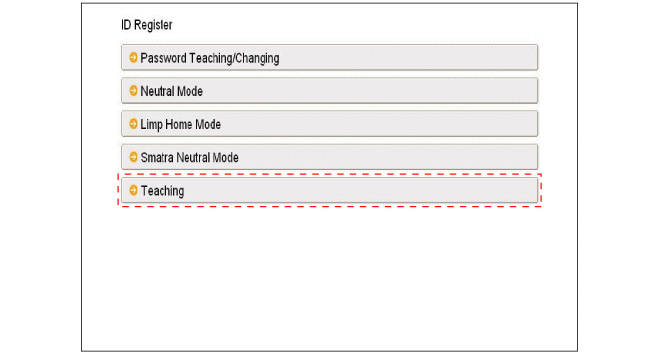
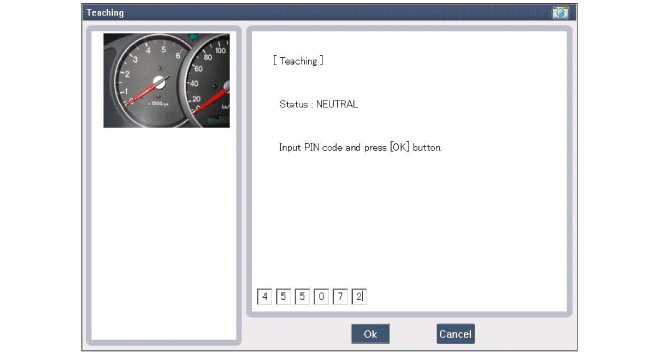
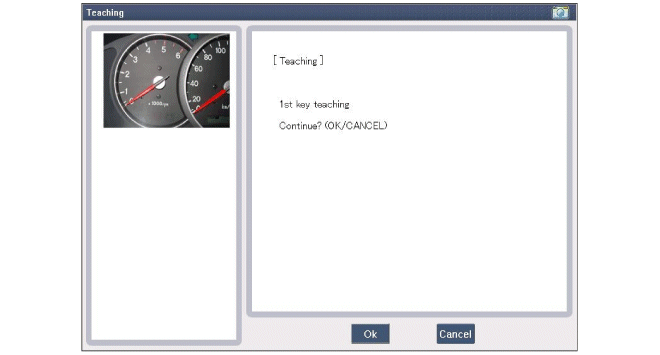
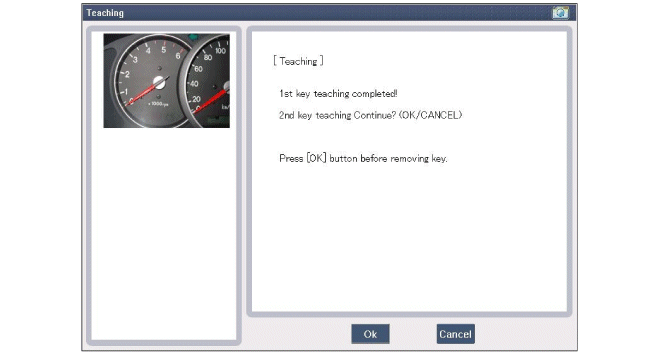
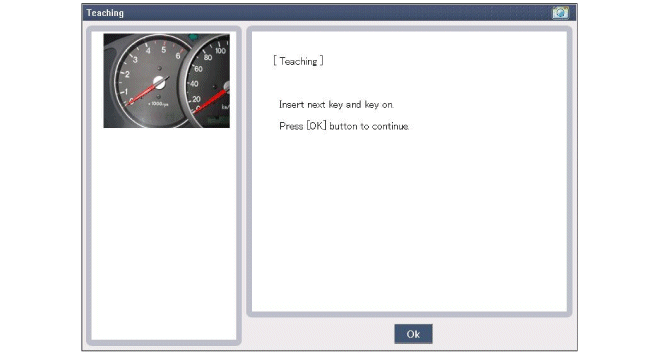
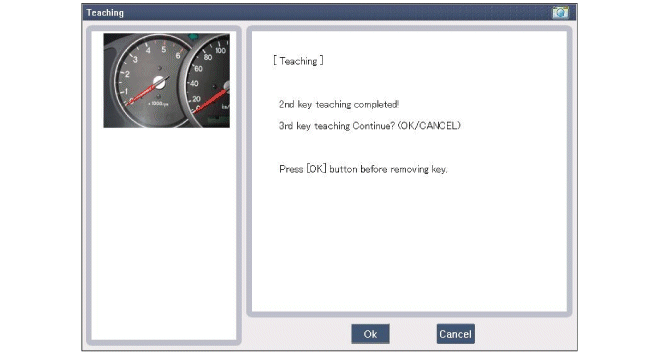
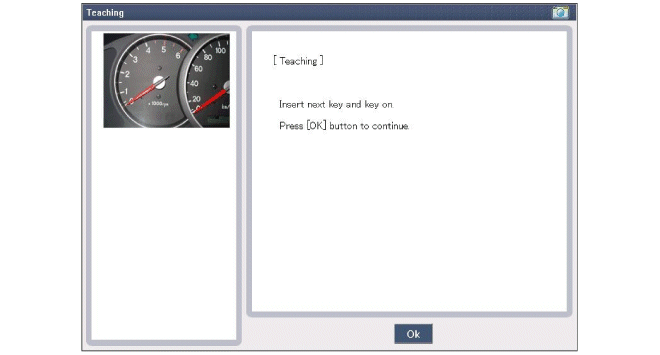
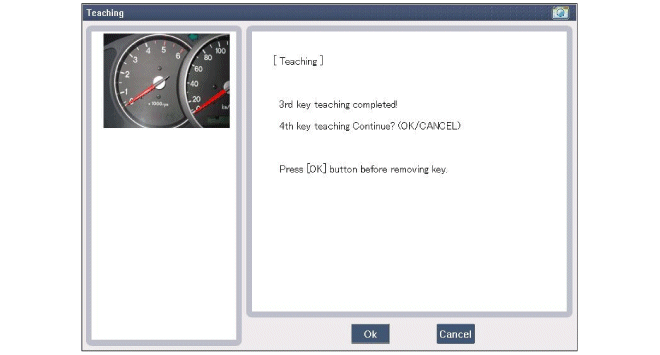
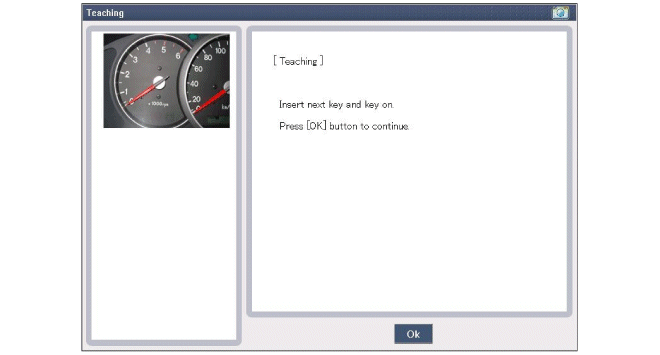
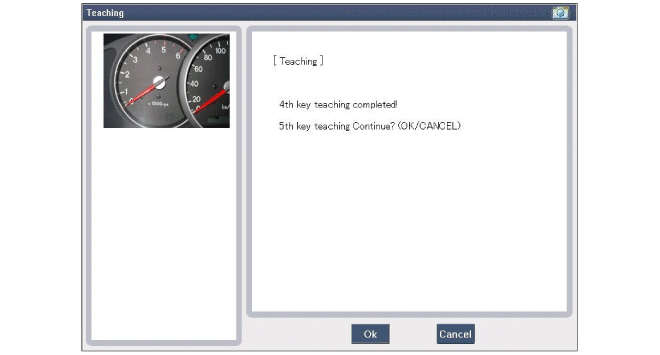
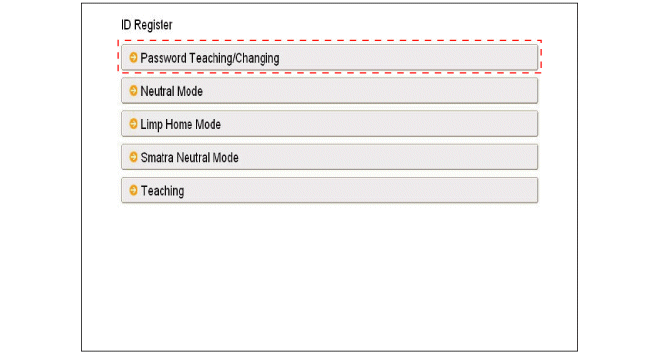
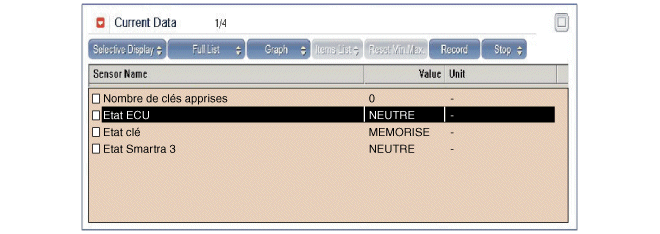
MAIN LEARNING PROCEDURE. Key coding must be performed after replacing a faulty PCM (ECM) or when providing the owner with additional vehicle keys. The procedure starts with the tester requesting vehicle-specific data from the PCM (ECM) (PIN: 6 digits). The "virgin" PCM (ECM) can be started with the vehicle-specific data and key learning. A "learned" PCM (ECM) compares the vehicle-specific data from the tester with the stored data. If the data is correct, learning can begin. If incorrect data has been transmitted to the PCM (ECM) three times, the PCM (ECM) will reject key learning requests for a period of one hour. This delay cannot be changed by disconnecting the battery or by any other manipulation. After the battery is reconnected, the timer restarts for one hour. Key learning is accomplished by contacting the key and sending other commands from the tester. The PCM (ECM) stores the relevant data in the EEPROM and transponder. The PCM (ECM) then performs the authentication required to confirm the learning process. The programming success is then reported to the tester by message. If the PCM (ECM) recognizes a key after previous learning, the authentication will be accepted and the EEPROM data updated. The transponder content will not be modified (this is not possible with a "learned" transponder). The PCM (ECM) rejects any repeated learning attempts for a key that has already been "learned" during the same learning cycle. The key is rejected and the tester receives a message. The PCM (ECM) rejects any invalid key presented for learning. The tester receives a message. The key may be invalid due to transponder faults or other causes resulting from incorrect data programming. If the PCM (ECM) detects credentials from another transponder and PCM (ECM), the key will be considered invalid. The maximum number of learned keys is 4. If an error occurs during the immobilizer service menu, the PCM (ECM) status remains unchanged and the specific fault code is stored. If the status of the PCM (ECM) and the key do not match for key coding, the tester procedure stops and the specific fault code is registered in the PCM (ECM).
Status learned from PCM (ECM).
Empty status of PCM (ECM). After replacing a new PCM (ECM), GDS shows that the PCM (ECM) is in key learning mode. The "EMPTY" status means the PCM (ECM) does not have a corresponding PIN code.
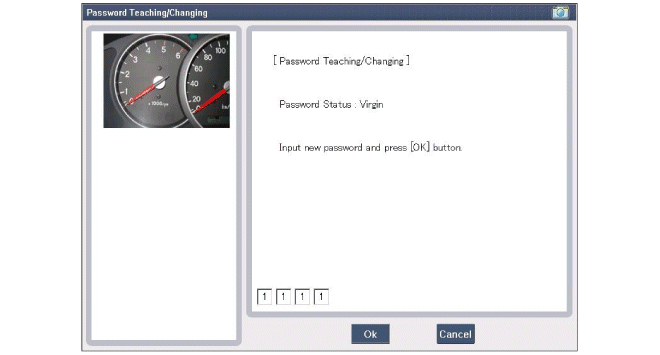
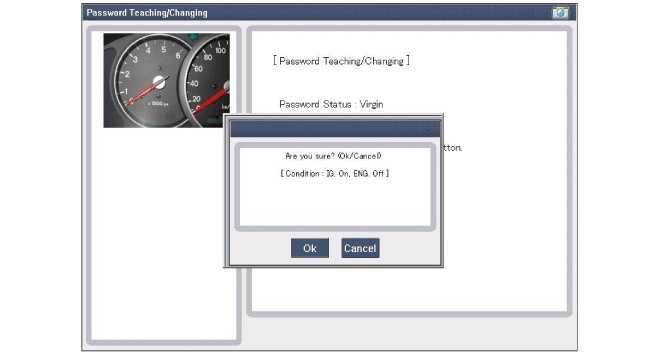
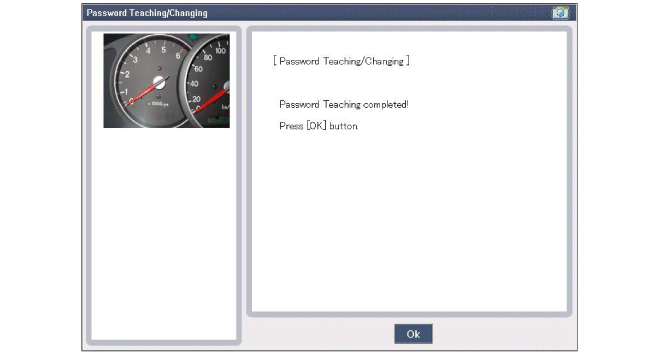
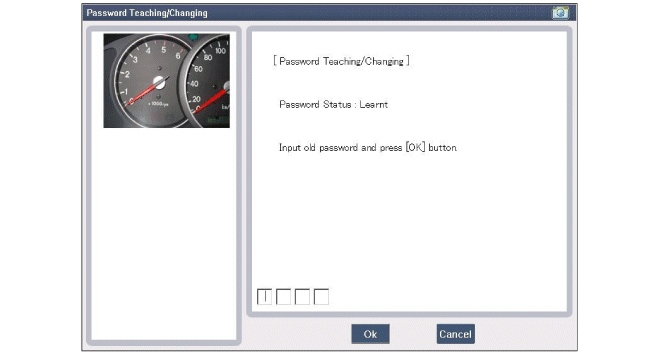
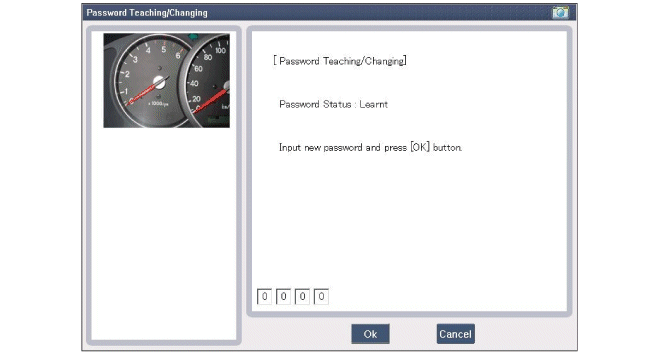
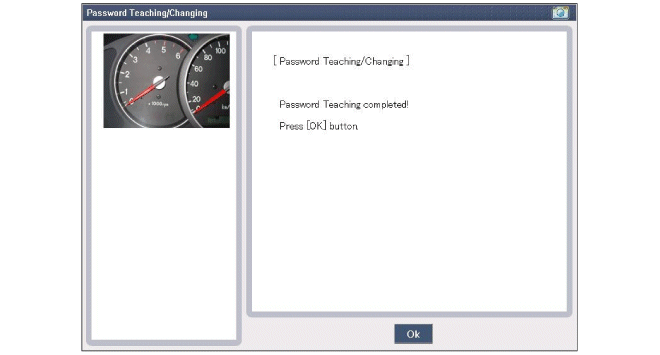
USER PASSWORD LEARNING PROCEDURE. The user password for the limp-home (emergency driving) function is programmed at the dealer. The vehicle owner may select a four-digit number. User password learning is only permitted when the PCM (ECM) is "Learned". Before starting programming of the user password in the PCM (ECM), the password status is "empty". Emergency driving is not possible. Learning is started by presenting a valid key (key learned) and sending the user password with the tester. When learning is successful, the user password status changes from "Virgin" to "Learned". The user password can also be changed. This is done if the password status is "learned" and the tester transmits access authorization either for the previous password or for the specific vehicle data. Once the proper authorization is confirmed, the PCM (ECM) requests the new password. The status remains "learned" and the new password remains valid for the next limp-home mode. If incorrect user passwords or incorrect data have been transmitted to the PCM (ECM) three times in succession or intermittently, the PCM (ECM) will reject the password change request for a one-hour period. This delay cannot be changed by disconnecting the battery or any other action. After the battery is reconnected, the timer restarts for one hour.
User Password Learning? If an incorrect password is entered, repeat the first step after 10 seconds.
Change User Password
Emergency Driving Function Step by Step
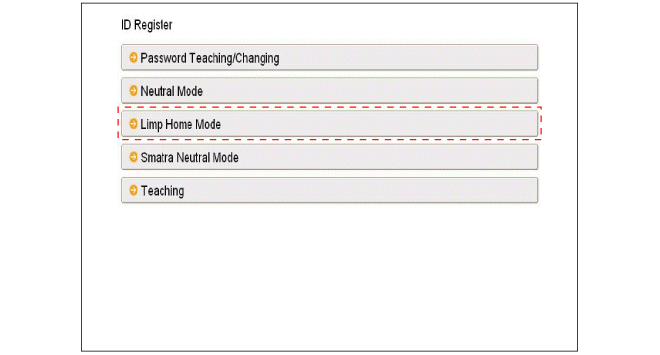
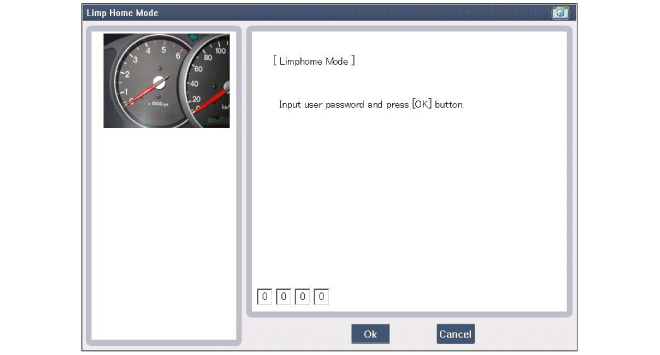
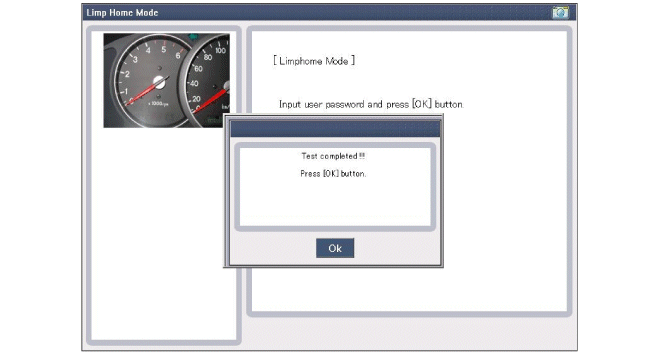
LIMP-HOME MODE USING THE TESTER. If the PCM (ECM) does not detect faults in the SMARTRA or transponder, the PCM (ECM) will enable the immobilizer limp-home function. The limp-home function is only possible if the user password (4 digits) has previously been transmitted to the PCM (ECM). The password can be selected by the user and programmed at the dealer. The user password can be sent to the PCM (ECM) through the special tester menu. The PCM (ECM) will be unlocked for only 30 seconds. If the PCM (ECM) status is "learned", then the user password status is "learned" and the user password is correct. The engine will start only during this delay. After this time expires, the engine will not start. If an incorrect secret code is entered, the PCM (ECM) rejects your request for emergency driving for one hour. This delay cannot be changed by disconnecting the battery or any other intervention. After the battery is reconnected, the PCM (ECM) timer restarts for one hour.
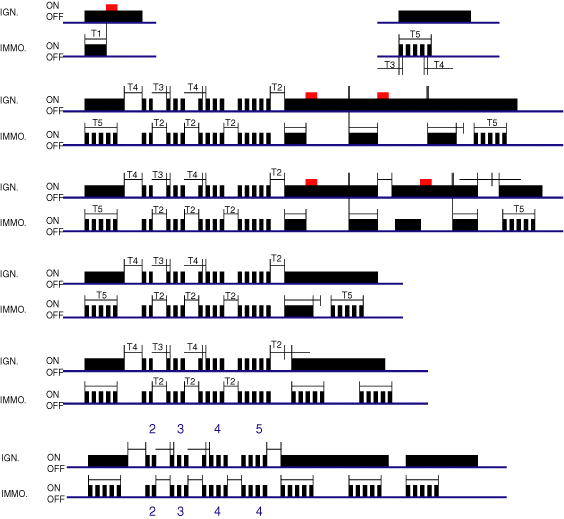
LIMP-HOME MODE USING CONTACT KEY. The limp-home driving function can also be activated with the ignition key. The user password can be entered into the PCM (ECM) using a special ignition on/off sequence. The PCM (ECM) will be unlocked for only 30 seconds. If the PCM (ECM) status is "Learned", then the user password status is "Learned" and the user password is correct. The engine will start only during this delay. After this time expires, the engine will not start. The timer restarts (30 sec.) after entering a new password. After the ignition sequence is completed, the PCM (ECM) locks if the time counter exceeds 8 seconds. A password must be entered again for the next start.
REPLACEMENT
PROBLEMS AND PARTS:
Problem
Kit
GDS required?
All keys lost
White key (4)
Yes
Antenna coil unit malfunction
Antenna coil unit
NO
ECM malfunction
PCM (ECM)
Yes
Ignition switch malfunction
Ignition switch with antenna coil unit
Yes
Unidentified vehicle data is required
Key, PCM (ECM)
Yes
SMARTRA unit malfunction
SMART RA UNIT
Yes
ECM AND SMARTRA MODULE REPLACEMENT If the ECM is faulty, replace the unit with a "clean" or "neutral" ECM. All keys must be programmed into the new ECM. Keys not programmed into the ECM will be invalid after ECM replacement. (Refer to the key learning procedure.) Vehicle-specific data must remain the same due to the unique transponder programming. If the SMARTRA is faulty, proceed to learn the new SMARTRA unit. The new SMARTRA unit replaces the old one, and the SMARTRA requires learning.
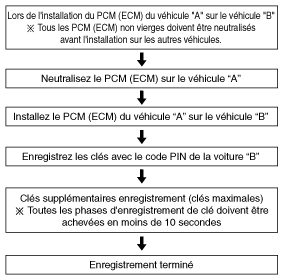
Precautions before replacement (PCM (ECM))
Points to Note Before Replacement (Registering Additional Keys)
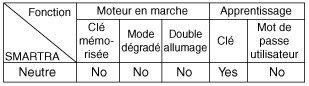
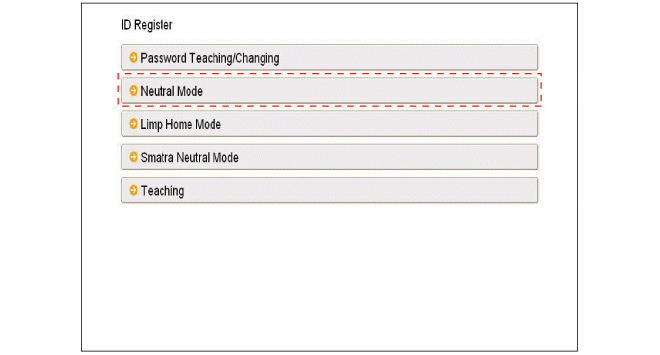
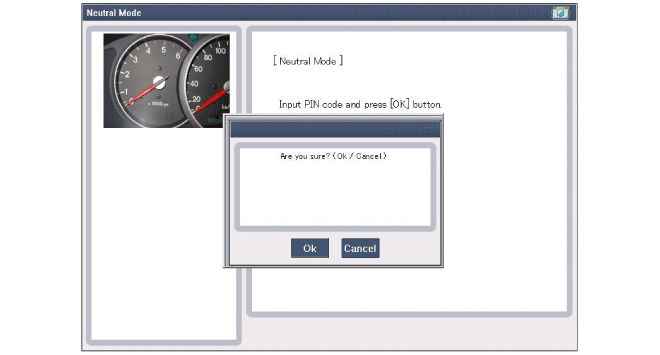
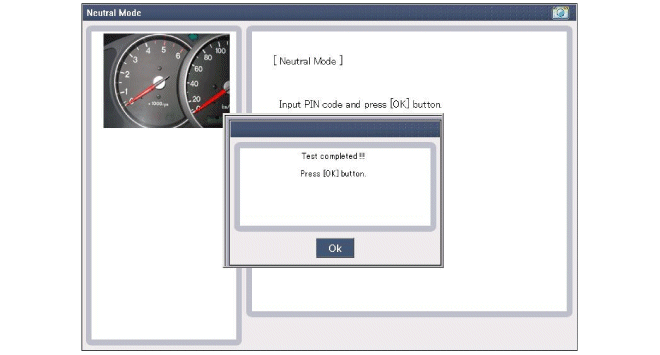
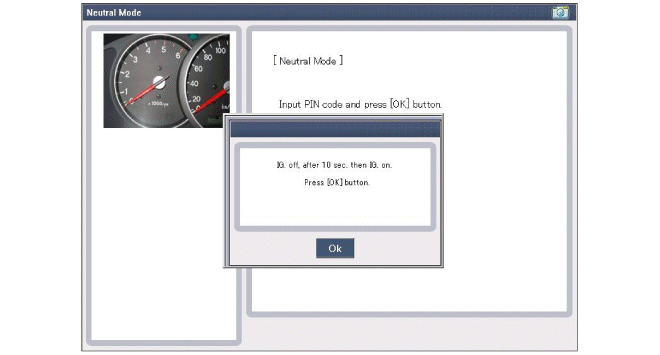
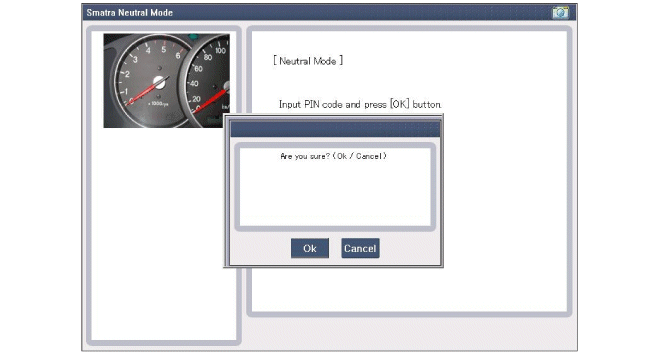
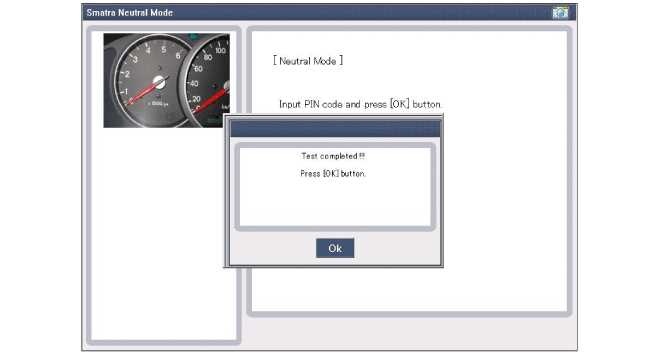
Neutralizing the ECM. The PCM (ECM) can be neutralized ("neutral" state) using the tester. Insert a valid ignition key, and after ignition registration, the PCM (ECM) requires transmission of vehicle-related data from the tester. Communication messages are described in "Neutral Mode". After receiving the data correctly, the PCM (ECM) is deactivated. The ECM remains locked. Neither the flexible mode, which returns you to the initial state, nor the "double ignition" function is accepted by the PCM (ECM). Key learning is performed using the procedure described for a virgin PCM (ECM). Vehicle-specific data must remain unchanged due to the unique transponder programming. Changing the data will require new keys and a blank transponder. This function is used to disable the PCM (ECM) and the key. Example: When the key is lost, neutralize the PCM (ECM), then program the keys. (Refer to Procedures - Key and PIN Code.) The PCM (ECM) can be set to the "neutral" state with the scan tool. If incorrect SMARTRA data has been transmitted three times in succession or intermittently, the SMARTRA will reject the request to enter neutral mode for one hour. This delay cannot be changed by disconnecting the battery or by any other means. After reconnecting the battery, the timer restarts for one hour.
Neutralizing the SMARTRA. The EMS can be neutralized ("neutral" state) using the tester. Insert the ignition key (regardless of key state) and turn the ignition on. If it receives the correct vehicle password from the GST, the SMARTRA can be neutralized. SMARTRA neutralization is possible if the PIN is identical to the value entered by the GST. If the SMARTRA state is neutral, the EMS keeps the locked state. Starting with "double ignition" is not possible. When changing the vehicle password, use only a new blank transponder. For a blank key, after learning the key, the vehicle password can be used. If incorrect data has been transmitted to the SMARTRA three times in a row, the SMARTRA will reject the request to enter neutral mode for one hour. Disconnecting the battery or other manipulations cannot shorten this time. Once the battery is reconnected, the timer restarts for one hour.
?
Test yourself
A quick Hyundai Tucson quiz: every answer comes with an explanation and a link to the manual page.