Seat belts
Restraint System
WARNING- - For maximum protection from the restraint system, always wear your seat belt when the vehicle is moving.
- Seat belts are more effective when the seatbacks are upright.
- Children aged 12 and under should always be properly restrained in the rear seat. Never let children sit in the front passenger seat. If a child over 12 must sit in the front seat, they must wear the seat belt and the seat must be moved as far back as possible.
- Never wear the seat belt under your arm or behind your back. An improperly positioned shoulder belt can cause serious injury. It must be placed across the chest, along the collarbone.
- Avoid wearing a twisted seat belt. A twisted belt will not work properly in an accident and could even cut you. Make sure the belt webbing is flat, without twists.
- Take care not to damage the seat belt or its anchorages. If they are damaged, replace them.
Seat belts are designed to rest on the bony structure of the body. They must be worn low across the front of the pelvis or hips, across the chest and over the shoulders, as applicable. Avoid wearing the lap belt across the abdomen.
Seat belts must be snug as possible while remaining comfortable in order to provide the protection they were designed for. A loose belt significantly reduces occupant protection.
Take care to keep the belt webbing free of polish, oils and chemicals, particularly battery acid.
The belt may be safely cleaned with water and mild soap. The belt must be replaced if the webbing becomes frayed, contaminated or damaged. It is essential to replace the entire assembly if it was worn during a severe impact, even if no damage to the assembly is visible.
Avoid wearing belts with twisted webbing. Each seat belt must be worn by only one occupant; it is dangerous to place a belt around a child seated on the occupant's lap.
WARNING- Do not make any additions or modifications that would prevent the seat belt adjusting devices from working to remove slack, or that would prevent the seat belt from being adjusted to remove slack.
- When buckling the seat belt, make sure you do not buckle it into another seat's buckle. This can be very dangerous and the belt may not protect you properly.
- Do not unbuckle the seat belt, or repeatedly buckle and unbuckle it while driving. You could lose control and have an accident that could cause death, serious injury or property damage.
- When buckling the seat belt, make sure it does not pass over hard or fragile objects.
- Make sure there is nothing in the buckle, otherwise the belt may not latch properly.
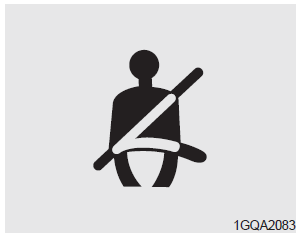
Seat Belt Reminder (Driver's Seat)
The driver's seat belt indicator and chime operate as follows when the ignition switch is in "ON".
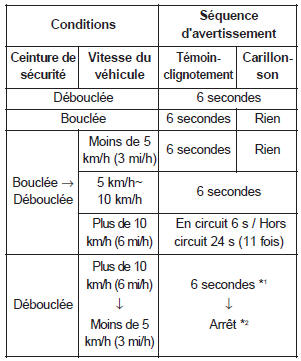
*1 The sequence repeats 11 times at 24-second intervals. If the driver's seat belt is buckled, the indicator turns off within 6 seconds and the chime turns off immediately.
*2 The indicator turns off within 6 seconds and the chime turns off immediately.
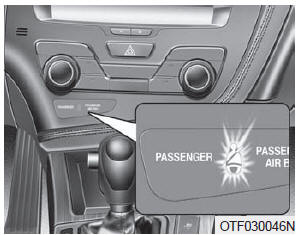
Seat Belt Indicator (Front Passenger's Seat)
The front passenger's seat belt indicator illuminates as follows when the ignition switch is in ON.
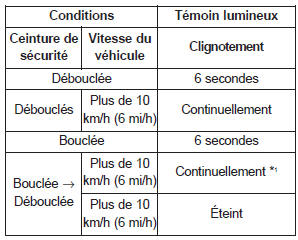
*1 The seat belt indicator turns off if vehicle speed is below 5 km/h. The indicator will flash again if vehicle speed exceeds 5 km/h.
NOTICE
- The front passenger's seat belt indicator is located on the center trim panel.
- The seat belt indicator will flash for 6 seconds even if no one is seated in the front passenger's seat.
- The seat belt indicator may flash if you place a briefcase or bag on the front passenger's seat.
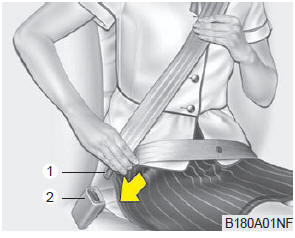
3-Point Seat Belt with Emergency Locking Retractor - Driver
Buckling the seat belt:
To buckle your seat belt, pull it out of the retractor and insert the metal tongue (1) into the buckle (2). You will hear a click when the tongue latches into the buckle.
The belt adjusts automatically to the correct length once the lap belt is manually adjusted over the hips. If you lean forward slowly, the belt extends with you. In the event of a sudden stop or impact, the belt locks; it also locks if you lean forward quickly.
NOTICE
If you cannot pull the seat belt out of the retractor, pull firmly on the belt, then release it.
You should then be able to extend the belt smoothly.
Height adjustment
You can adjust the height of the shoulder belt anchor in 4 positions for greater comfort and safety.
The height of the adjustable belt should never be too close to the neck.
The shoulder belt should be adjusted so that it crosses the chest and passes across the middle of the shoulder closest to the door, not along the neck.
To adjust the height of the seat belt anchor, lower or raise the adjuster to the desired position.
To raise the adjuster, pull it upward (1). To lower it, push it downward (3) while pressing the button (2).
Release the button to lock the anchor in place. Try to move the adjuster to make sure it is securely locked.
WARNING- Make sure the seat belt anchor is at the proper height. Never place the shoulder belt against the neck or face. An improperly positioned seat belt can cause serious injury in an accident.
- Failing to replace seat belts after an accident may leave you with damaged belts that will not protect you in another collision. You could then suffer serious or even fatal injuries. Replace the seat belts as soon as possible after an accident.
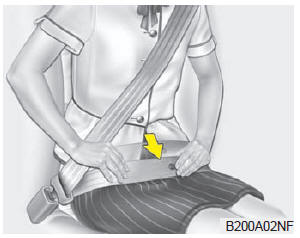
WARNING
Position the lap belt as low as possible, snug against the hips, not the waist.
A belt positioned too high on the waist can increase the risk of injury in a collision. Do not place both arms on or under the belt. Instead, place one arm on the belt and the other under it, as shown.
Never wear the belt under the arm closest to the door.
3-point seat belt with combined emergency locking retractor - front and rear passengers
Fastening your seat belt:
The rear seats are equipped with combined retractor seat belts that accept the installation of a child seat. Although a combined retractor is installed on the front passenger belt, we strongly recommend that children always be seated in the rear seat. NEVER place a rear-facing infant seat on the front seat of the vehicle.
This type of seat belt combines the features of the emergency locking retractor and the automatic locking retractor. To fasten your belt, pull it out of the retractor and insert the metal tongue into the buckle. You will hear a click when the tongue engages. If you are not using a child seat, the belt works like the driver's belt (emergency locking retractor).
The belt adjusts automatically to the correct length once the lap belt is manually adjusted over the hips.
When pulled completely out of the retractor to use a child seat, the belt changes function. It can retract but cannot extend (automatic locking retractor). See "Using a Child Seat" later in this section.
NOTICE
Although the combined retractor offers the same level of protection in either emergency or automatic locking mode, we recommend that seated passengers use the emergency locking function for greater convenience. Automatic locking is intended to make child seat installation easier. To switch from automatic locking to emergency locking, let the unbuckled belt retract completely.
CAUTIONDo NOT fold down the left section of the rear seatback when the center seat belt is buckled.
ALWAYS UNBUCKLE the rear center seat belt before folding down the left section of the rear seatback.
If the rear center seat belt is buckled when you fold down the left section of the rear seatback, you may damage the top of the seatback and the seat belt webbing, and the seatback may lock in the folded position.
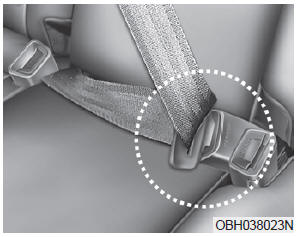
If you use the rear center seat belt, use the buckle marked "CENTER".
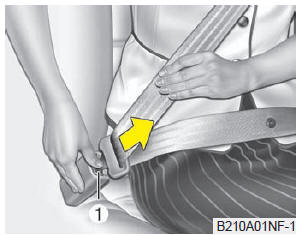
Unfastening your seat belt:
To unbuckle your belt, press the release button (1) on the buckle. Once unbuckled, the belt should automatically retract into the retractor.
If it does not, make sure the belt is not twisted and try again.
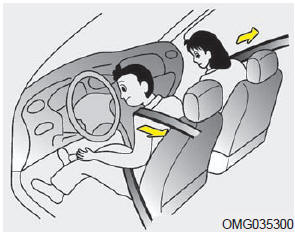
Seat Belt with Pretensioner
The vehicle is equipped with seat belts with pretensioners for the driver and front passenger. The pretensioner keeps the seat belts snug against the occupant's body in certain frontal (or side) collisions. Seat belt pretensioners may activate if the frontal (or side) impact is severe enough.
WARNINGFor your own safety, make sure the belt webbing is neither loose nor twisted and that you are always properly seated.
During a sudden stop or if the occupant leans forward too quickly, the seat belt retractor locks in place. In certain frontal (or side) collisions, the pretensioner activates and tightens the seat belt more firmly against the occupant's body.
If the system detects excessive tension in the driver's or front passenger's seat belt when the pretensioner activates, the load limiter inside the pretensioner will slightly reduce the belt force on that seat belt.
WARNINGDo not place anything near the buckle.
Objects placed near the buckle may adversely affect the buckle pretensioner and increase the risk of personal injury in a collision.
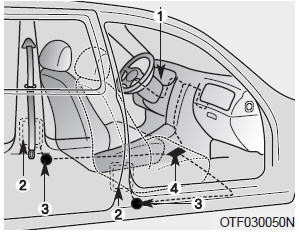
The seat belt pretensioner includes these main components. Their location is shown in the illustration:
- SRS airbag warning light
- Retractor pretensioner
- Pretensioner anchor
- SRS control module
To get the maximum benefit from the seat belt pretensioner:
- The seat belt must be worn correctly and adjusted to the proper position. Read and follow all important information and warnings concerning the vehicle's safety systems - including seat belts and airbags - presented in this manual.
- Make sure you and your passengers always wear your seat belts properly.
NOTICE
- The driver's and front passenger's seat belt pretensioners may activate in certain frontal collisions.
NOTICE
Because the sensor that deploys the airbags is connected to the seat belt pretensioner, the SRS airbag warning light ( ) will illuminate
on the instrument panel for about 6 seconds after the ignition key is turned to "ON". It should then turn off.
If the seat belt pretensioner malfunctions, this light will illuminate even if the SRS airbags do not malfunction. If the SRS light does not illuminate when you turn the ignition key to ON, if it remains illuminated after about 6 seconds, or if it remains illuminated while driving, have the SRS airbag and pretensioner system inspected as soon as possible at an authorized Kia dealer.
WARNING- The pretensioners are single-use. If they have been activated, the seat belts with pretensioners must be replaced. All seat belts, of any type, should be replaced if they were being worn during an accident.
- The seat belt pretensioner mechanism becomes hot after activation. Wait several minutes before touching a mechanism that has been activated.
- Do not attempt to inspect or repair a seat belt pretensioner yourself.
This must be done by an authorized Kia dealer.
Seat belt instructions
WARNINGAll occupants of a vehicle must wear their seat belts at all times. Seat belts and child restraint systems reduce the risk of serious or fatal injury in a collision or sudden stop.
Without a seat belt, occupants may be positioned too close to a deploying airbag, strike the interior structure of the vehicle, or be ejected from the vehicle. Properly worn seat belts reduce these risks.
Even with advanced airbags, occupants who do not wear their seat belts can be seriously injured by a deploying airbag.
Always follow the instructions in this manual regarding seat belts, airbags and child restraint systems.
Infant or small child
You should know the special requirements in your country. Child or infant seats must be properly installed and placed on the rear seat.
For more information on these restraint systems, see "Child Restraint System" in this section.
WARNINGEvery person in your vehicle must be properly restrained at all times, including infants and children. Never hold a child in your arms or on your lap. The violent forces of a collision will tear the child from your arms and throw them inside the vehicle. Always use the restraint appropriate for your child's size and weight.
NOTICE
In an accident, small children are better protected from injury when properly restrained in a child seat that meets your country's safety standards and is secured to the rear seat. Before buying a child restraint, make sure it carries a label certifying that it meets your country's safety standards.
The restraint must suit your child's size and weight. This information is found on the label of the restraint. See also "Child Restraint System" in this section.
Larger children
Children who are too big for a child restraint should sit in the rear seat and use the seat belts. The lap belt should fit snugly across the hips and be as low as possible. Check the belt position regularly. A squirming child can move the belt out of position.
Children are better protected in a collision when they are restrained by the appropriate system in the rear seat.
If an older child (12 years or older) must sit in the front seat, the child must be securely restrained by the seat belt, and the seat should be moved as far back as possible. Children under 13 should be restrained in the rear seat. Children aged 12 and under should be securely restrained in the rear seat. NEVER place a child aged 12 or under in the front seat. NEVER place a rear-facing child seat in the front seat.
If the shoulder belt lightly touches the child's neck or face, try moving the child closer to the center of the vehicle. If the shoulder belt still touches the face or neck, the child must be placed in a child restraint.
WARNING - Shoulder Belts and Small Children- Never allow the shoulder belt to touch the child's face or neck while the vehicle is moving.
- A seat belt that is worn incorrectly or poorly fitted on a child can cause serious or fatal injuries.
Pregnant women
Pregnant women are advised to wear the seat belt to reduce the risk of injury in an accident. The lap belt should be worn as low and as snug as possible across the hips, not across the abdomen. For specific advice, consult a doctor.
WARNING - Pregnant WomenPregnant women must never place the lap portion of the seat belt over the abdomen where the fetus is located, or above the abdomen.
Injured persons
An injured person should wear a seat belt when traveling. If necessary, seek medical advice.
One person per belt
Two persons (including children) should never share the same seat belt. This could increase the severity of injuries in an accident.
Do not lie down
To reduce the risk of injury in an accident and to get the maximum effectiveness from the restraint system, all passengers should sit upright, and the front seats should be in the upright position while the vehicle is moving. A seat belt cannot provide good protection if the occupant is lying on the rear seat or if the front seatback is reclined.
WARNINGRiding with the seatback reclined increases the risk of serious or fatal injury in a collision or sudden stop. The protection provided by the restraint system (seat belts and airbags) is greatly reduced when the seatback is reclined. Belts must rest against the hips and chest. The more the seatback is reclined, the greater the risk that the occupant's hips will slide under the lap belt, which could cause serious internal injuries. In addition, the shoulder belt may strike the occupant's neck. The driver and passengers should always sit upright, be properly belted, and keep the seatback upright.
Seat Belt Care
Never disassemble or modify the seat belts. Make sure the belts and their mechanisms are not damaged by seat or door hinges or otherwise.
WARNINGWhen returning the rear seatback to its upright position after folding it down, take care not to damage the seat belt or its buckle. Make sure the belt or buckle does not get caught or pinched in the rear seat. A damaged belt or buckle could fail in a collision or sudden stop, resulting in serious injury. If the belt or buckle is damaged, have it replaced immediately.
Pregnant women
The condition of all seat belts should be checked regularly. Any damaged part should be replaced as soon as possible.
Keep belts clean and dry
Seat belts should be kept clean and dry. If the belts are dirty, they can be cleaned with a solution of warm soapy water. Never use bleach, strong detergent, or abrasives, as they could damage or weaken the webbing.
When to replace seat belts
The entire seat belt assembly or assemblies should be replaced if the vehicle has been involved in a collision, even if no damage is apparent. Any questions about the operation of the seat belts should be directed to an authorized Kia dealer.
Test yourself
A quick Kia Optima DL3 quiz: every answer comes with an explanation and a link to the manual page.