Airbag - Supplemental Restraint System
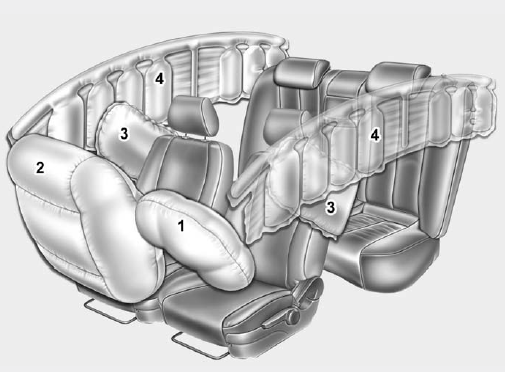
* The shape of the vehicle's airbags may differ from the illustration.
- Driver airbag
- Front passenger airbag
- Side airbag
- Curtain airbag
Even in a vehicle equipped with airbags, you and your passengers must always wear your seat belts to minimize the risk and severity of injuries in the event of a collision or multi-vehicle collision.
How airbags work
- The airbags are activated (ready to deploy if necessary) when the ignition key is in the ON or START position.
- The front and side airbags (if equipped with side and curtain airbags) inflate instantly in the event of a severe frontal or side impact to help protect occupants from serious injury.
- There is no specific speed at which airbags deploy.
In general, airbags deploy depending on the force and direction of the impact. These two factors determine whether or not the sensors send a deployment signal.
The determining factors are not limited to those mentioned here.
It is practically impossible to see the airbags deploy during an accident. You are more likely to see them deflated, hanging from their housings, after the collision.
This is therefore an integral part of airbag design.
That said, deployment can also cause injuries such as facial abrasions, contusions, fractures and, in some cases, serious injuries, because the deployment speed requires a great expansion force.- To avoid serious or fatal injury when an airbag deploys, the driver should sit as far as possible from the steering wheel airbag (at least 250 mm (10 in.)). The front passenger should also move the seat back as far as possible and sit well back in the seat.
- Airbags deploy instantly in a collision, and passengers may be injured by the force of deployment if they are not seated properly.
- Airbag deployment can cause injuries including facial or body abrasions, injuries caused by broken glass, or burns.
Noise and smoke
When the airbags deploy, they may make a loud noise and leave smoke and powder in the air inside the vehicle. This is normal and is caused by the ignition of the inflator.
Once the airbag has deployed, you may have difficulty breathing due to the impact of the airbag and seat belt against your chest, and because of the smoke and powder. Open the doors and/or windows as soon as possible after the collision to reduce discomfort and avoid prolonged exposure to smoke and powder.
Although the smoke and powder are non-toxic, they may irritate the skin (eyes, nose and throat). If this occurs, wash and rinse immediately with cold water, and consult a doctor if symptoms persist.
WARNINGWhen the airbags deploy, the related parts of the steering wheel and instrument panel, or the roof side rails on each side above the front and rear doors, become very hot.
To avoid injury, do not touch the internal parts of the airbag storage locations immediately after deployment.
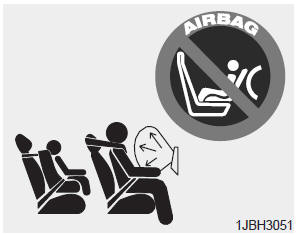
Installing a rear-facing child restraint on the front seat is prohibited
Never place a rear-facing child restraint on the front passenger seat. If the airbag deploys, it could strike the child restraint, causing serious or fatal injury.
In addition, do not place any child seat on the front passenger seat. If the front passenger airbag deploys, it could cause serious or fatal injury to the child.
WARNING- Extreme danger! Do not use a rear-facing child seat on a seat protected by a front airbag.
- Never place a child seat on the front passenger seat. If the front passenger airbag deploys, it may cause serious or fatal injury.
- When children are seated in the rear outboard seats of a vehicle equipped with side airbags or curtain airbags, make sure to install the child restraint as far as possible from the door.
Also make sure the child restraint is securely anchored in place.
Deployment of side airbags or curtain airbags can cause serious or fatal injuries to an infant or a child.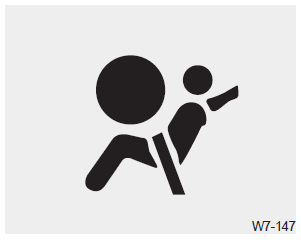
Airbag Warning Light
The airbag warning light is an indicator on the instrument panel that warns you of a possible problem with the Supplemental Restraint System (SRS).
When you turn the ignition key to ON, the warning light should illuminate for about 6 seconds and then go off. Have the system checked if:
- The light does not go off shortly after turning the ignition key to ON.
- The light remains on after the approximately 6-second delay.
- The light comes on while the vehicle is being driven.
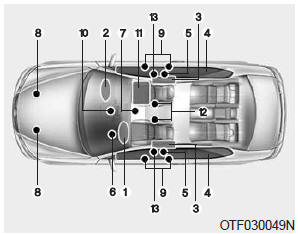
SRS Components and Functions
The SRS consists of the following components:
- Driver airbag module
- Front passenger airbag module
- Side airbag modules
- Curtain airbag modules
- Seat belt pretensioners*
- Airbag Warning Light
- SRS control module (SRSCM)
- Front impact sensors
- Side impact sensors
- Passenger airbag off indicator (PASS AIR BAG OFF) (front passenger seat only)
- Occupant classification system (front passenger seat only)
- Driver and front passenger seat belt buckle sensors
- Pretensioner anchor
* : if equipped
The SRSCM continuously monitors all SRS components when the ignition key is in the ON position, to determine whether an impact is severe enough to deploy the airbags or activate the pretensioners.
The airbag warning light illuminates on the instrument panel for about 6 seconds when you turn the ignition key to the ON position. It should then go off.
If any of the following conditions occur, the SRS is not functioning properly. In this case, have the SRS inspected as soon as possible at an authorized Kia dealer.
- The light does not illuminate briefly when you turn the ignition key to ON.
- The light remains on after the 6-second period has elapsed.
- The light comes on while the vehicle is in motion.
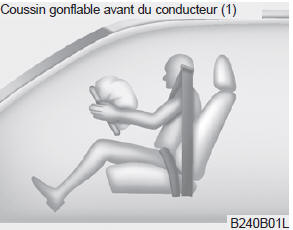
The airbag modules are located in the center of the steering wheel and in the panel in front of the front passenger, above the glove box. If the SRSCM
detects an impact of sufficient severity to the front of the vehicle, it will automatically deploy the front airbags.
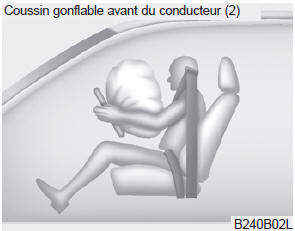
When deployed, the tear seams of the airbag cover separate under the expansion pressure of the airbag, allowing the airbag to deploy fully.
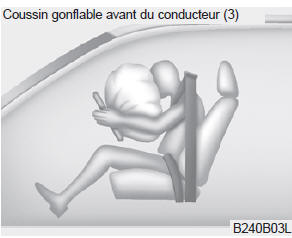
The deployed airbag, together with a properly worn seat belt, slows the forward movement of the driver or passenger, reducing the risk of head and chest injuries.
Once fully deployed, the airbag deflates, allowing the driver to maintain forward visibility and to steer or perform other actions.
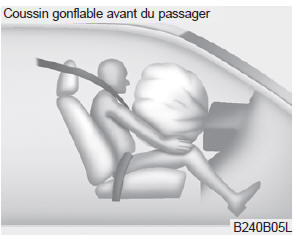
WARNING
- Do not place or mount accessories (cup holders, cassette holders, stickers, etc.) on the panel above the glove box of a vehicle with a front passenger airbag. These items may become dangerous projectiles and cause injury if the passenger airbag deploys.
- If you place a liquid air freshener in the vehicle, do not place it near the gauges or the instrument panel.
It could become a dangerous projectile if the passenger airbag deploys.
WARNING- If an airbag deploys, you may hear a loud noise followed by a fine powder in the air. This is normal and is not dangerous. The airbags are packed with this fine powder.
The dust produced during deployment can irritate the skin or eyes and aggravate asthma in some people. After an accident in which the airbags have deployed, wash exposed skin thoroughly with lukewarm soapy water.
Occupant Detection System
Your vehicle is equipped with an occupant detection system for the front passenger seat.
The occupant detection system detects the presence of a properly seated front passenger and determines whether the front passenger airbag should be enabled (deployable) or not. The driver airbag is not affected or controlled by the occupant detection system.
Main components of the occupant detection system
- A sensing device located under the front passenger seat frame.
- An electronic system that determines whether the passenger airbags should be enabled or disabled.
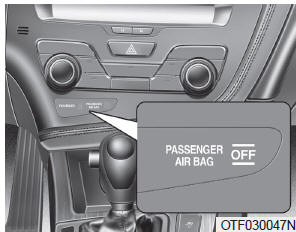
- A dashboard indicator light with the words PASSENGER AIR BAG "OFF" showing that the front passenger airbag system is disabled.
- The airbag indicator light on the dashboard is connected to the occupant detection system.
If the system determines that a person seated in the front passenger seat is an adult and is properly seated (backrest upright, centered on the seat, seat belt fastened, legs comfortably extended and feet on the floor), the PASSENGER AIR BAG "OFF" indicator turns off and the passenger airbag will be enabled to provide protection in a frontal collision.
The passenger airbag indicator is located on the center panel of the dashboard. The system detects conditions 1 to 4 in the following table and enables or disables the front passenger airbag based on these conditions.
Always make sure that you and the vehicle occupants are seated and properly restrained (sitting upright, backrest upright, centered on the seat cushion, legs comfortably extended, feet on the floor, and wearing the seat belt correctly) so that the airbags and seat belts provide the most effective protection.
- The ODS (Occupant Detection System) may not operate correctly if the passenger acts in a way that affects the detection system, such as:
- not sitting upright;
- leaning toward the door or the center console;
- sitting on the side or the front edge of the seat;
- placing the legs on the dashboard;
- wearing the seat belt incorrectly;
- reclining the seatback too far rearward.
Conditions and operation of the occupant classification system
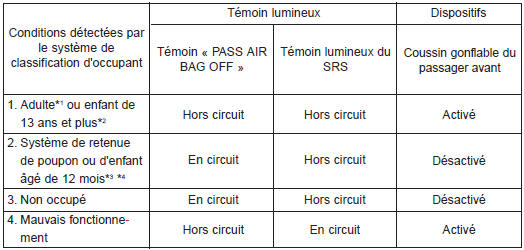
*1) The system determines whether the occupant is an adult. When a smaller adult is seated in the front passenger seat, the system may identify them as a child, depending on their build and posture.
*2) Never allow a child to sit in the front passenger seat.
When a child who is too big for a child seat sits in the front passenger seat, the system may recognize them as an adult, depending on their build and posture.
*3) Never install a child restraint on the front passenger seat.
*4) The PASSENGER AIR BAG OFF indicator may flash intermittently if a child aged 12 months to 12 years (with or without a child restraint system) is seated in the front passenger seat.
This situation is normal.
WARNINGSitting improperly or placing a load on the front passenger seat may interfere with the operation of the occupant detection system (ODS).
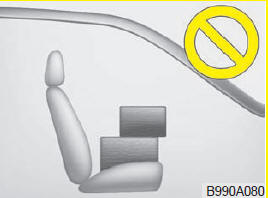
- Never place a heavy load on the front passenger seat or in the pocket of its seatback.
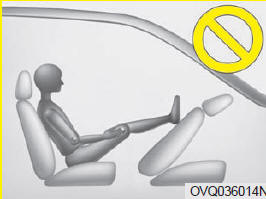
- Never place your feet against the front passenger seatback.
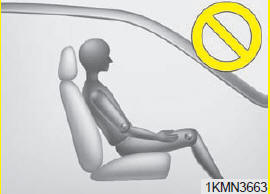
- Never sit with your hips pushed forward on the seat.
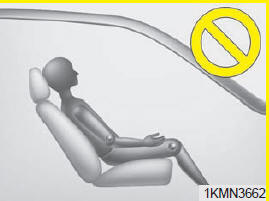
- Never recline the front passenger seatback excessively.
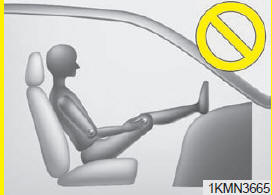
- Never place your feet on the dashboard.
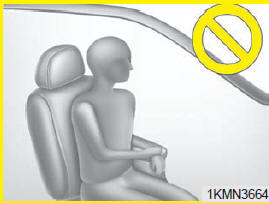
- Never lean against the door or the center console.
- Never sit sideways on the front passenger seat.
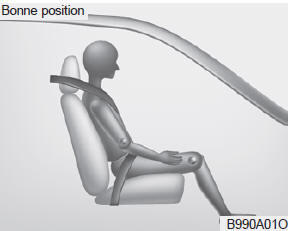
If the PASSENGER AIR BAG "OFF" indicator lights up when an adult is seated in the front passenger seat, turn the ignition key to LOCK and ask the passenger to sit properly (upright, backrest raised, centered on the seat cushion, seat belt fastened, legs comfortably extended and feet on the floor).
Restart the engine and ask the passenger to maintain this position. This will allow the system to detect the occupant and enable the passenger airbag.
If the PASSENGER AIR BAG "OFF" indicator remains on, ask the passenger to sit in the rear seat.
WARNINGDo not allow an adult to sit in the front seat if PASSENGER AIR BAG "OFF" remains on, as the airbag will not deploy in an accident. If the PASSENGER AIR BAG "OFF" indicator remains on after an adult passenger has resettled properly in the seat and the engine has been restarted, it is recommended that the passenger sit in the rear seat, because the front passenger airbag will not deploy.
The front passenger must sit properly to avoid serious injury if the airbag deploys.
NOTICE
The PASSENGER AIR BAG "OFF" indicator light comes on for about 4 seconds after the ignition key is turned to ON or the engine is started. If the front passenger seat is occupied, the occupant detection system will classify the front passenger a few seconds later.
WARNINGDo not place a heavy load in the front passenger seatback pocket. Do not hold on to the front passenger seat. Do not place anything, such as a tray table, on the front passenger seatback. Do not place your feet against the front passenger seatback. Do not place any items under the front passenger seat. Such actions may affect the proper operation of the sensors.
WARNING- Although the vehicle is equipped with an occupant detection system, never install a child restraint system on the front passenger seat. When deployed, the airbag could strike the child with great force, causing serious or fatal injury. All children 12 years old and under should ride in the rear seat. Children who are too large for a child seat should use the lap/shoulder seat belts. Regardless of the type of accident, children of all ages are safer when properly secured in the rear seat.
- If the PASSENGER AIR BAG "OFF" indicator light comes on while an adult is properly seated (seatback upright, centered on the seat, seat belt fastened, legs comfortably extended and feet on the floor) in the front passenger seat, ask that person to sit in the rear seat.
- If a child is seated in the front passenger seat without a child seat, the "PASSENGER AIR BAG OFF" indicator light may or may not come on, and the airbag may or may not deploy in a collision. For greater safety, have the child sit in the rear seat.
- Do not modify or replace the front passenger seat. Do not place or attach anything, such as a blanket or seat warmer, on the front passenger seat. This may affect the proper operation of the occupant detection system.
- Do not sit on a sharp object, such as a tool, when sitting on the front passenger seat. This could affect the proper operation of the occupant detection system.
- Do not use aftermarket seat covers on the front seats.
- Accident statistics show that children are safer when seated in the rear than in the front. It is recommended that child seats be secured in the rear seat, including infants in a rear-facing seat, a child in a forward-facing seat, and a booster seat for older children.
- Airbags can only be used once. Have an authorized Kia dealer immediately replace any airbag that has deployed.
- A smaller adult who is not seated properly in the front passenger seat (e.g., seatback reclined too far, leaning toward the door or center console, hips slid forward) may cause a condition where the occupant classification system detects less weight than if the occupant were seated properly (sitting upright, seatback upright, centered on the seat cushion, seat belt fastened, legs comfortably extended, feet on the floor).
If the occupant detection system is not working properly, the SRS airbag warning light on the instrument panel
will come on because the SRS airbag warning light is connected to the occupant detection system. If the occupant detection system fails, the PASSENGER AIR BAG "OFF" indicator light will not come on and the front passenger airbag will deploy in a frontal collision, even if no one is seated in the front passenger seat. If the SRS airbag warning light does not come on when you turn the ignition key to ON, stays on after the normal 6-second delay when the ignition key is turned to ON, or comes on while driving, have the occupant detection system and the SRS airbag system inspected as soon as possible by an authorized Kia dealer.
Driver and Passenger Airbags
Your vehicle is equipped with an advanced supplemental restraint system (airbags) and three-point seat belts at the driver and front passenger positions.
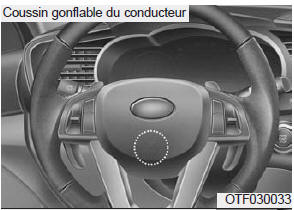
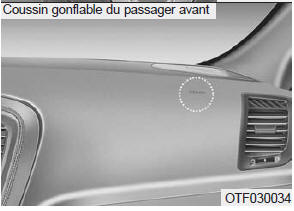
The system is indicated by the embossed letters "AIR BAG" in the center of the steering wheel and on the panel in front of the front passenger, above the glove box.
The SRS consists of airbags mounted under covers in the center of the steering wheel and on the panel in front of the front passenger, above the glove box.
The SRS is designed to provide the driver and/or front passenger with additional protection beyond that of the seat belts in the event of a sufficiently severe frontal collision. The SRS uses sensors to collect data on the driver's and front passenger's seat belt use and the severity of the impact.
WARNINGIf the occupant detection system is not working properly, the SRS airbag warning light will come on in the instrument panel
because the SRS airbag warning light is connected to the occupant detection system. If the SRS airbag warning light does not come on when you turn the ignition key to ON, stays on after the normal 6-second delay when the ignition key is turned to ON, or comes on while driving, have the occupant detection system and the SRS airbag system inspected as soon as possible by an authorized Kia dealer.
The seat belt buckle switches detect whether the driver's and front passenger's seat belts are buckled.
These sensors control the deployment of the airbags depending on whether the seat belts are buckled or not and on the severity of the impact.
The advanced SRS controls airbag deployment in two stages. The first stage is for medium-severity impacts. The second stage is for more severe impacts.
The front passenger airbag is designed to help reduce injuries to a child seated near the instrument panel in a low-speed impact. However, children will be better protected if they are restrained in the rear seat.
Depending on the severity of the impact and the use of seat belts, the SRSCM (SRS control module) controls airbag deployment. Failing to properly wear your seat belt may increase the risk or severity of injury in an accident.
Your vehicle is also equipped with an occupant detection system for the front passenger seat. The occupant detection system detects the presence of a passenger in the front passenger seat and, under certain conditions, turns the front passenger airbag off. For more information, refer to the "Occupant Detection System" section.
WARNING- Modifying the seat structure may affect the operation of the seat position sensor and cause the airbag to deploy at a level other than the appropriate one.
- Do not place any objects under the front seats, as they could damage the seat position sensor or interfere with the occupant classification system.
- Do not place any magnetic objects near the front seat. This could cause the seat position sensor to malfunction.
Government regulations require manufacturers to provide a contact point for vehicle modifications for persons with disabilities that could affect the vehicle's advanced airbag system.
However, Kia does not endorse or accept responsibility for changes to vehicle parts or structure that could affect the advanced airbag system, including the occupant detection system.
In particular, the front passenger seat, instrument panel or door should not be replaced, except by an authorized Kia dealer using genuine Kia parts designed for that vehicle and model. Any other replacement or modification could affect the operation of the occupant detection system and the advanced airbags.
For the same reason, do not attach anything to the seat, instrument panel or door, even temporarily. If the system is affected, serious or fatal injury could result in a collision.
NOTICE
- Read the "SRS" labels on the back of the sun visor carefully.
- The advanced airbags are combined with pretensioner seat belts to help provide additional occupant protection in a frontal collision. The front airbags are designed not to deploy if the pretensioner seat belt can provide protection.
Always wear seat belts and use child restraints without fail. Airbags deploy with great force and very quickly. Seat belts help keep occupants in the proper position to get the maximum benefit from the airbags. Even with advanced airbags, a person who does not wear or improperly wears a seat belt can be seriously injured when the airbag deploys. Always follow the warnings in this manual regarding seat belts, airbags and occupant safety.
To get the most from the SRS and reduce the risk of serious or fatal injury:
- Never place a child in a child restraint on the front seat.
- Always secure children in the rear seat. It is the safest place for children of all ages.
- The front and side airbags can injure occupants who are not seated properly in the front seats.
- Position the seat as far from the airbag as practical while maintaining control of the vehicle.
- Do not sit or lean near the airbags without a reason. A driver or passenger who is not seated properly can be seriously injured by a deploying airbag.
- Always sit upright, never leaning against the door or on the center console.
- Do not allow a passenger to sit in the front seat if the PASSENGER AIR BAG "OFF" indicator is illuminated, because the airbag will not deploy in a moderate or severe frontal impact.
- Do not place any objects on or near the steering wheel airbag module or on the instrument panel above the glove box. Such objects could injure you if an accident causes the airbags to deploy.
- Do not place seat covers, blankets or seat heaters that could interfere with the occupant detection system.
- Do not modify or disconnect the SRS wiring or its components. You could be injured by accidental airbag deployment or by the SRS failing to operate.
- If the SRS indicator stays on while you are driving, have the system inspected as soon as possible by an authorized Kia dealer.
- Airbags can only be used once. Have them replaced immediately after deployment by an authorized Kia dealer.
- The SRS deploys the airbags only if the impact is severe enough and the impact angle is less than 30 degrees from the vehicle's longitudinal axis. Airbags deploy only once. Always wear your seat belt.
- The front airbags should not deploy in a side or rear impact, or in a multi-vehicle collision. The front airbags do not deploy if the frontal impact is not severe enough.
- Although the vehicle is equipped with an occupant detection system, never place a child restraint on the front passenger seat. Never install a child restraint on the front seat. The child could be seriously injured or killed by an airbag that deploys in a collision.
- Children aged 12 and under should always be properly restrained in the rear seat. Never allow a child to sit in the front passenger seat. If a child over 12 years old sits in the front passenger seat, they must wear their seat belt correctly and the seat must be moved as far back as possible.
- For maximum protection, in any type of accident, all passengers and the driver must wear their seat belt, whether or not there is an airbag at their position, to minimize the risk of serious or fatal injury. Never hold yourself too close to an airbag while the vehicle is moving.
- Sitting improperly can cause serious or fatal injuries in an accident. All occupants must sit upright, with the seatback raised, centred on the seat cushion, and wear their seat belt, with their legs extended and their feet on the floor, until the vehicle is parked and the key is removed from the ignition.
- SRS airbags deploy at very high speed to provide protection. If an occupant is out of position because they are not wearing their seat belt, the force of contact with the airbag can cause serious or fatal injuries.
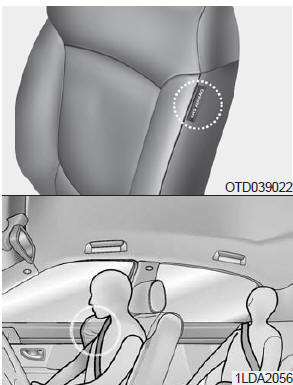
Side airbag
Your vehicle is equipped with a side airbag for each front seat. These airbags give the driver and front passenger additional protection that the seat belt alone cannot provide.
Side airbags only deploy in certain side impacts, depending on the force, angle, speed and point of impact. They are not designed to deploy in every side impact.
WARNING- Do not allow passengers to lean against the door, rest their arm on the door, extend their arm outside the vehicle, or place objects between themselves and the door when seated in a position protected by a side airbag, a curtain airbag, or both.
- The side airbag supplements the driver's and front passenger's seat belts; it does not replace them. Always wear your seat belt when driving.
The airbags will only deploy if the side impact is severe enough to cause serious injury to the occupants.
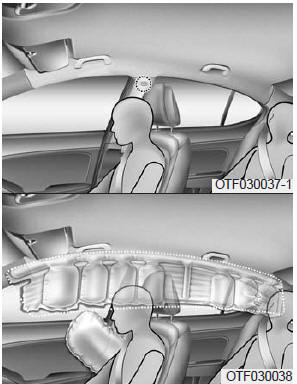
Curtain airbag
The curtain airbags are located on each side, along the roof rails, above the front and rear doors.
They help protect the heads of front and rear occupants in certain types of side impacts.
Curtain airbags only deploy in certain side impacts, depending on the force, angle, speed and point of impact. They are not designed to deploy in every side impact.
WARNING- For the side airbags and curtain airbags to provide the best protection, front seat passengers and rear outboard passengers must sit upright with their seat belts properly fastened. Children must also be properly seated in the rear, in an appropriate child restraint.
- When a child is seated on the left or right side, they must be in an appropriate child restraint.
This should only be done by an authorized Kia dealer.
Failure to follow these instructions could result in serious or fatal injury to vehicle occupants in the event of an accident.Why didn't my airbag deploy? (Deployment conditions)
There are several types of accidents in which the airbag would not provide additional protection.
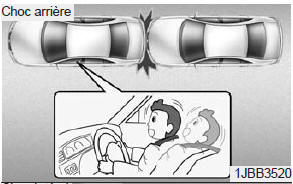
These include rear impacts, secondary and tertiary impacts in a chain-reaction collision, and low-speed impacts. In other words, even if your vehicle is damaged or rendered completely unusable, do not be surprised if the airbags do not deploy.
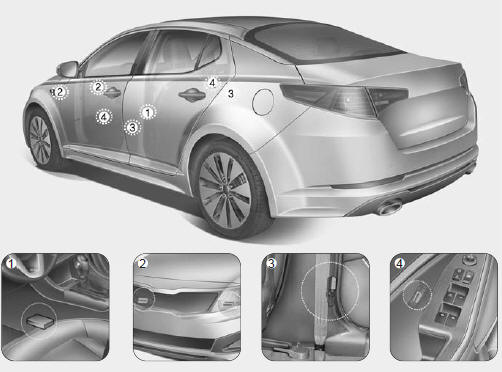
Airbag sensors
- SRS control module
- Frontal impact sensor
- Side impact sensor
- Side pressure sensor
- Do not strike or allow any object to strike the airbag sensors.
This could cause unexpected deployment, resulting in serious or fatal injuries.
Therefore, do not attempt to perform repairs around the airbag sensors.
Have your vehicle inspected and repaired by an authorized Kia dealer.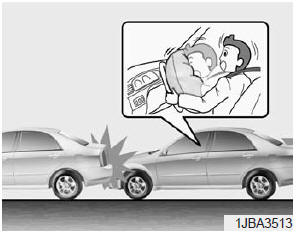
Airbag deployment conditions
Front airbag
The front airbags are designed to inflate in a frontal collision, depending on the severity, speed or angle of the impact.
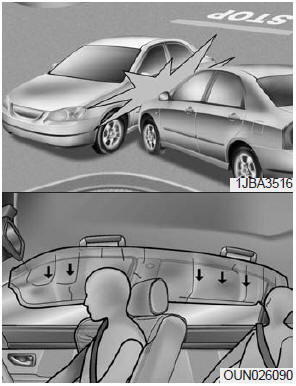
Side airbags
The side airbags (side impact airbags/curtain airbags) are designed to deploy when an impact is detected by the side impact sensors, depending on the force, speed or angle of the impact in a side collision.
Although the front airbags (driver and passenger) are only designed to deploy in a frontal collision, they may also deploy in other cases if the frontal impact sensors detect a sufficient impact. The side airbags (side and curtain) are only designed to deploy in a side collision, but they may also deploy in other cases if the side impact sensors detect a sufficient impact.
The airbags may deploy if the vehicle underbody strikes bumps or objects while driving on rough roads or when climbing a curb. Drive carefully when driving on rough roads or on surfaces not designed for road traffic.
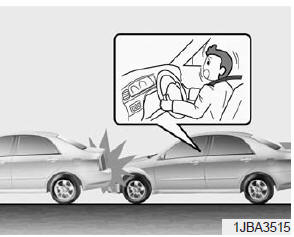
Cases in which the airbags do not deploy
- The airbags may not deploy in certain collisions. They are designed not to deploy in these cases because they would not provide occupants with protection beyond that of the seat belts.
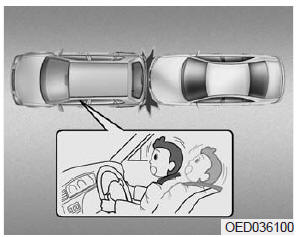
- The front airbags are not designed to deploy in a rear impact because the occupants are pushed rearward by the force of the impact. The airbags would provide no additional benefit in such a case.
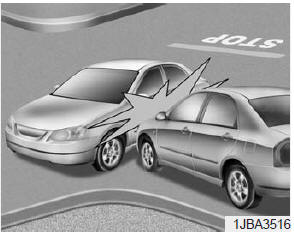
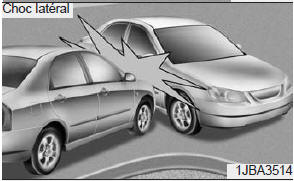
- The front airbags may not deploy in a side impact because the occupants move in the direction of the impact. If the impact is from the side, deployment of the front airbags would provide no additional protection.
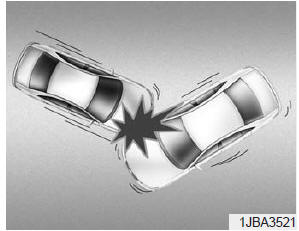
- In the case of a collision at an angle or at an oblique angle, the impact force may direct the occupants in a direction where the airbags could provide no additional benefit. In such a case, the sensors may not deploy the airbags.
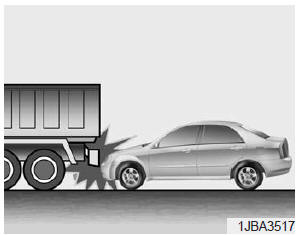
- Drivers often brake sharply just before impact.
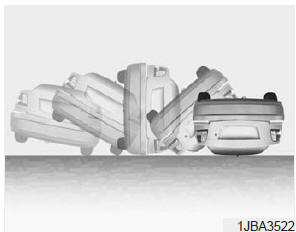
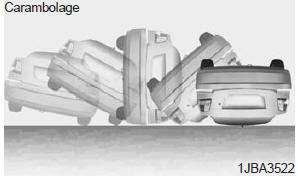
- The front airbags may not deploy in a multi-vehicle collision because they would not provide protection to the occupants.
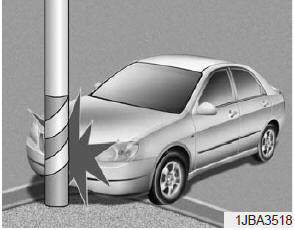
- The airbags may not deploy if the vehicle strikes objects such as a pole or a tree, when the impact is concentrated on one area and the full force of the impact is not transmitted to the sensors.
SRS maintenance
The SRS requires virtually no maintenance because it contains no parts that you can safely service yourself. If the SRS "AIR BAG" warning light does not come on or stays on continuously, have your vehicle inspected immediately at an authorized Kia dealer.
Any work on the SRS system, such as removal, installation, repair or work on the steering wheel, must be performed by an authorized Kia dealer. Improper handling of the SRS system may cause serious injury.
WARNING- Modifying SRS components or wiring, including adding any kind of emblem to the airbag cover, or modifying the body structure, may impair the proper operation of the SRS and cause injury.
- To clean the airbag cover, use a dry, soft cloth or a cloth lightly dampened with clean water. Solvents or cleaners may affect the airbag cover and impair proper deployment.
- Do not place any object on or near the steering wheel airbag module or on the instrument panel in front of the passenger, above the glove box. These objects could injure you if a collision strong enough to deploy the airbags occurs.
- If the airbags deploy, they must be replaced at an authorized Kia dealer.
- Do not modify or disconnect the SRS cable or SRS components. This could cause injury from accidental airbag deployment or render the SRS inoperative.
- If SRS components must be discarded or the vehicle must be scrapped, certain precautions must be taken. An authorized Kia dealer is familiar with these precautions and can provide you with the necessary information. Failure to take these precautions and follow the procedures increases the risk of injury.
- If your vehicle has been flooded or the carpet or floor is soaked, do not attempt to start the engine; have your vehicle towed to an authorized Kia dealer.
Additional precautions
- Never allow a passenger to sit in the luggage compartment or on the folded-down rear seatback.
All occupants must sit upright, well back in their seats, wear their seat belts and keep their feet on the floor.
All occupants must sit upright, well back in their seats, wear their seat belts, and keep their feet on the floor. IF occupants are too close to the airbag covers, they could be injured if the airbags deploy.
Placing items under the front seats could interfere with the operation of the supplemental restraint system sensors and wiring harnesses.
- An occupant who is improperly seated or out of position may be too close to the airbag as it deploys, strike the interior structure, or be ejected from the vehicle, suffering serious or fatal injury.
- Always sit upright, with the seatback in the upright position, centered on the cushion, wearing your seat belt, legs comfortably extended, and feet on the floor.
Adding equipment or modifying a vehicle equipped with airbags
If you modify your vehicle by changing the chassis, bumpers, front end, side panels, or ride height, this may affect the operation of the vehicle's airbag system.
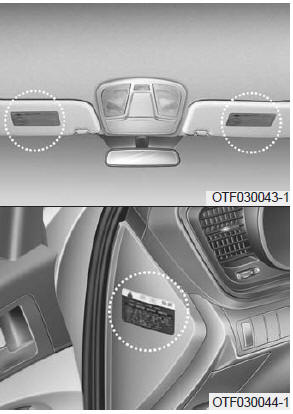
Airbag warning label
Warning labels, some required by the Canadian Motor Vehicle Safety Standards (CMVSS), are affixed to warn the driver and passengers of the hazards presented by the airbag system.
Test yourself
A quick Kia Optima DL3 quiz: every answer comes with an explanation and a link to the manual page.