Specifications. Maintenance Data (Fuel, Oil Level, etc.)
The specifications of the Lexus GS L10 provide detailed information on dimensions, engines, fluids, tire sizes and more. This section is a reference for maintenance and care and helps you select suitable operating fluids. Important notes on oil quality, coolant and tire pressure help ensure long service life and optimal vehicle performance. This keeps your Lexus GS in excellent technical condition.
Dimensions and Weights
GS350/GS200t
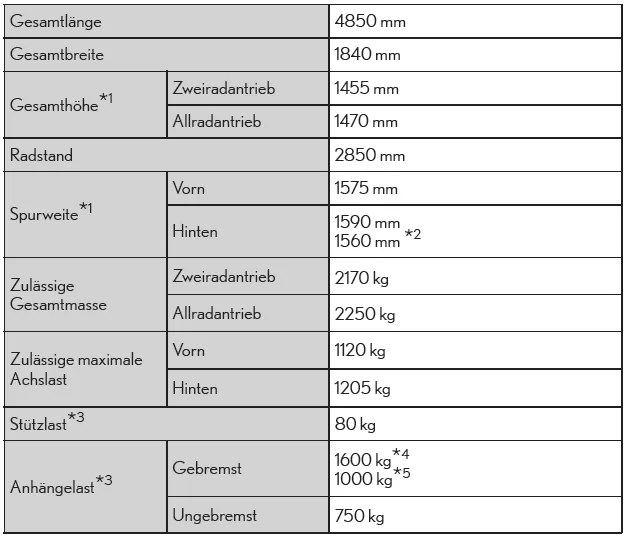
*1: Unladen vehicle
*2: Vehicles with 265/35R19 tires
*3: Vehicles with towing package
*4: Two-wheel drive models
*5: All-wheel drive models
GS F
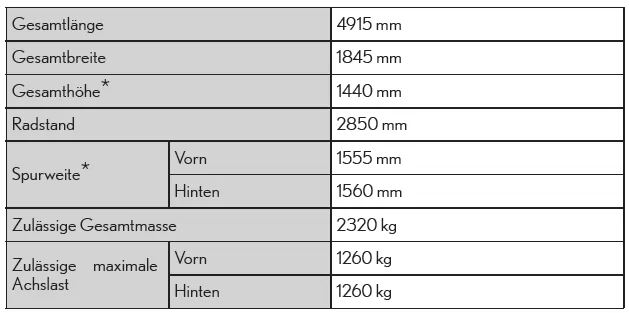
*: Unladen vehicle
Vehicle Identification
■ Vehicle Identification Number
The Vehicle Identification Number (VIN) is the legally required identification number of your vehicle. It is the primary identification number of your Lexus and is used for registering vehicle ownership.
This number is stamped in the upper left corner of the instrument panel and in the engine compartment.
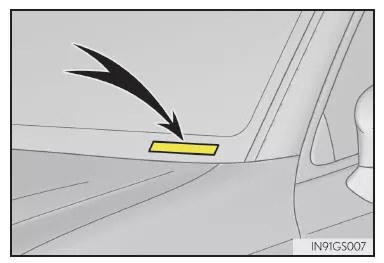
GS350
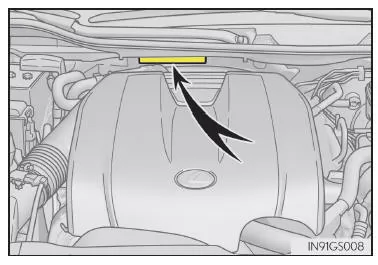
GS200t
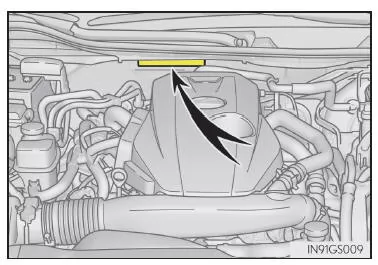
GS F
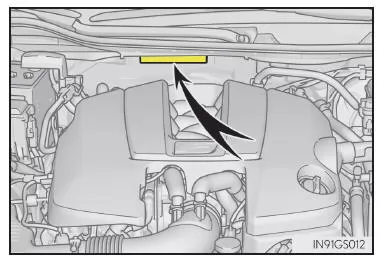
The number is also located on the manufacturer's label.
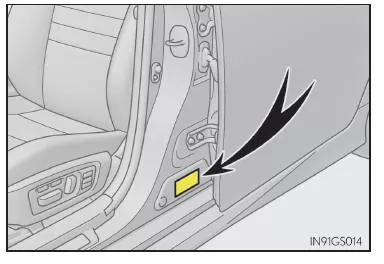
■ Engine Number
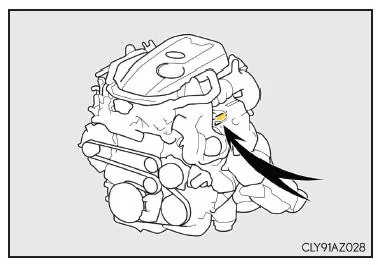
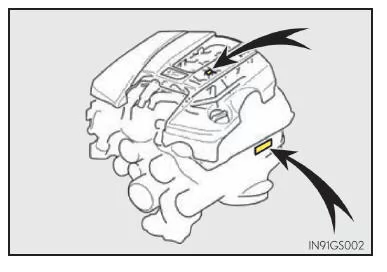
The engine number is stamped into the engine block (see illustration).
GS350
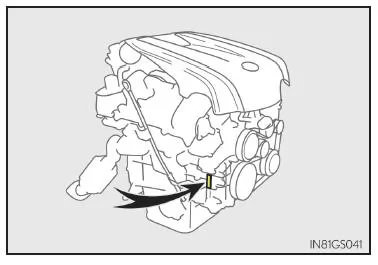
GS200t
GS F
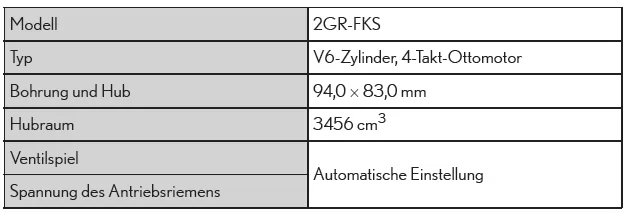
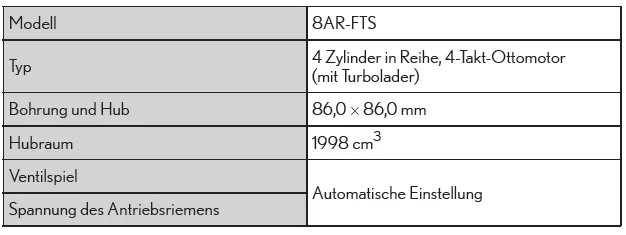
Engine
GS350
GS200t
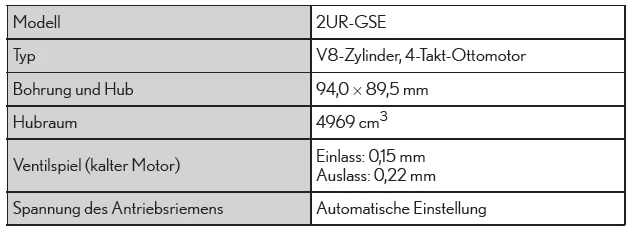
GS F
Fuel
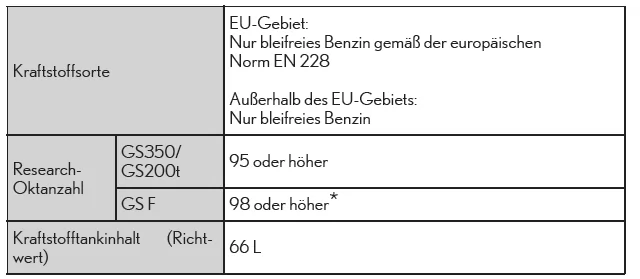
*: If unleaded gasoline with an octane rating of 98 RON is not available, unleaded gasoline with an octane rating of 95 RON may be used without affecting engine life or engine performance.
Lubrication System
GS350

*: The specified engine oil capacity is a guide for an oil change. Warm up the engine and then turn it off. Wait at least 5 minutes, then check the oil level with the dipstick.
■ Selecting the Correct Engine Oil
Your Lexus engine is filled with Toyota Genuine Motor Oil. Lexus recommends using Toyota Genuine Motor Oil. Other engine oil of equivalent quality may also be used.
Oil grade: 0W-20, 5W-30 and 10W-30: Multi-grade oil of API Service Category SL "Energy-Conserving", SM "Energy-Conserving" or SN "Resource-Conserving", or ILSAC multi-grade oil. 15W-40: Multi-grade oil of API Service Category SL, SM or SN
Recommended oil viscosity (SAE): Your Lexus is filled at the factory with SAE 0W-20. This is the best choice for fuel economy and makes starting easier in cold weather.
If SAE 0W-20 is not available, SAE 5W-30 oil may be used. However, it should be replaced with SAE 0W-20 at the next oil change.
Engine oil of SAE 10W-30 or higher viscosity may cause starting difficulties in extremely low temperatures. Therefore, it is recommended to use SAE 0W-20 or 5W-30 engine oil.
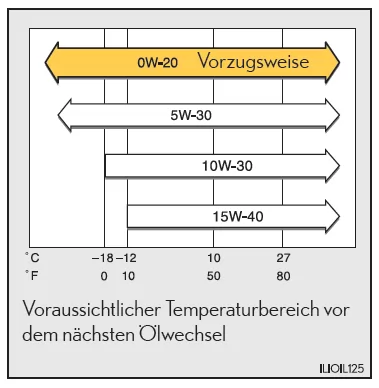
Oil viscosity (0W-20 is used here as an example):
- The 0W part of 0W-20 indicates the oil's cold-start performance. Oils with a lower number before the W make it easier to start the engine in cold conditions.
- The number 20 in 0W-20 indicates the oil's viscosity at high oil temperature. An oil with a higher viscosity (a higher number) may be better suited for high speeds or extreme load conditions.
Reading the oil container labels: One or both API symbols are often printed on the oil container to help you select the correct oil.
- API service label.
Upper section: "API SERVICE SN" indicates the oil quality defined by the American Petroleum Institute (API).
Middle section: "SAE 0W-20" indicates the SAE viscosity grade.
Lower section: "Resource-Conserving" means the oil offers fuel-saving and environmentally friendly properties.
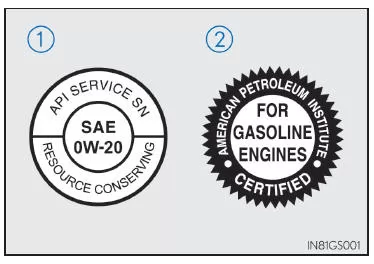
- ILSAC certification mark.
The International Lubricant Standardization and Approval Committee (ILSAC) certification mark is on the front of the container.
GS200t

*: The specified engine oil capacity is a guide for an oil change. Warm up the engine and then turn it off. Wait at least 5 minutes, then check the oil level with the dipstick.
■ Selecting the Correct Engine Oil
Your Lexus engine uses "Toyota Genuine Motor Oil SAE 0W-20 for Downsized Turbo Gasoline Engines". Use the Lexus-recommended "Toyota Genuine Motor Oil SAE 0W-20 for Downsized Turbo Gasoline Engines" or an equivalent engine oil of the following quality and viscosity.
Oil quality: "Toyota Genuine Motor Oil SAE 0W-20 for Downsized Turbo Gasoline Engines" or multigrade oil of API class SL "Energy-Conserving", SM "Energy-Conserving" or SN "Resource-Conserving", or ILSAC multigrade oil
Viscosity grade: SAE 0W-20 and 5W-30 Recommended oil viscosity (SAE): Your Lexus is filled at the factory with "Toyota Genuine Motor Oil SAE 0W-20 for Downsized Turbo Gasoline Engines", as SAE 0W-20 is the best choice for fuel economy and easier starting in cold weather.
If SAE 0W-20 is not available, SAE 5W-30 oil may be used. However, it should be replaced with SAE 0W-20 at the next oil change.
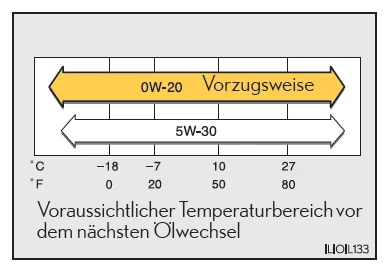
Oil viscosity (0W-20 is used here as an example):
- The 0W part of 0W-20 indicates the oil's cold-start performance. Oils with a lower number before the W make it easier to start the engine in cold conditions.
- The number 20 in 0W-20 indicates the oil's viscosity at high oil temperature. An oil with a higher viscosity (a higher number) may be better suited for high speeds or extreme load conditions.
Reading the oil container labels: One or both API symbols are often printed on the oil container to help you select the correct oil.
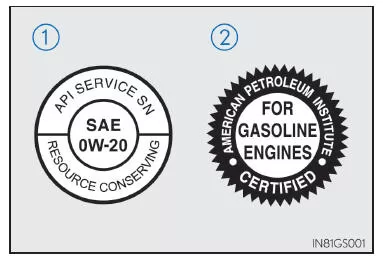
- API service label.
Upper section: "API SERVICE SN" indicates the oil quality defined by the American Petroleum Institute (API).
Middle section: "SAE 0W-20" indicates the SAE viscosity grade.
Lower section: "Resource-Conserving" means the oil offers fuel-saving and environmentally friendly properties.
- ILSAC certification mark.
The International Lubricant Standardization and Approval Committee (ILSAC) certification mark is on the front of the container.
GS F

*: The specified engine oil capacity is a guide for an oil change. Warm up the engine and then turn it off. Wait at least 5 minutes, then check the oil level with the dipstick.
■ Selecting the Correct Engine Oil
Your Lexus engine is filled with Toyota Genuine Motor Oil. Lexus recommends using Toyota Genuine Motor Oil. Other engine oil of equivalent quality may also be used.
Oil quality: 5W-30 and 10W-30: multigrade oil of API class SL "Energy-Conserving", SM "Energy-Conserving" or SN "Resource-Conserving", or ILSAC multigrade oil. 15W-40: multigrade oil of API class SL, SM or SN. Recommended oil viscosity (SAE): Your Lexus is filled at the factory with SAE 5W-30. This is the best choice for fuel economy and easier starting in cold weather.
An SAE 10W-30 or higher-viscosity engine oil may cause starting difficulties at extremely low temperatures. Therefore, SAE 5W-30 engine oil is recommended.
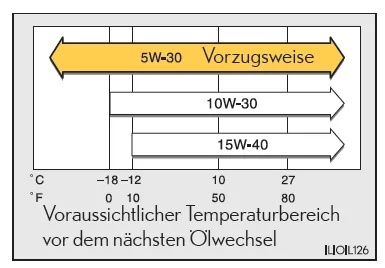
Oil viscosity (5W-30 is used here as an example):
- The 5W in 5W-30 indicates the cold-start performance of the oil. Oils with a lower number before the W make it easier to start the engine in cold conditions.
- The 30 in 5W-30 indicates the viscosity of the oil at high oil temperature. An oil with higher viscosity (that is, a higher number) may be better suited for high speeds or extreme load conditions.
Reading the oil container labels: One or both API symbols are often printed on the oil container to help you select the correct oil.
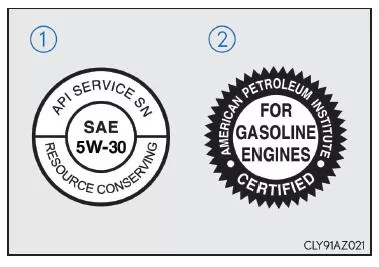
- API service label.
Upper section: "API SERVICE SN" indicates the oil quality defined by the American Petroleum Institute (API).
Middle section: "SAE 5W-30" indicates the SAE viscosity grade.
Lower section: "Resource-Conserving" means the oil offers fuel-saving and environmentally friendly properties.
- ILSAC certification mark.
The International Lubricant Standardization and Approval Committee (ILSAC) certification mark is on the front of the container.
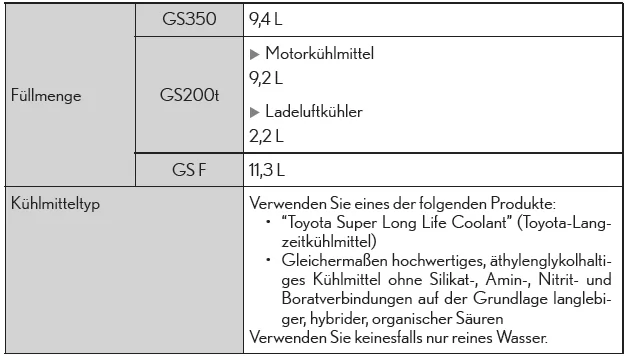
Cooling system
Ignition system
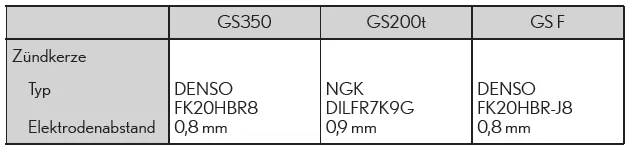
■ Iridium spark plugs
Use only iridium spark plugs. Never adjust the spark plug electrode gap.
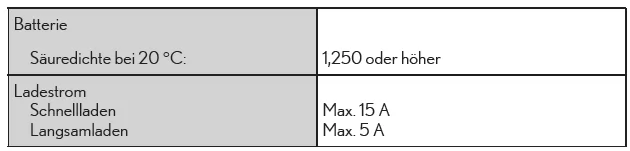
Electrical system
Automatic transmission
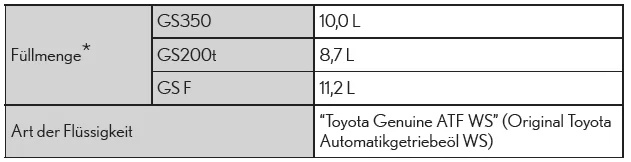
*: The oil capacity figures are approximate.
If a change is required, contact a Lexus dealer or authorized repair shop, or another qualified repair shop with the appropriate equipment.
NOTICE■ Automatic transmission fluid type
Using a transmission fluid other than "Toyota Genuine ATF WS" may cause poor shift quality, transmission lock-up with vibration, and eventually transmission damage.
Front differential (AWD models)
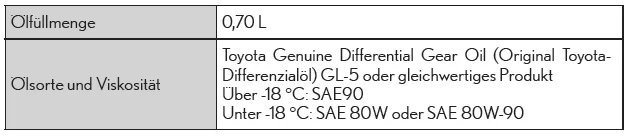
Rear differential
GS350/GS200t

GS F (vehicles with LSD [limited-slip differential])

GS F (vehicles with TVD [torque vectoring differential])
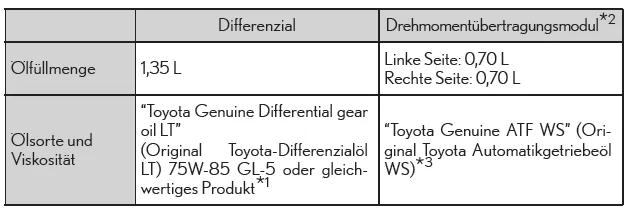
*1: Your Lexus is filled at the factory with "Toyota Genuine Differential Gear Oil". Use the Lexus-approved "Toyota Genuine Differential Gear Oil" or an equivalent differential oil of appropriate quality that meets the specifications listed above. For more information, contact a Lexus dealer or authorized repair shop, or another qualified repair shop with the appropriate equipment.
*2: The torque transfer modules are located on the right and left sides of the rear differential assembly.
*3: Using a torque transfer module fluid other than "Toyota Genuine ATF WS" may cause reduced performance, vibration, and eventually damage to your vehicle's TVD system.
Brakes
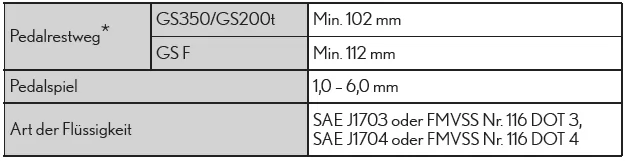
*: Minimum remaining pedal travel when applying a force of 500 N (51.0 kgf) with the engine running.
Steering

Tires and Wheels
GS350/GS200t (Type A)
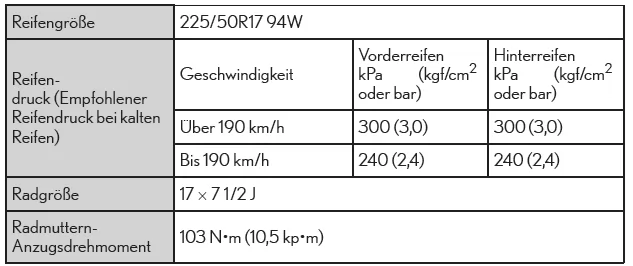
GS350/GS200t (Type B)
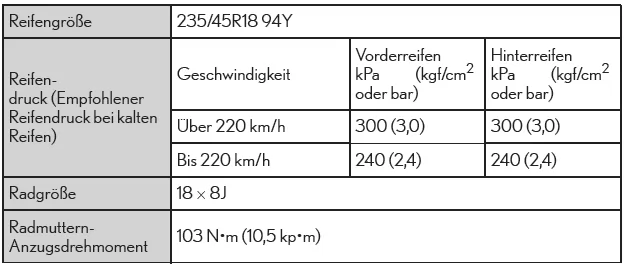
GS350/GS200t (Type C)
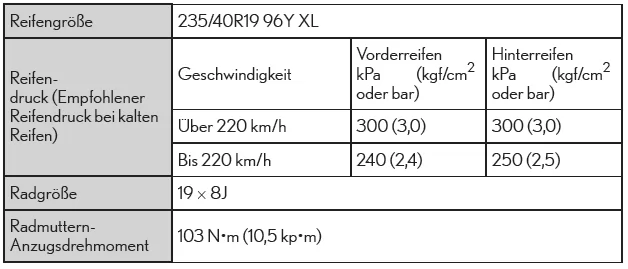
GS350/GS200t (Type D)
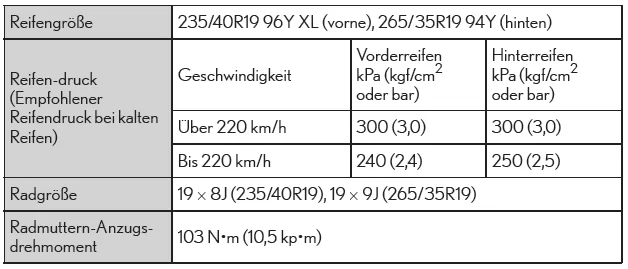
GS350/GS200t (temporary spare tire) (if equipped)
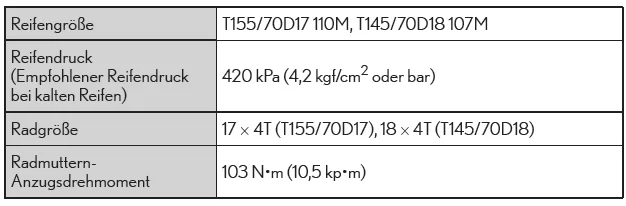
GS F
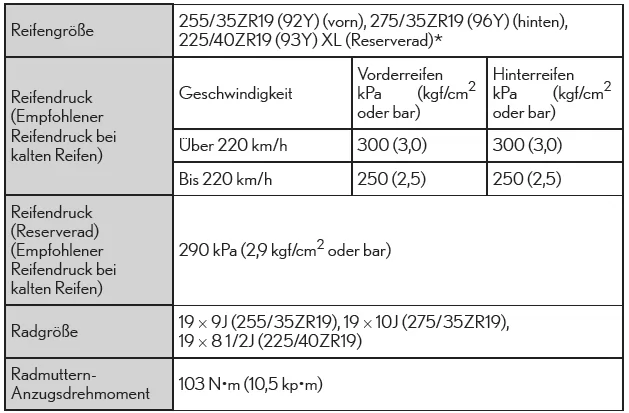
*: If equipped
■ When towing a trailer
Increase the recommended tire pressure by 20.0 kPa (0.2 kgf/cm² or bar) and do not drive faster than 100 km/h.
Bulbs
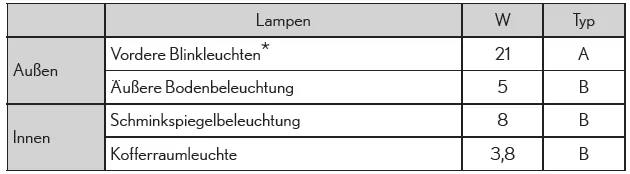
A: Wedge base bulbs (amber)
B: Wedge base bulbs (clear)
*: Vehicles with single-bulb headlights
The engine data of the Lexus GS GRL1 reflect the engineering refinement of the 4th generation. Powerful yet efficient powertrains provide dynamic acceleration while keeping fuel consumption low. Depending on the model, highly developed V6 gasoline engines or modern hybrid powertrains are used, underlining the premium character of this sport sedan.
With precise performance figures and state-of-the-art exhaust emission control technology, the Lexus GS 2016–2020 meets the highest demands for environmental friendliness and performance.
FAQWhat is the output of the Lexus GS F?
The GS F has a 5.0-liter V8 engine with approximately 477 hp (PS) (depending on market).
Do all engines meet current emission standards?
Yes, the engines of the Lexus GS GRL1 are designed to meet the applicable emission standards.
Test yourself
A quick Lexus GS quiz: every answer comes with an explanation and a link to the manual page.