Location of the tire label (placard)
The tire label shows the tire inflation pressure for each tire size and other important information. It is located on the B-pillar on the driver's side or on the edge of the driver's door frame.
SAMPLE
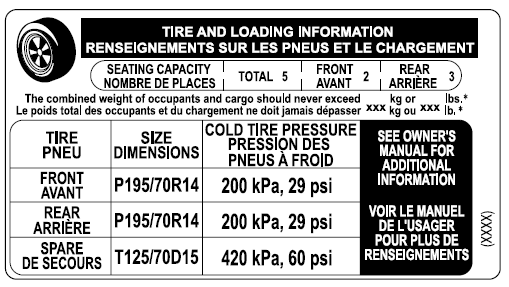
Recommended tire inflation pressure
The tire label shows the recommended tire inflation pressure in kPa and psi for the tires fitted as original equipment on the vehicle. It is essential to keep the vehicle's tires at the recommended pressure. Check tire pressure regularly to make sure the correct inflation pressure is maintained.
Refer to Tires on page 9-7.
NOTE
The tire inflation pressures listed on the vehicle placard or the tire information label are the recommended cold tire inflation pressures, measured when the tires are cold, after the vehicle has been parked for at least 3 hours. While driving, tire temperature rises, which increases tire pressure.
WARNING
Always check tire inflation pressure at regular intervals in accordance with the tire inflation pressures on the tire label and the information in this owner's and service manual:
Driving with underinflated tires is dangerous.
Underinflation is the main cause of tire failures and can cause severe cracking, tread separation or "blowout", with sudden loss of vehicle control and a greater risk of injury. Underinflation increases the sidewall flexing of the tire and rolling resistance, causing heat buildup and internal damage to the tire. It causes undesirable tire fatigue and uneven wear, and may lead to loss of control and accidents. A tire can lose up to half of its air pressure without appearing flat! It is impossible to tell whether tires are properly inflated just by looking at them.
Checking tire pressure
- When checking tire pressure, make sure the tires are cold, i.e.
NOTE
Some spare tires require a higher inflation pressure.
- Visually inspect the tires to make sure there are no nails or other embedded objects that could puncture the tire and cause air loss.
- Check the sidewalls to make sure there are no scratches, cuts, bulges, cracks or other irregularities.
Glossary of terms
Tire placard: Label showing the original tire sizes, recommended inflation pressures and the maximum weight the vehicle can carry.
Tire Identification Number (TIN): Number on the sidewall of each tire, giving information on the tire brand, manufacturing plant, tire size and date of manufacture.
Inflation pressure: Measure of the amount of air in a tire.
kPa: Kilopascal, metric unit of air pressure.
psi: Pounds per square inch, imperial unit of air pressure.
B-pillar: Structural pillar on the side of the vehicle behind the front door.
Original equipment (OE): Describes the components originally fitted to the vehicle.
Vehicle load limit: Maximum combined weight of occupants and added cargo.
Tire bead: The part of the tire that rests on the rim.
Tire sidewall: The area between the bead and the tread of the tire.
Tire tread: The part of the tire's circumference that contacts the road when the tire is mounted on the vehicle.
Seating capacity is the total permitted number of occupants of the vehicle. The seating capacity is shown on the vehicle certification label.
Production option weight is the combined weight of installed regular production options that weigh more than 2.3 kilograms more than the standard items they replace, and that were not previously included in the curb weight or the accessory weight. This includes heavy-duty brakes, ride-leveling devices, roof rack, heavy-duty battery and special wheels.
Rim: The metal support (wheel) that holds a tire or tire and inner tube assembly and on which the tire bead rests.
Test yourself
A quick Mazda 6 quiz: every answer comes with an explanation and a link to the manual page.