Practical information
Repair procedure
In this manual: Practical information
~2min read
1. Sealing
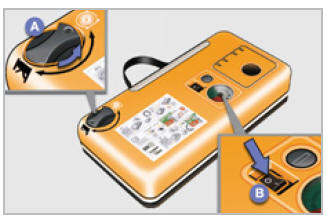
- Turn the ignition off.
- Turn selector A to the "Repair" position.
- Check that switch B is set to the "O" position.
 .
Do not remove any foreign objects embedded in the tyre.
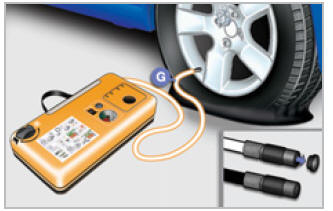
- Fully unroll the white hose G.
- Unscrew the cap from the white hose.
- Connect the white hose to the valve of the damaged tyre.
Store the product out of the reach of children.
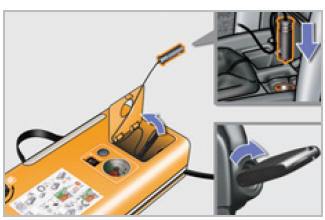
- Plug the compressor's electrical lead into the vehicle's 12 V socket.
- Start the vehicle and let the engine idle.
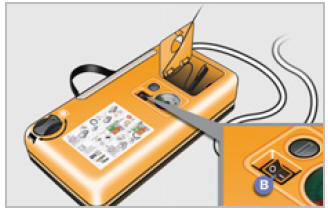
- Turn on the compressor by setting switch B to the "I" position until the tyre pressure reaches 2.0 bar.
²The sealant is injected into the tyre under pressure; do not disconnect the hose from the valve during this operation (risk of splashing).
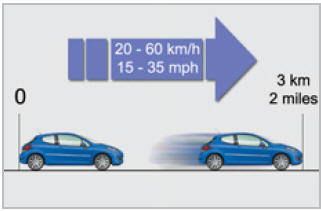
- Disconnect the kit and screw the cap back onto the white hose. Take care not to get fluid left in the container on the vehicle.
Keep the kit within reach.
- Drive immediately for about five kilometres at low speed (between 20 and 60 km/h) to seal the punctured tyre.
- Stop to check that the tyre has sealed and that the pressure is holding.
2. Inflation
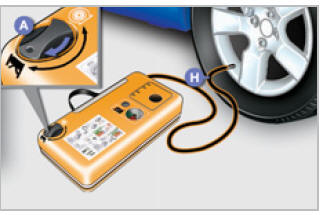
- Set selector A to the "Inflation" position.
- Fully unroll the black hose H.
 .
- Connect the black hose to the valve of the damaged tyre.
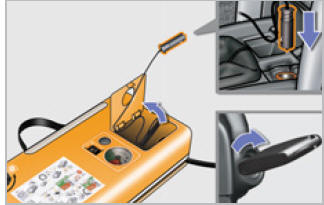
- Plug the compressor's electrical lead back into the vehicle's 12 V socket.
- Restart the vehicle and let the engine idle.
After the diagnostic check, the technician will recommend repairing or replacing the tyre.
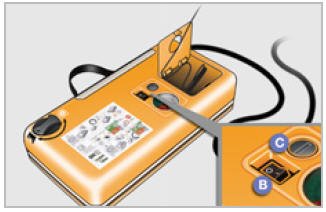
- Adjust the pressure using the compressor (to inflate: switch B to "I"; to deflate: switch B to "O" and press button C), according to the tyre pressure label (located on the driver's door).
A later drop in pressure indicates that the puncture has not been properly sealed. Contact a PEUGEOT dealer or a specialist workshop to call roadside assistance.
- Disconnect the entire kit, then stow it away.
- Do not exceed 80 km/h and limit the distance to 200 km.
Test yourself
A quick Peugeot 207 quiz: every answer comes with an explanation and a link to the manual page.
Was this page helpful?